


Thousands on Saturday rallied outside a pro-government television station in Serbia accused of a propaganda campaign against university students behind months of massive anti-corruption protests rattling populist Serbian President Aleksandar Vucic.
Private Informer television is among mainstream media outlets in Serbia loyal to Vucic and his right-wing government. Informer TV and tabloid newspaper have repeatedly branded student protesters as extremists and mercenaries during nearly five months of almost daily street demonstrations.
Protests have been peaceful but pro-government media have accused organizers of fueling violence and seeking to overthrow the government under orders from abroad. They have provided no evidence to support those claims.
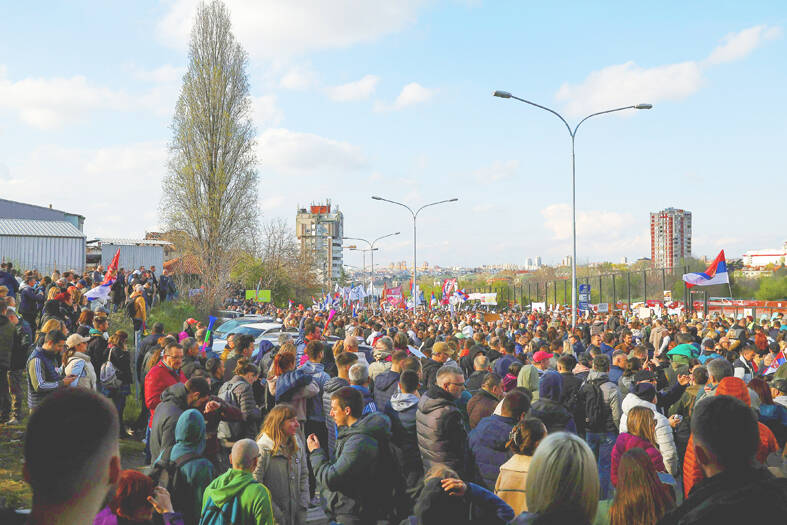
Photo: Reuters
“For months now, ever since the blockades started, we have been their target, we have been constantly smeared in the media,” student Ivona Markovic said.
The protests started after a concrete canopy collapsed in November last year at a train station in Serbia’s north, killing 16 people. The crash drew focus on rampant government corruption, triggering demands for accountability and political changes.
Protests have put pressure on an increasingly authoritarian Vucic, who is formally seeking EU entry for Serbia but maintains close relations with Russia and China.
Vucic has promised a “counter-revolution” against the protests. Authorities have threatened legal action against university professors, including calls for the arrest of Vladan Djokic, the head dean at Belgrade University.
Vucic on Saturday visited a camp of his loyalists outside the presidency building, including a group of pro-government university students.
He said that “those who introduced anarchy” at the university would be held responsible.
Student protests have drawn hundreds of thousands of people.
Wearing protective white suits, several students symbolically staged a “decontamination” performance outside the Informer TV building. Students also launched a petition to limit the television station’s access to broadcasting frequencies.
“This is a media war between Informer and students, between lies and truth, abuse of power and resistance,” the students said. “They [Informer] do not inform, they persecute.”
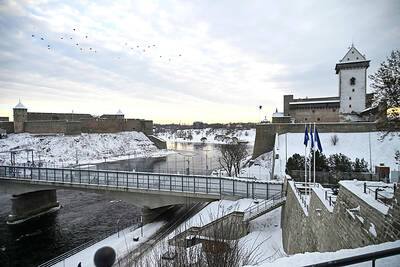
Two medieval fortresses face each other across the Narva River separating Estonia from Russia on Europe’s eastern edge. Once a symbol of cooperation, the “Friendship Bridge” connecting the two snow-covered banks has been reinforced with rows of razor wire and “dragon’s teeth” anti-tank obstacles on the Estonian side. “The name is kind of ironic,” regional border chief Eerik Purgel said. Some fear the border town of more than 50,0000 people — a mixture of Estonians, Russians and people left stateless after the fall of the Soviet Union — could be Russian President Vladimir Putin’s next target. On the Estonian side of the bridge,

Jeremiah Kithinji had never touched a computer before he finished high school. A decade later, he is teaching robotics, and even took a team of rural Kenyans to the World Robotics Olympiad in Singapore. In a classroom in Laikipia County — a sparsely populated grasslands region of northern Kenya known for its rhinos and cheetahs — pupils are busy snapping together wheels, motors and sensors to assemble a robot. Guiding them is Kithinji, 27, who runs a string of robotics clubs in the area that have taken some of his pupils far beyond the rural landscapes outside. In November, he took a team
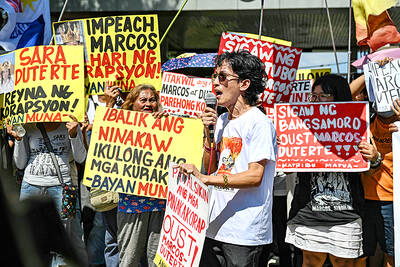
Civil society leaders and members of a left-wing coalition yesterday filed impeachment complaints against Philippine Vice President Sara Duterte, restarting a process sidelined by the Supreme Court last year. Both cases accuse Duterte of misusing public funds during her term as education secretary, while one revives allegations that she threatened to assassinate former ally Philippine President Ferdinand Marcos Jr. The filings come on the same day that a committee in the House of Representatives was to begin hearings into impeachment complaints against Marcos, accused of corruption tied to a spiraling scandal over bogus flood control projects. Under the constitution, an impeachment by the
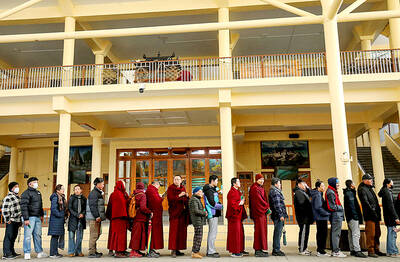
Exiled Tibetans began a unique global election yesterday for a government representing a homeland many have never seen, as part of a democratic exercise voters say carries great weight. From red-robed Buddhist monks in the snowy Himalayas, to political exiles in megacities across South Asia, to refugees in Australia, Europe and North America, voting takes place in 27 countries — but not China. “Elections ... show that the struggle for Tibet’s freedom and independence continues from generation to generation,” said candidate Gyaltsen Chokye, 33, who is based in the Indian hill-town of Dharamsala, headquarters of the government-in-exile, the Central Tibetan Administration (CTA). It


 RSS
RSS