


Cat lovers in Indian-controlled Kashmir were thrown into a tizzy. Panic spread and local veterinarians reported a surge in pet owners coming in with their cats — all because of posts that went viral on social media.
It began with a warning in January from veterinarians in the disputed Himalayan region, where the cat population has soared over the past years, partly because of stray cats roaming free and pet stores bringing in ever more costly breeds to keep up with local demand.
The vets said there has been an uptick in infections among the feline population due to lack of vaccination and mishandling of strays.
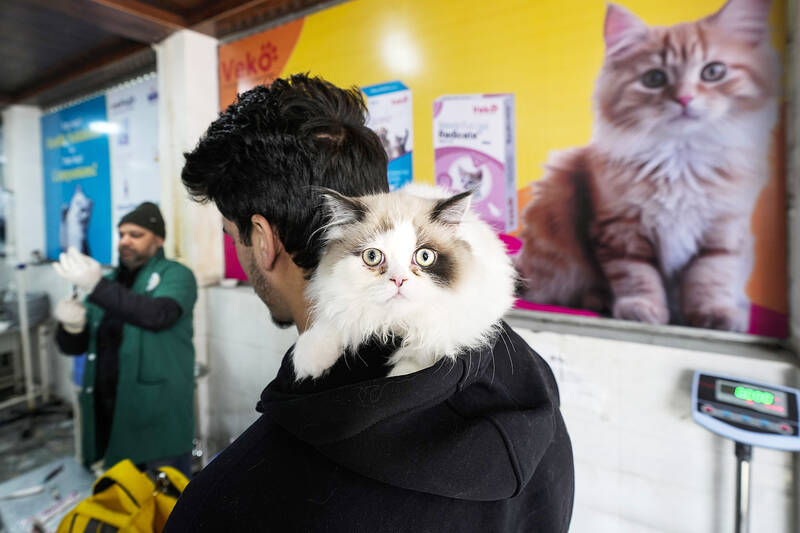
Photo: AP
What was meant to be a cautionary note was misinterpreted. Video clips and news reports started claiming that cats transmit potentially deadly infections to humans, and that cat-borne diseases could cause miscarriages.
Days later, the region’s animal husbandry department issued a statement saying there was no harm in keeping cats as pets as long as proper hygiene is maintained.
The statement did little to calm pet owners in Kashmir, where cats have been long revered in Islamic folklore for their cleanliness and considered noble and intelligent creatures.
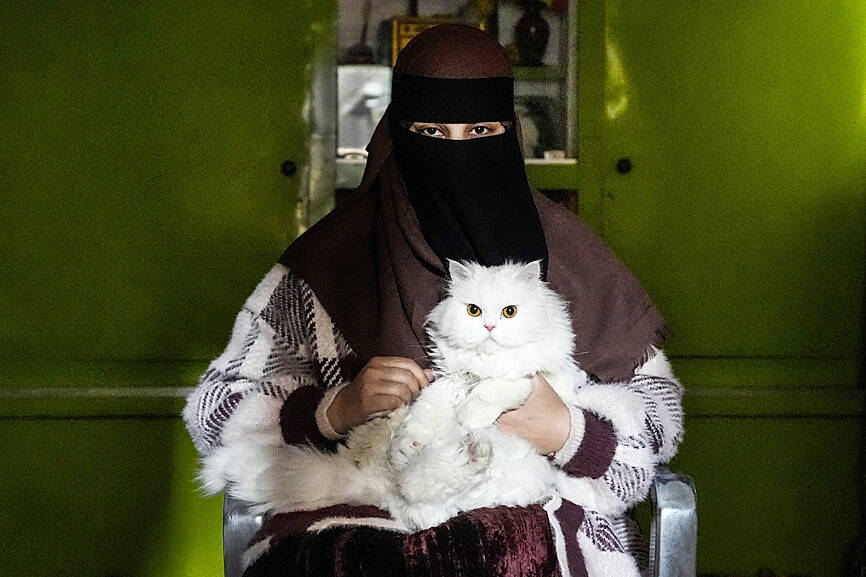
Photo: AP
Mir Mubashir, a local businessman who lives on the outskirts of Srinagar, the region’s main city, said the posts and reports made him worried. His heart heavy, he took Liger, his Persian kitty, to her vet to make sure she was fine.
“I felt really scared,” he said.
Only after the vet’s assurances that all was well did he calm down.
Reflecting the level of concern, Altaf Gilani, the head of the main Srinagar animal hospital, said they had examined 2,594 cats in the first seven weeks of this year, compared with a total of 1,010 cats in January and February last year.
If regular deworming, vaccinations and hygiene protocols are followed, pet owners are not at risk, he said.
Keeping cats, much like raising pigeons in Kashmir, is seen as a stress buster and mood elevator in a region long plagued by conflicts.
Split between Pakistan and India, but claimed by both in its entirety, Kashmir has been subject to two harsh lockdowns, first in 2019, when Indian Prime Minister Narendra Modi’s administration stripped the region’s semi-autonomy, and in 2020, during the COVID-19 pandemic.
More people began adopting stray cats during the lockdowns. Children were encouraged to play with them — experts called it pet therapy.
“Cats entice you to love them and you get attached once you spend time with them,” said Mujtaba Hussain, another cat owner.

Two medieval fortresses face each other across the Narva River separating Estonia from Russia on Europe’s eastern edge. Once a symbol of cooperation, the “Friendship Bridge” connecting the two snow-covered banks has been reinforced with rows of razor wire and “dragon’s teeth” anti-tank obstacles on the Estonian side. “The name is kind of ironic,” regional border chief Eerik Purgel said. Some fear the border town of more than 50,0000 people — a mixture of Estonians, Russians and people left stateless after the fall of the Soviet Union — could be Russian President Vladimir Putin’s next target. On the Estonian side of the bridge,

Jeremiah Kithinji had never touched a computer before he finished high school. A decade later, he is teaching robotics, and even took a team of rural Kenyans to the World Robotics Olympiad in Singapore. In a classroom in Laikipia County — a sparsely populated grasslands region of northern Kenya known for its rhinos and cheetahs — pupils are busy snapping together wheels, motors and sensors to assemble a robot. Guiding them is Kithinji, 27, who runs a string of robotics clubs in the area that have taken some of his pupils far beyond the rural landscapes outside. In November, he took a team

Civil society leaders and members of a left-wing coalition yesterday filed impeachment complaints against Philippine Vice President Sara Duterte, restarting a process sidelined by the Supreme Court last year. Both cases accuse Duterte of misusing public funds during her term as education secretary, while one revives allegations that she threatened to assassinate former ally Philippine President Ferdinand Marcos Jr. The filings come on the same day that a committee in the House of Representatives was to begin hearings into impeachment complaints against Marcos, accused of corruption tied to a spiraling scandal over bogus flood control projects. Under the constitution, an impeachment by the
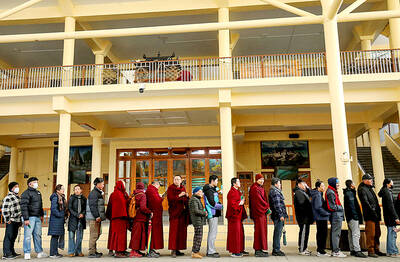
Exiled Tibetans began a unique global election yesterday for a government representing a homeland many have never seen, as part of a democratic exercise voters say carries great weight. From red-robed Buddhist monks in the snowy Himalayas, to political exiles in megacities across South Asia, to refugees in Australia, Europe and North America, voting takes place in 27 countries — but not China. “Elections ... show that the struggle for Tibet’s freedom and independence continues from generation to generation,” said candidate Gyaltsen Chokye, 33, who is based in the Indian hill-town of Dharamsala, headquarters of the government-in-exile, the Central Tibetan Administration (CTA). It


 RSS
RSS