


Saudi Arabia said more than 1,300 pilgrims died during the annual hajj pilgrimage, as temperatures during the gathering reached the highest level in two decades.
The majority of fatalities were unregistered pilgrims, who were not authorized to participate and walked long distances without adequate shelter, the official Saudi Press Agency said.
Many of the dead were elderly and chronically ill, it said.
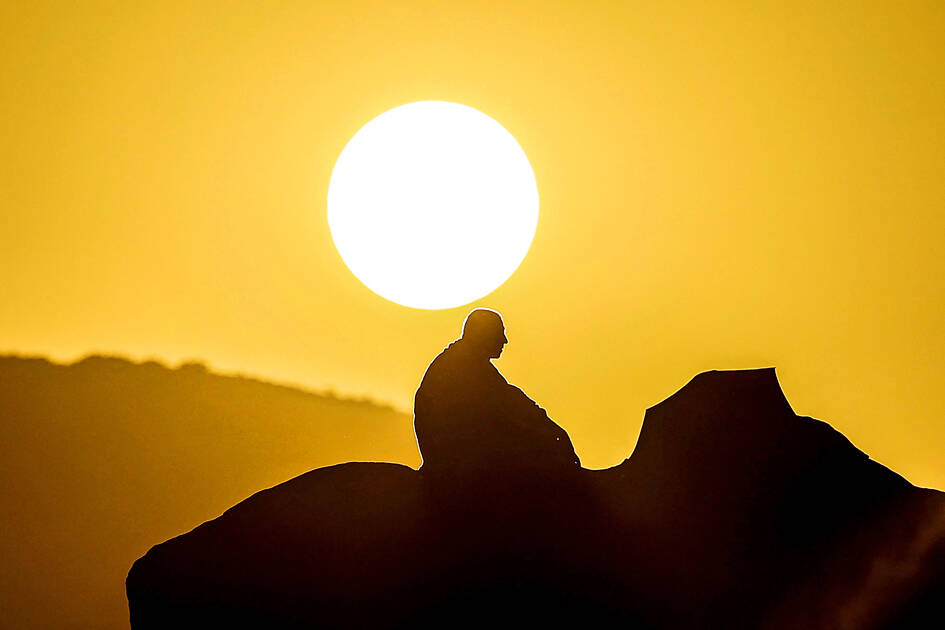
Photo: AFP
GLOBAL RISKS
The fatalities put a fresh spotlight on the threat from a hotter world and the risk it poses for large gatherings. Heat-related deaths have been reported in India, wildfires are forcing evacuation of people on Greece, parts of the US are in the middle of a heat wave and there are fears that rising temperatures might increasingly make some parts of the Middle East difficult to live.
In Saudi Arabia, temperatures reached about 52oC during the five-day pilgrimage that ended on Tuesday last week, the highest level recorded during hajj in 20 years, data from the Saudi National Center for Meteorology said.
More than 1.8 million worshippers participated in this year’s hajj.
Saudi authorities had earlier cautioned about “the significant rise in temperatures, which poses a threat to the health of pilgrims.”
The Ministry of Health later urged people to use umbrellas to prevent sun exposure. More than 2,700 cases of heat stroke were reported on Monday last week alone.
ORIGINS
The majority of deceased pilgrims came from countries including Egypt, Jordan, Indonesia, India and Pakistan, earlier reports from Agence-France Press said, citing diplomats.
Deaths at hajj are not uncommon due to a variety of reasons. A stampede in 2015 killed hundreds of people. Heat stroke caused 1,012 deaths in 1985, when the pilgrimage was in August and average temperatures reached 54oC, a report from the Annals of Saudi Medicine said.
This year, the health ministry said treatment was given to almost half a million people, including 141,000 unauthorized pilgrims. Services included open-heart surgeries, cardiac care and air ambulance operations. Saudi Arabia also said it made almost 6,500 beds and rooms available to those who needed care.
The health minister praised the “successful execution of health management efforts” during the hajj season, the Saudi Press Agency reported on Sunday.
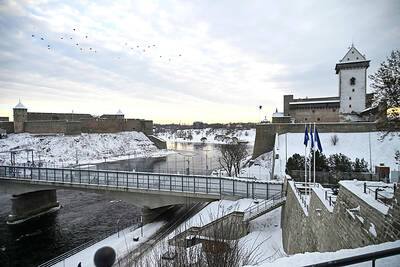
Two medieval fortresses face each other across the Narva River separating Estonia from Russia on Europe’s eastern edge. Once a symbol of cooperation, the “Friendship Bridge” connecting the two snow-covered banks has been reinforced with rows of razor wire and “dragon’s teeth” anti-tank obstacles on the Estonian side. “The name is kind of ironic,” regional border chief Eerik Purgel said. Some fear the border town of more than 50,0000 people — a mixture of Estonians, Russians and people left stateless after the fall of the Soviet Union — could be Russian President Vladimir Putin’s next target. On the Estonian side of the bridge,

Jeremiah Kithinji had never touched a computer before he finished high school. A decade later, he is teaching robotics, and even took a team of rural Kenyans to the World Robotics Olympiad in Singapore. In a classroom in Laikipia County — a sparsely populated grasslands region of northern Kenya known for its rhinos and cheetahs — pupils are busy snapping together wheels, motors and sensors to assemble a robot. Guiding them is Kithinji, 27, who runs a string of robotics clubs in the area that have taken some of his pupils far beyond the rural landscapes outside. In November, he took a team
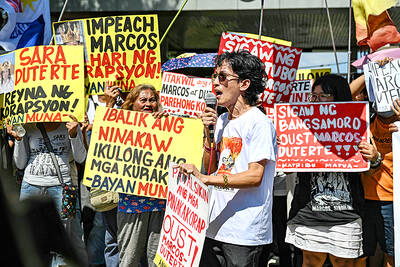
Civil society leaders and members of a left-wing coalition yesterday filed impeachment complaints against Philippine Vice President Sara Duterte, restarting a process sidelined by the Supreme Court last year. Both cases accuse Duterte of misusing public funds during her term as education secretary, while one revives allegations that she threatened to assassinate former ally Philippine President Ferdinand Marcos Jr. The filings come on the same day that a committee in the House of Representatives was to begin hearings into impeachment complaints against Marcos, accused of corruption tied to a spiraling scandal over bogus flood control projects. Under the constitution, an impeachment by the
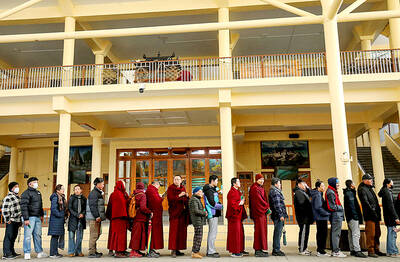
Exiled Tibetans began a unique global election yesterday for a government representing a homeland many have never seen, as part of a democratic exercise voters say carries great weight. From red-robed Buddhist monks in the snowy Himalayas, to political exiles in megacities across South Asia, to refugees in Australia, Europe and North America, voting takes place in 27 countries — but not China. “Elections ... show that the struggle for Tibet’s freedom and independence continues from generation to generation,” said candidate Gyaltsen Chokye, 33, who is based in the Indian hill-town of Dharamsala, headquarters of the government-in-exile, the Central Tibetan Administration (CTA). It


 RSS
RSS