


Thousands of Israelis on Saturday rallied in Tel Aviv to demand urgent government action to bring home hostages held in Gaza, after the bodies of several were retrieved.
Protesters observed a minute’s silence in Tel Aviv’s “Hostages Square” in honor of the captives whose bodies were recovered by Israeli troops this month, a correspondent reported.
The army on Friday said that troops had retrieved the bodies of three hostages in an overnight operation in Jabalia in the northern Gaza Strip.

Photo: AFP
The remains of Chanan Yablonka, Brazilian-Israeli Michel Nisenbaum and French-Mexican Orion Hernandez Radoux “were rescued” and their families notified after forensic identification, the military said in a statement.
“In just a few hours, I will bury my 42-year-old brother... I feared this moment,” Yablonka’s sister Avivit said at the rally.
“My brother, I promise you that I will continue to shout, support, fight and do everything so that all the hostages return home safely,” she said. “They must be taken out of this hell now.”
The bodies of four other hostages, Ron Benjamin, Yitzhak Gelerenter, Shani Louk and Amit Buskila, were recovered last week.
Another protest, calling for the resignation of Israeli Prime Minister Benjamin Netanyahu and an early election, was held nearby.

A ship that appears to be taking on the identity of a scrapped gas carrier exited the Strait of Hormuz on Friday, showing how strategies to get through the waterway are evolving as the Middle East war progresses. The vessel identifying as liquefied natural gas (LNG) carrier Jamal left the Strait on Friday morning, ship-tracking data show. However, the same tanker was also recorded as having beached at an Indian demolition yard in October last year, where it is being broken up, according to market participants and port agent’s reports. The ship claiming to be Jamal is likely a zombie vessel that

Cannabis-based medicines have shown little evidence of effectiveness for treating most mental health and substance-use disorders, according to a large review of past studies published in a major medical journal on Monday. Medical use of cannabinoids has been expanding, including in the US, Canada and Australia, where many patients report using cannabis products to manage conditions such as anxiety, post-traumatic stress disorder and sleep problems. Researchers reviewed data from 54 randomized clinical trials conducted between 1980 and May last year involving 2,477 participants for their analysis published in The Lancet. The studies assessed cannabinoids as a primary treatment for mental disorders or substance-use
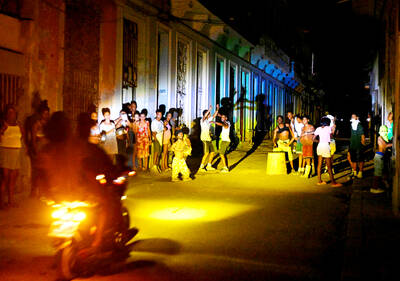
NATIONWIDE BLACKOUT: US President Donald Trump cut off Venezuelan oil shipments to Cuba, strangling the Caribbean island’s already antiquated grid Cuba’s national electric grid collapsed on Monday, the nation’s grid operator said, leaving about 10 million people without power amid a US-imposed oil blockade that has crippled the already obsolete generation system. Grid operator UNE on social media said that it is investigating the causes of the blackout, the latest in a series of widespread outages that last for hours or days and that this weekend sparked a rare violent protest in the communist-run nation. Officials ruled out a major power plant failure, but had still not pinpointed the root cause of the grid collapse, suggesting a problem with transmission. Officials said that
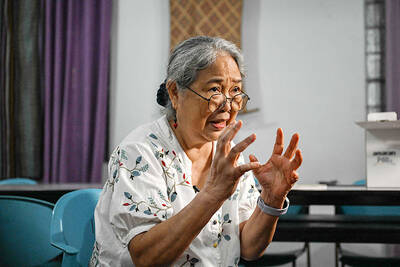
‘HEALTH ISSUE’: More than 250 women are hospitalized every day due to complications from unsafe abortions, and about three die, a study showed Jane had been bleeding heavily for days before finally seeking help, not from a hospital, but from the man who sold her the pills meant to end her six-week pregnancy. Abortions are strictly outlawed in the mainly Catholic Philippines, forcing women to turn to a patchwork of providers operating in the online shadows. While rare in practice, Philippine law allows for prison terms of up to six years for abortion patients and providers, leaving thousands of Filipinas to search for solutions in online forums where unlicensed sellers promote abortifacients. “It was very painful, as if my abdomen was being twisted,” said Jane, whose


 RSS
RSS