


Russian authorities are threatening to bury Alexei Navalny on the grounds of the arctic prison colony where he died unless his family agrees to a closed funeral, the opposition leader’s team said on Friday, while his wife said that Russian President Vladimir Putin had personally ordered that his body not be handed over to his family.
The 47-year-old Kremlin critic died last week after spending more than three years behind bars, prompting outrage and condemnation from Western leaders and his supporters.
Several leading Russian cultural figures and activists have called on authorities to release the body to his mother, who arrived at the prison colony in northern Siberia on Saturday last week.
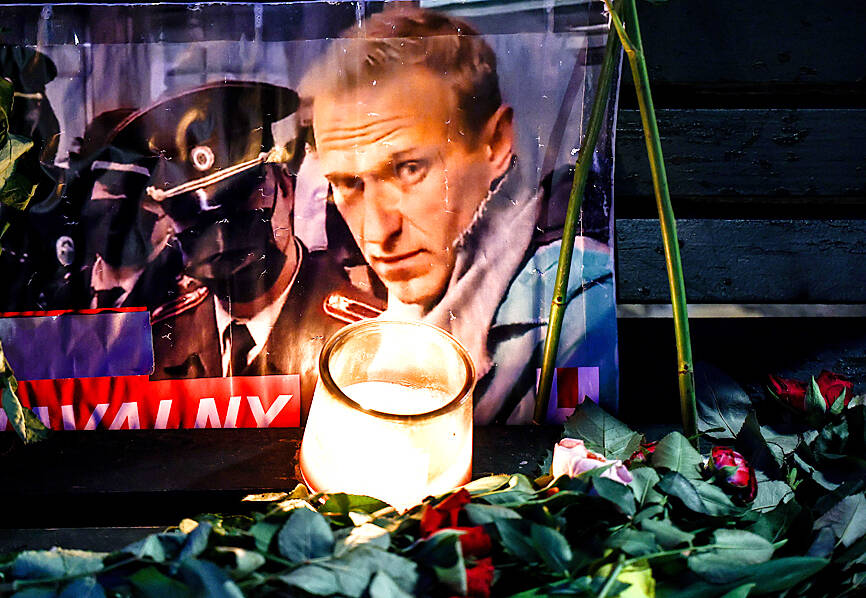
Photo: EPA-EFE
“An hour ago, an investigator called Alexei’s mother and gave her an ultimatum,” Navalny’s spokesperson Kira Yarmysh wrote on X. “She has three hours to agree to a secret funeral without a public farewell, or Alexei will be buried in the colony.”
His mother, Lyudmila Navalnaya, “refused to negotiate ... because they have no authority to decide how and where to bury her son,” Yarmysh added.
She has filed a lawsuit alleging the “desecration” of his body, said Ivan Zhdanov, an exiled ally of the late leader.
“You tortured him alive, now you torture him while he is dead,” Yulia Navalnaya, who has vowed to continue her husband’s work, said in a new video.
“I completely understand that this has not been curated by some investigator in Salekhard. Putin is directing it all,” she said.
“It’s Putin saying: ‘Put pressure on the mother, break her, tell her the body of her son is rotting,’” she said.
She said Navalny’s mother, who traveled to the remote prison colony where he died, is being “tormented” by authorities.
“This is the same Putin that likes to show that he is a practicing Christian,” she said.
Navalny’s team have said the Kremlin is “scared” of the opposition leader even after his death.
They believe the authorities do not want a public funeral as it would represent a show of support for Navalny’s movement against Putin.
They previously called Putin a “killer” who was trying to cover his tracks by not allowing independent forensic analysis of Navalny’s body.
The US Department of State on Friday announced it was imposing sanctions against three Russian officials over Navalny’s death in prison.
Those named include Valery Boyarinev, deputy director of the Russian Federal Penitentiary Service which oversaw the remote arctic penal colony where Navalny died.
“You can expect more ... with respect to holding the Kremlin accountable for Mr Navalny’s death,” US National Security Council Coordinator for Strategic Communications John Kirby told journalists.
On Wednesday, the UK announced sanctions against six Russian officials at the IK-3 Arctic Penal Colony “Polar Wolf,” where Navalny died.
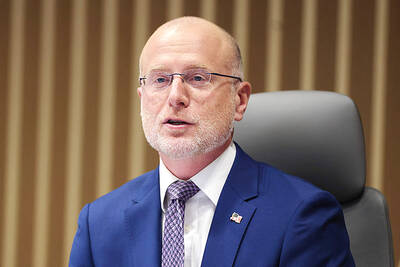
FAKE NEWS? ‘When the government demands the press become a state mouthpiece under the threat of punishment, something has gone very wrong,’ a civic group said The top US broadcast regulator on Saturday threatened media outlets over negative coverage of the Middle East war, after US President Donald Trump slammed critical headlines from the “Fake News Media.” The US president since his first term has derided mainstream media as “fake news” and has sued major outlets over what he sees as unfair coverage. Brendan Carr, head of the US Federal Communications Commission — which oversees the nation’s radio, television and Internet media — said broadcasters risked losing their licenses over news coverage. “The law is clear. Broadcasters must operate in the public interest, and they will
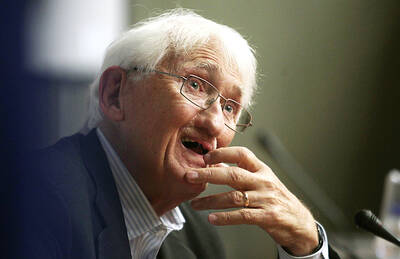
INFLUTENTIAL THEORIST: Habermas was particularly critical of the ‘limited interest’ shown by German politicians in ‘shaping a politically effective Europe Jurgen Habermas, whose work on communication, rationality and sociology made him one of the world’s most influential philosophers and a key intellectual figure in his native Germany, has died. He was 96. Habermas’ publisher, Suhrkamp, said he died on Saturday in Starnberg, near Munich. Habermas frequently weighed in on political matters over several decades. His extensive writing crossed the boundaries of academic and philosophical disciplines, providing a vision of modern society and social interaction. His best-known works included the two-volume Theory of Communicative Action. Habermas, who was 15 at the time of Nazi Germany’s defeat, later recalled the dawn of
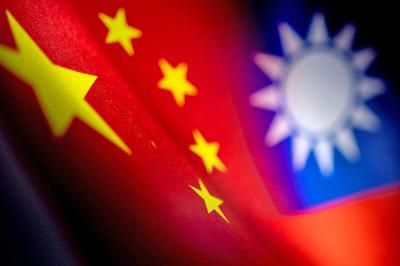
The Chinese public maintains relatively warm sentiments toward Taiwan and strongly prefers non-military paths to improving cross-strait relations, a recent survey conducted by the Atlanta, Georgia-based Carter Center and Emory University showed. The “China Pulse” research project, which polled 2,506 adults between Oct. 27 last year and Jan. 1 this year, found that 86 percent of respondents support strengthening cultural ties, while 81 percent favor deepening economic interaction. The report, co-authored by political scientists at Emory University and advisors at the Carter Center, indicates that the Chinese public views Taiwan’s importance through a lens of shared history and culture rather than geopolitical

Cannabis-based medicines have shown little evidence of effectiveness for treating most mental health and substance-use disorders, according to a large review of past studies published in a major medical journal on Monday. Medical use of cannabinoids has been expanding, including in the US, Canada and Australia, where many patients report using cannabis products to manage conditions such as anxiety, post-traumatic stress disorder and sleep problems. Researchers reviewed data from 54 randomized clinical trials conducted between 1980 and May last year involving 2,477 participants for their analysis published in The Lancet. The studies assessed cannabinoids as a primary treatment for mental disorders or substance-use


 RSS
RSS