

Ukrainian President Volodymyr Zelenskiy said Russian forces are suffering heavy losses and the notion that Moscow is winning the nearly two-year-old war is only a “feeling,” not based on reality.
“Thousands, thousands of killed Russian soldiers, nobody even took them away,” he told The Economist in an interview published on Monday, referring to fighting around the besieged eastern town of Avdiivka which he visited last week.
He provided no evidence to back up his assertion, but Western military analysts agree that Russia is paying a heavy price in men and equipment for relatively minor gains in eastern and southern Ukraine.
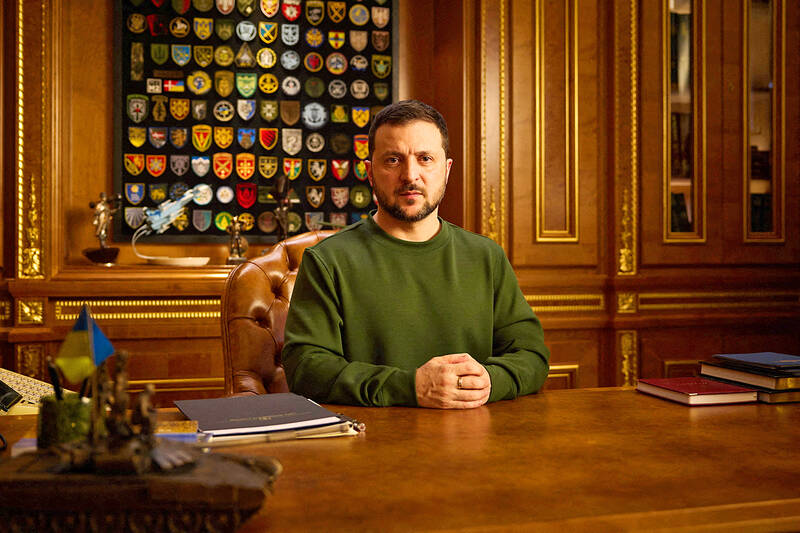
Photo: Ukrainian Presidential Press Service via Reuters
There was no response to a request for comment from Russian officials on Zelenskiy’s remarks.
Russian officials have said Western estimates of the Russian death toll are vastly exaggerated and almost always underestimate Ukrainian losses.
Russian President Vladimir Putin last month said that Russia’s position was improving and it would not stop what he calls the “special military operation” until its objectives, including Ukraine’s “denazification, demilitarization and its neutral status”, had been achieved.
Russian officials have dismissed as a failure a Ukrainian counteroffensive launched in the middle of last year in the east and south.
Zelenskiy acknowledged that the counteroffensive backed by advanced Western weapons might not have succeeded “as the world wanted. Maybe not everything is as fast as someone imagined.”
In contrast, he hailed the “huge result” of Ukrainian forces breaking through a Russian Black Sea blockade, enabling grain exports by way of a new route along its southern coast.
If Ukraine lost the war, he said, Russia would be encouraged to advance against other nations because “Putin feels weakness like an animal, because he is an animal. He senses blood, he senses his strength.”
With support for Ukraine facing obstacles in the US and EU, more needed to be done to persuade the world that defending Ukraine meant defending the world, Zelenskiy said.
“Maybe something is missing. Or maybe someone is missing,” he told the magazine. “Someone who can talk about Ukraine as a defense of all of us.”
Zelenskiy acknowledged that “mobilization of Ukrainian society and of the world” that was so strong at the start of Russia’s invasion is not there anymore.
Ukraine saw tens of thousands of men volunteer to fight in the first months of Russia’s invasion, but that enthusiasm has waned 22 months later.
“That needs to change,” he said. “Mobilization is not just a matter of soldiers going to the front. It is about all of us. It is the mobilization of all efforts. This is the only way to protect our state and de-occupy our land.”
Zelenskiy has embarked on a flurry of international trips trying to shore up Western support. At home, he has repeatedly urged Ukrainians to do their duty.
“Victory is not received or granted, it is gained,” Zelenskiy said in his New Year’s message to Ukrainians. “And to this end, today we have to live by the rule: You either work or you fight.”
A draft law that proposes lowering the mobilization age to 25 from 27 has sparked controversy.
Russia has said it is ready for peace talks if Ukraine takes account of “new realities,” suggesting an acknowledgement that Russia controls about 17.5 percent of Ukrainian territory.
Zelenskiy rejected any notion that Moscow was interested in talks, pointing to its repeated waves of aerial strikes.
Russia would only agree to a pause in fighting if it needed a break to replenish its army, he said.
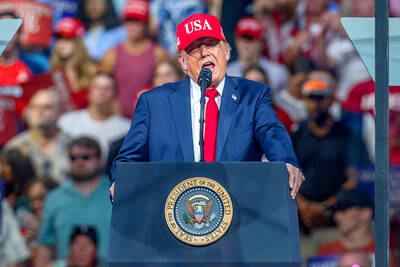
US President Donald Trump on Wednesday threatened to take action against the EU if it moves forward with European Commission President Ursula von der Leyen’s proposal to make Canada the bloc’s first associate member. “If they do that, if I think it’s at all a hostile act; I will put very serious tariffs or stop trading with Europe on many things,” Trump told reporters en route to an event in North Carolina, calling the proposal “laughable.” “If it’s a good intention, that’s fine. If it’s a bad intention, we’ll put very heavy tariffs on Europe,” he said. Von der Leyen made the proposal
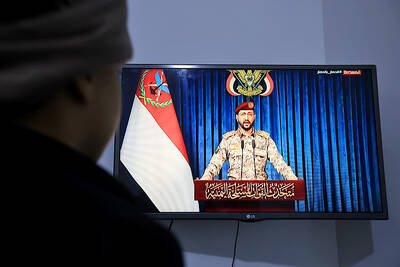
ON THE MOVE: Trump unexpectedly cut short a trip to return to the White House, while the State Department warned Americans to avoid travel to the Middle East The US on Saturday warned that hostilities between Saudi Arabia and Iran-backed Houthis could “escalate rapidly” after a missile attack targeted Riyadh for the first time since the Yemen conflict resumed. US President Donald Trump on Saturday cut short a weekend at Camp David, a secluded presidential complex in rural Maryland, to return unexpectedly to the White House. The White House gave no explanation for the early return, which comes as a new threshold was crossed in the conflict between Saudi Arabia and the Houthis, who control a large part of Yemen and are fighting government forces backed by a coalition led

The US military came close to boarding a Chinese vessel in the Middle East earlier this year based on a flawed intelligence report prepared with the help of artificial intelligence (AI), CNN said on Friday. US intelligence indicated the ship was carrying nuclear weapons-related components, leading US forces to prepare to intercept it, the broadcaster reported, citing four anonymous sources familiar with the incident. However, the operation was called off after officials determined that an AI chatbot used by an analyst had misidentified the material the ship was carrying. The report was “entirely false,” but “almost started a war,” CNN quoted one source
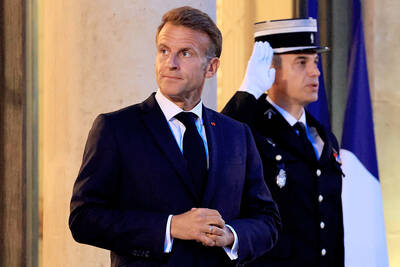
French President Emmanuel Macron today embarks on a rare and symbolic visit to a remote French territory in the North Atlantic, hosting Canadian Prime Minister Mark Carney at a time of growing tensions with Washington. The three-day visit to Saint Pierre and Miquelon, a three-island archipelago of less than 6,000 people just 25km off Newfoundland, would be the first by a French president in more than a decade. The trip to France’s only remaining possession in North America, a vestige of the huge territories Paris once controlled in what is now Canada and the US, carries immense symbolic resonance. Macron insists that US


 RSS
RSS