

A 50-year-old Spanish extreme athlete has emerged from spending 500 days living 70m deep in a cave outside Granada, Spain, with no contact with the outside world, in an experiment closely monitored by scientists seeking to learn more about the capacities of the human mind and circadian rhythms.
Beatriz Flamini, an elite mountaineer and climber, is said by her support team to have broken a world record for longest time spent in a cave. She was 48 when she went into the cave, and celebrated two birthdays alone underground.
She began her challenge on Saturday, Nov. 20, 2021 — before the outbreak of the Ukraine war, the resultant cost-of-living crisis, the end of Spain’s lengthy COVID-19 mask requirement and the death of Queen Elizabeth II.

Photo: AFP
Media coverage of her emergence into the light of spring was limited so as not to overwhelm her, but a broadcast on national television station TVE showed her wearing dark glasses and climbing out toward her support team grinning. Wearing masks, they encircled her in a hug.
Speaking shortly afterwards, she described her experience as “excellent, unbeatable.”
Pressed for more details by reporters, she added: “I’ve been silent for a year and a half, not talking to anyone but myself.”
“I lose my balance, that’s why I’m being held,” she said. “If you allow me to take a shower — I haven’t touched water for a year and a half — I’ll see you in a little while. Is that OK with you?”
Flamini spent her time underground doing exercises to keep her fit and busy, painting and drawing and knitting woolly hats.
She took two GoPro cameras to document her time, and got through 60 books and 1,000 liters of water, her support team said.
SCIENTIFIC BENEFIT
Flamini was monitored by a group of psychologists, researchers, speleologists — specialists in the study of caves — and physical trainers who watched her every move and monitored her physical and mental wellbeing, although they never made contact.
Her experience has been used by scientists at several Spanish universities and a Madrid-based sleep clinic.
They were studying the impact of social isolation and extreme temporary disorientation on people’s perception of time, the possible neuropsychological and cognitive changes humans undergo underground and the impact on circadian rhythms and sleep.

ON THE MOVE: Trump unexpectedly cut short a trip to return to the White House, while the State Department warned Americans to avoid travel to the Middle East The US on Saturday warned that hostilities between Saudi Arabia and Iran-backed Houthis could “escalate rapidly” after a missile attack targeted Riyadh for the first time since the Yemen conflict resumed. US President Donald Trump on Saturday cut short a weekend at Camp David, a secluded presidential complex in rural Maryland, to return unexpectedly to the White House. The White House gave no explanation for the early return, which comes as a new threshold was crossed in the conflict between Saudi Arabia and the Houthis, who control a large part of Yemen and are fighting government forces backed by a coalition led
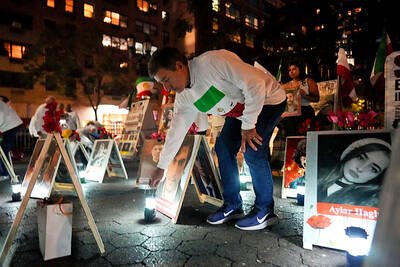
World leaders gather in New York this week for the UN General Assembly, bracing for US President Donald Trump’s return to the rostrum for a second year running, with talks centering on the widening conflicts in the Middle East and Ukraine and the risks of artificial intelligence (AI). Nearly 130 heads of state meet with the post-World War II order under strain and with the UN itself struggling to remain relevant and weathering attacks from Trump, who has slashed the US’ contributions and withdrawn from dozens of UN bodies. Chinese President Xi Jinping (習近平), who last addressed the diplomatic jamboree via video
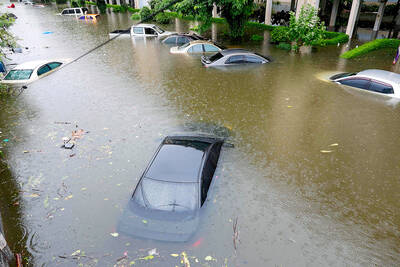
Several areas of Thailand’s capital city Bangkok were inundated by continuous rain from Thursday afternoon to yesterday morning that has disrupted traffic and forced some residents to evacuate. Major canals in Bangkok filled with accumulated rainfall exceeding 20cm, officials said yesterday. Floodwaters spread across the city, particularly in the central and eastern parts, blocking roads and stopping traffic. The Thai Meteorological Department warned that the heavy rain would continue in most parts of the country through today, citing a strong low-pressure system over the central region and strengthening southwest monsoon conditions. More than 84,000 people in 21 provinces nationwide were
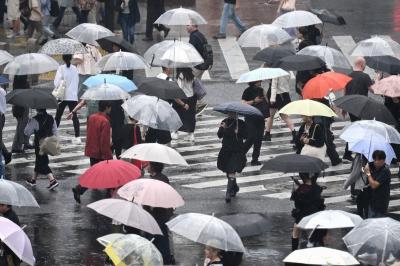
Typhoon Dujuan forced the cancellation of at least 275 flights in Japan today and prompted warnings of potentially record-breaking rainfall as the storm nears Tokyo. The typhoon, which is accompanied by high winds, has also led to the early closure in Tokyo of one the world’s biggest video game trade fairs and knocked out power for thousands. The Japan Meteorological Agency (JMA) warned yesterday that rain and winds were expected to intensify even before the typhoon’s arrival. “The total rainfall through Tuesday could exceed the average monthly rainfall for September, resulting in record-breaking heavy rain,” the agency said. The typhoon’s wind speeds were at


 RSS
RSS