


Anti-lockdown protesters yesterday clashed violently with police as hundreds of unmasked people marched through the streets of Melbourne.
Footage posted on social media showed protesters cheering, throwing objects at police officers and letting off flares, as well as police pepper-spraying protesters.
The Melbourne protests took place after Victoria Premier Daniel Andrews announced a lockdown in place across Melbourne would be extended across the entire state.
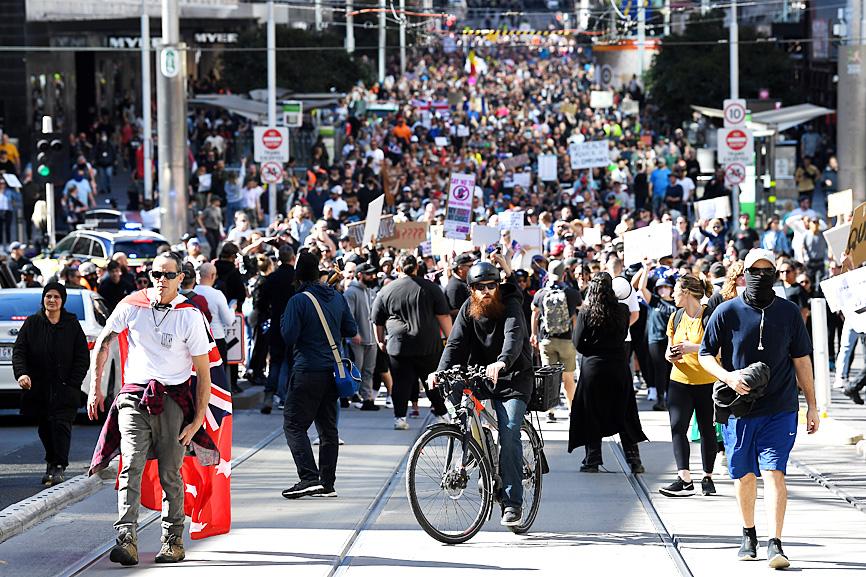
Photo: EPA-EFE
The state yesterday recorded 77 new cases of COVID-19.
More than 700 extra Victoria police officers were deployed to contain the lockdown protest, where social media videos showed hundreds were in attendance with some letting off flares.
People of all ages were seen walking through streets, shouting for “freedom,” while police condemned the marchers as selfish.
Public gatherings are not allowed in Victoria as the state tries to contain a surge in COVID-19 cases.
Police on horseback lined up to block the march, which appeared to start in Russell Street and join other groups.
Police blocked and herded protesters in Melbourne, with some officers using pepper spray to keep crowds back. Few people appeared to be wearing masks.
Earlier, Victoria police said they had issued six infringement notices against people they suspected were traveling to the protests.
A crowd estimated in the thousands gathered in Brisbane City Botanic Gardens to rally against the lockdown and vaccine measures.
In Sydney, police deployed more than 1,500 extra officers and issued orders banning taxis and Ubers from taking passengers into the central business district until 3pm yesterday. Trains were not allowed to stop at city center stations.
Footage taken near Victoria Park and posted on Twitter by ABC journalist Josh Bavas showed at least two men were arrested.
In New Zealand, 21 new COVID-19 cases were recorded.
New Zealand Prime Minister Jacinda Ardern said that the number would increase in the next few days, urging people to adhere to the lockdown rules.
The infections in the community outbreak of the highly transmissible Delta variant now total 51. Of the 21 new cases, 18 are in the largest city, Auckland, and three in the capital, Wellington.
Ardern on Friday extended the lockdown for the country of 5.1 million until midnight on Tuesday as the outbreak widened beyond the two key cities.
“One of the things that we’ve learned from New South Wales is that the virus can continue to spread during lockdown,” Ardern said of an outbreak in neighboring Australia’s most-populous state.
New South Wales on Saturday logged a record 825 cases as a Delta outbreak surges despite weeks-long lockdown.
“No one wants an extended lockdown and no one wants to see that rate of transmission, so the number one thing everyone can do right now is reduce down your contacts,” Ardern said.
New Zealand’s outbreak has been linked to a traveler from Sydney, the capital of New South Wales.
Additional reporting by Reuters
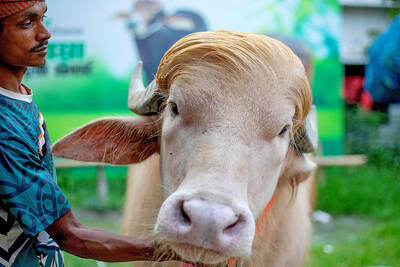
Crowds in Bangladesh are flocking to snap photographs with an unlikely social media star — an albino buffalo with flowing blond hair nicknamed “Donald Trump” that is due to be sacrificed within days. Owner Zia Uddin Mridha, 38, said his brother named the 700kg bull over its flowing helmet of hair resembling the signature look of the US president. “My younger brother picked this name because of the buffalo’s extraordinary hair,” he said at his farm in Narayanganj, just outside the capital, Dhaka. Mridha said that a constant stream of curious visitors — social media fans, onlookers and children — have come throughout

It began as a satirical online project. Now millions of young people in India are flocking to it as an outlet for their frustration. A parody political party called the Cockroach Janta Party, with the insect as its symbol, has exploded across India’s social media by turning absurdist humor into protest. Memes and short videos mocking corruption, joblessness and political dysfunction have flooded social media sites, where millions of users are embracing the cockroach — known for its ability to survive harsh conditions — as a tongue-in-cheek symbol of endurance. The online movement’s rise has been unusually rapid. The Cockroach Janta Party (CJP)
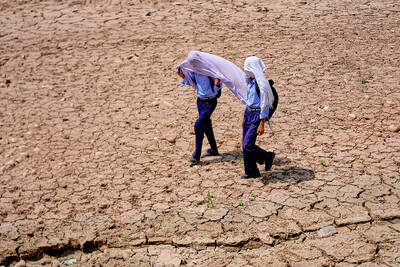
HOTTER: While Indians are accustomed to summer heat, climate change has caused northwestern India to warm faster than other parts of the country, an academic said Roads and markets have emptied during afternoons and some farmers have switched to nighttime work to avoid scorching temperatures as a heat wave grips large parts of India. The India Meteorological Department forecast maximum temperatures for yesterday of about 45°C in the capital, New Delhi, where authorities have opened temporary “cooling zones” to help people cope. The weather department warned that conditions would likely persist across several northern regions in the coming days, with temperatures staying well above seasonal averages. Authorities urged people to stay indoors during the hottest hours and take precautions against heat-related illnesses. India declares a heat wave whenever maximum temperatures
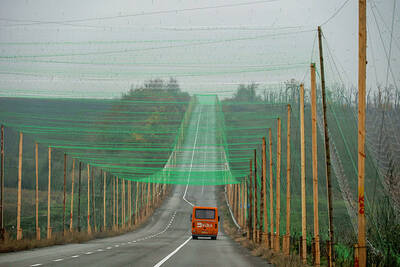
BIGGER ROLE: Beijing has said it maintains an impartial stance on the war in Ukraine, but by training Russian troops, China is far more involved than previously known China’s armed forces secretly trained about 200 Russian military personnel in China late last year, and some have since returned to fight in Ukraine, according to three European intelligence agencies and documents seen by Reuters. While China and Russia have held a number of joint military exercises since Moscow’s full-scale invasion of Ukraine in 2022, Beijing has repeatedly said that it is neutral in the conflict and presents itself as a peace mediator. The covert training sessions, which predominantly focused on the use of drones, were outlined in a dual-language Russian-Chinese agreement signed by senior Russian and Chinese officers in Beijing on


 RSS
RSS