


Papua New Guinean security services yesterday called for calm, as incidents of rioting and looting followed the death of a beloved former prime minister.
Papua New Guinean Minister for Police William Onglo said that officers would “step in to fully restore order” after disturbances in Port Moresby and the second city of Lae.
Several stores were reportedly ransacked during a national day of mourning for the nation’s first prime minister and “father of the nation” Sir Michael Somare, who died of pancreatic cancer on Friday last week.
“Rioting is never our Melanesian way to show respect,” Onglo said in a statement.
Somare’s daughter, Dulciana, decried reports of “looting and property being destroyed,” urging compatriots to follow her father’s “composure and gentle ways.”
“My darling Dadda we are not ready for a Papua New Guinea without you in it,” she said.
Known across the nation simply as “The Chief,” Somare led Papua New Guinea at its independence from Australia in 1975 and was prime minister for 17 years, in three separate terms.
A national holiday had been declared to commemorate his passing, forcing businesses to close.
In one instance in Lae, an Asian-owned store appeared to have been specifically targeted.
Local media showed footage of dozens of people, including children, running from the store carrying snacks and bottles of drinks.
Several Asian-owned stores were raided last year, seemingly in response to the COVID-19 pandemic.
Papua New Guinean Police Commissioner David Manning on Friday last week had warned against unrest, saying officers “throughout the country will be out in full force to ensure that opportunists do not take this sad day in our history to create fear and panic.”
Papua New Guinea is one of the poorest nations in the Pacific. Violent crime and social unrest are commonplace.
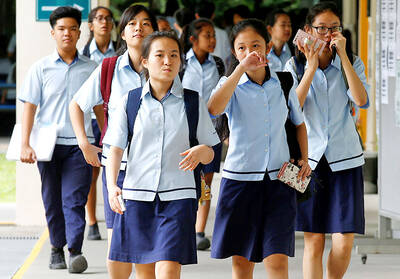
School bullies in Singapore are to face caning under new guidelines, but the education minister on Tuesday said it would be meted out only as a last resort with strict safeguards. Human rights groups regularly criticize Singapore for the use of corporal punishment, which remains part of the school and criminal justice systems, but authorities have defended it as a deterrent to crime and serious misconduct. Caning was discussed in the parliament after legislators asked how it would be used in relation to bullying in schools. The debate followed stricter guidelines on serious student misconduct, including bullying, unveiled by the Singaporean Ministry of
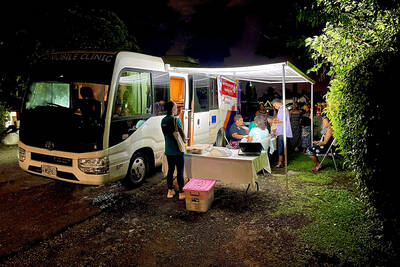
As evening falls in Fiji’s capital, a steady stream of people approaches a makeshift clinic that is a first line of defense against one of the world’s fastest-growing HIV epidemics. In the South Pacific nation — a popular tourist destination of just under a million people — more than 2,000 new HIV cases were recorded last year, a 26 percent increase from 2024. The government has declared an HIV outbreak and described it as a national crisis. “It’s spreading like wildfire,” said Siteri Dinawai, 46, who came to be tested. The Moonlight Clinic, a converted minibus parked in a suburban cul-de-sac in Suva, is
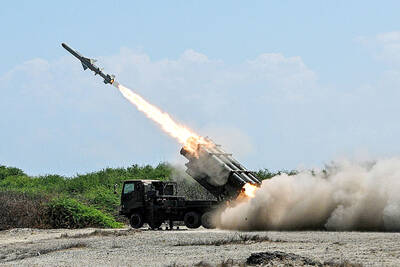
A MESSAGE: Japan’s participation in the Balikatan drills is a clear deterrence signal to China not to attack Taiwan while the US is busy in the Middle East, an analyst said The Japan Self-Defense Forces yesterday fired a Type 88 anti-ship missile during a joint maritime exercise with US, Australian and Philippine forces, hitting a decommissioned Philippine Navy ship in waters facing the disputed South China Sea, in drills that underscore Tokyo’s rising willingness to project military power on China’s doorstep. The drill took place as Manila and Tokyo began talks on a potential defense equipment transfer, made possible by Japan’s decision to scrap restrictions on military exports. The discussions include the possible early transfer of Abukuma-class destroyers and TC-90 aircraft to the Philippines, Japanese Minister of Defense Shinjiro Koizumi said. Philippine Secretary of
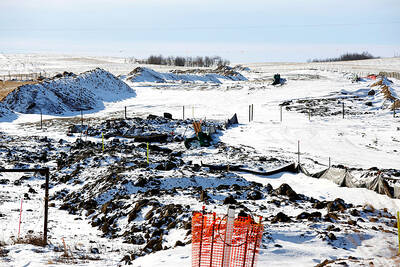
Separatists in Alberta are preparing to submit a petition tomorrow that they said has enough signatures to force a referendum on independence for the oil-rich Canadian province. Polls indicate the pro-independence camp remains a minority among Alberta’s 5 million people, but has hit a historic high of roughly 30 percent. Alberta separatists are also closer than ever to forcing a referendum, riding momentum fueled by intensifying grievances over Ottawa’s control of the provincial oil industry. They have also undeniably gotten a boost from the return to power of US President Donald Trump. After launching a petition in January, Stay Free Alberta, the group


 RSS
RSS