


The Russian Navy conducted major war games near the US state of Alaska involving dozens of ships and aircraft, the military said on Friday.
Russian Navy Admiral Nikolai Yevmenov said that more than 50 warships and about 40 aircraft were taking part in the exercise in the Bering Sea, which involved multiple practice missile launches.
“We are holding such massive drills there for the first time ever,” Yevmenov said in a statement released by the Russian Ministry of Defense.
It was not immediately clear when the exercises began or if they had finished.
The war games are part of Russia’s efforts to boost its presence in the Arctic region and protect its resources, Yevmenov said.
“We are building up our forces to ensure the economic development of the region,” he said. “We are getting used to the Arctic spaces.”
The Russian military has revamped and expanded numerous facilities across the polar region in the past few years, revamping runways and deploying additional air defense assets.
The Arctic is believed to hold up to one-quarter of the Earth’s undiscovered oil and gas.
Russian President Vladimir Putin has cited estimates that put the value of Arctic mineral riches at US$30 trillion.
Nuclear submarine Omsk and missile cruiser Varyag launched cruise missiles at a practice target in the Bering Sea as part of the exercise, Russia’s Pacific Fleet said.
Missiles were also being fired at a practice target in the Gulf of Anadyr from the coast of the Chukchi Peninsula, it added.
As the exercise was ongoing, the US military spotted a Russian submarine surfacing near Alaska on Thursday.
US Northern Command spokesman Bill Lewis said that the Russian military exercise is taking place in international waters, well outside US territory.
The North American Aerospace Defense Command (NORAD) and US Northern Command were closely monitoring the submarine, Lewis said, adding that the US has not received any requests for assistance from the Russian Navy, but stands ready to assist vessels in distress.
Russian RIA Novosti news agency quoted Pacific Fleet sources as saying that the surfacing of the Omsk was routine.
Meanwhile, NORAD sent F-22s to intercept three groups of two Tu-142 Russian maritime patrol aircraft that came close to Alaska, Lewis said.
The Russian aircraft remained in the area for about five hours and came within 90km of Alaska. US officials said the Russian jets stayed in international air space and at no time entered US or Canadian sovereign air space.
“Our northern approaches have had an increase in foreign military activity as our competitors continue to expand their military presence and probe our defenses,” said Lieutenant General Glen VanHerck, commander of NORAD.
“This year, we’ve conducted more than a dozen intercepts, the most in recent years. The importance of our continued efforts to project air defense operations in and through the north has never been more apparent,” he said.
The presence of Russian military assets in the area caused a stir for US commercial fishing vessels in the Bering Sea on Wednesday.
“We were notified by multiple fishing vessels that were operating out the Bering Sea that they had come across these vessels and were concerned,” US Coast Guard spokesman Kip Wadlow said on Thursday.
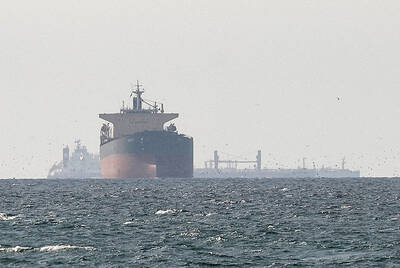
A ship that appears to be taking on the identity of a scrapped gas carrier exited the Strait of Hormuz on Friday, showing how strategies to get through the waterway are evolving as the Middle East war progresses. The vessel identifying as liquefied natural gas (LNG) carrier Jamal left the Strait on Friday morning, ship-tracking data show. However, the same tanker was also recorded as having beached at an Indian demolition yard in October last year, where it is being broken up, according to market participants and port agent’s reports. The ship claiming to be Jamal is likely a zombie vessel that

Japan is to downgrade its description of ties with China from “one of its most important” in an annual diplomatic report, according to a draft reviewed by Reuters, as relations with Beijing worsen. This year’s Diplomatic Bluebook, which Japanese Prime Minister Sanae Takaichi’s government is expected to approve next month, would instead describe China as an important neighbor and the relationship as “strategic” and “mutually beneficial.” The draft cites a series of confrontations with Beijing over the past year, including export controls on rare earths, radar lock-ons targeting Japanese military aircraft and increased pressure around Taiwan. The shift in tone underscores a deterioration

LAW CONSTRAINTS: The US has been pressing allies to send warships to open the Strait, but Tokyo’s military actions are limited under its postwar pacifist constitution Japan could consider deploying its military for minesweeping in the Strait of Hormuz if a ceasefire is reached in the war on Iran, Japanese Minister of Foreign Affairs Toshimitsu Motegi said yesterday. “If there were to be a complete ceasefire, hypothetically speaking, then things like minesweeping could come up,” Motegi said. “This is purely hypothetical, but if a ceasefire were established and naval mines were creating an obstacle, then I think that would be something to consider.” Japan’s military actions are limited under its postwar pacifist constitution, but 2015 security legislation allows Tokyo to use its Self-Defense Forces overseas if an attack,

German Chancellor Friedrich Merz’s conservative Christian Democratic Union (CDU) yesterday faced a regional election battle in Rhineland-Palatinate, now held by the center-left Social Democratic Party (SPD). Merz’s CDU has enjoyed a narrow poll lead over the SPD — their coalition partners at the national level — who have ruled the mid-sized state for 35 years. Polling third is the far-right Alternative for Germany (AfD), which spells a greater threat to the two centrist parties in several state elections in September in the country’s ex-communist east. The picturesque state of Rhineland-Palatinate, bordering France, Belgium and Luxembourg and with a population of about 4 million,


 RSS
RSS