


US President Donald Trump said he was not briefed on US intelligence related to Russian activity in Afghanistan because it was not thought “credible” by the country’s intelligence agencies.
An explosive New York Times report, citing anonymous officials, said that the US president had been told about findings that reportedly showed Russia had offered bounties to Taliban-linked militants for killing US soldiers.
Trump on Sunday denied having been briefed on the matter, as the report renewed questions about his reluctance to confront Russia over behavior that, if accurate, would represent a serious national security challenge.
“Intel just reported to me that they did not find this info credible, and therefore did not report it to me or @VP,” Trump tweeted late on Sunday, referring to US Vice President Mike Pence.
According to the Times report, US intelligence had concluded that a Russian military intelligence unit offered rewards to Taliban-linked militants to kill troops of the US-led coalition in Afghanistan.
The rewards were purportedly incentives to target US forces as Trump tries to withdraw US troops from the conflict-torn country — one of the militants’ key demands — and end the US’ longest war.
The newspaper said that Trump was briefed on the US intelligence findings in March, but has not decided how to respond.
Early on Sunday morning, Trump had criticized the report as “probably just another phony Times hit job, just like their failed Russia Hoax.”
“Nobody briefed or told me, @VP Pence, or Chief of Staff @MarkMeadows about the so-called attacks on our troops in Afghanistan by Russians, as reported through an ‘anonymous source’ by the Fake News @nytimes,” he tweeted. “Everybody is denying it & there have not been many attacks on us... Nobody’s been tougher on Russia than the Trump Administration.”
New US Director of National Intelligence John Ratcliffe issued a statement late on Saturday denying Trump or Pence had been briefed “on any intelligence alleged by the New York Times in its reporting.”
He also vouched for Saturday’s White House statement, which denied that the US president had been briefed on the intelligence, but left open the possibility that it existed.
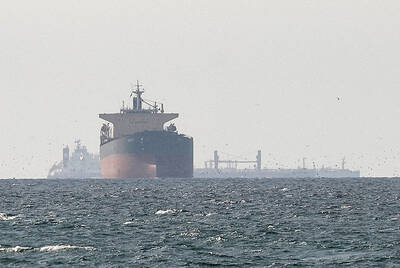
A ship that appears to be taking on the identity of a scrapped gas carrier exited the Strait of Hormuz on Friday, showing how strategies to get through the waterway are evolving as the Middle East war progresses. The vessel identifying as liquefied natural gas (LNG) carrier Jamal left the Strait on Friday morning, ship-tracking data show. However, the same tanker was also recorded as having beached at an Indian demolition yard in October last year, where it is being broken up, according to market participants and port agent’s reports. The ship claiming to be Jamal is likely a zombie vessel that

German Chancellor Friedrich Merz’s conservative Christian Democratic Union (CDU) yesterday faced a regional election battle in Rhineland-Palatinate, now held by the center-left Social Democratic Party (SPD). Merz’s CDU has enjoyed a narrow poll lead over the SPD — their coalition partners at the national level — who have ruled the mid-sized state for 35 years. Polling third is the far-right Alternative for Germany (AfD), which spells a greater threat to the two centrist parties in several state elections in September in the country’s ex-communist east. The picturesque state of Rhineland-Palatinate, bordering France, Belgium and Luxembourg and with a population of about 4 million,

Ugandan wildlife authorities have reintroduced rhinos into a remote protected area where they were once poached into extinction, an event seen by conservationists as a milestone in efforts to support the recovery of a species threatened by poaching. On Tuesday, two southern white rhinos from a private ranch in the East African country were reintroduced into Kidepo Valley National Park in the country’s northeast. Two more rhinos in metallic crates arrived on Thursday. There have been no rhinos in the park since 1983, the result of poaching. However, a private ranch in central Uganda — the Ziwa Rhino Sanctuary — has been
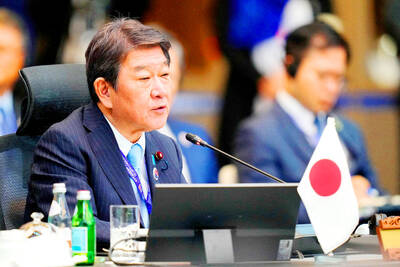
LAW CONSTRAINTS: The US has been pressing allies to send warships to open the Strait, but Tokyo’s military actions are limited under its postwar pacifist constitution Japan could consider deploying its military for minesweeping in the Strait of Hormuz if a ceasefire is reached in the war on Iran, Japanese Minister of Foreign Affairs Toshimitsu Motegi said yesterday. “If there were to be a complete ceasefire, hypothetically speaking, then things like minesweeping could come up,” Motegi said. “This is purely hypothetical, but if a ceasefire were established and naval mines were creating an obstacle, then I think that would be something to consider.” Japan’s military actions are limited under its postwar pacifist constitution, but 2015 security legislation allows Tokyo to use its Self-Defense Forces overseas if an attack,


 RSS
RSS