


Cruise ships are drowning out seals’ roars that are important for securing a mate, researchers found in one of the latest studies to reveal the consequences of human activity on wildlife.
Ships are known to produce low-frequency sounds that can overlap with calls made by marine creatures, but researchers studying harbor seals have said that such noise could be taking its toll.
“As it gets noisier, it becomes harder for harbor seals to be heard,” Cornell University researcher and study coauthor Michelle Fournet said, adding that the animals’ roars serve a number of purposes — including advertising to females and establishing territories underwater.
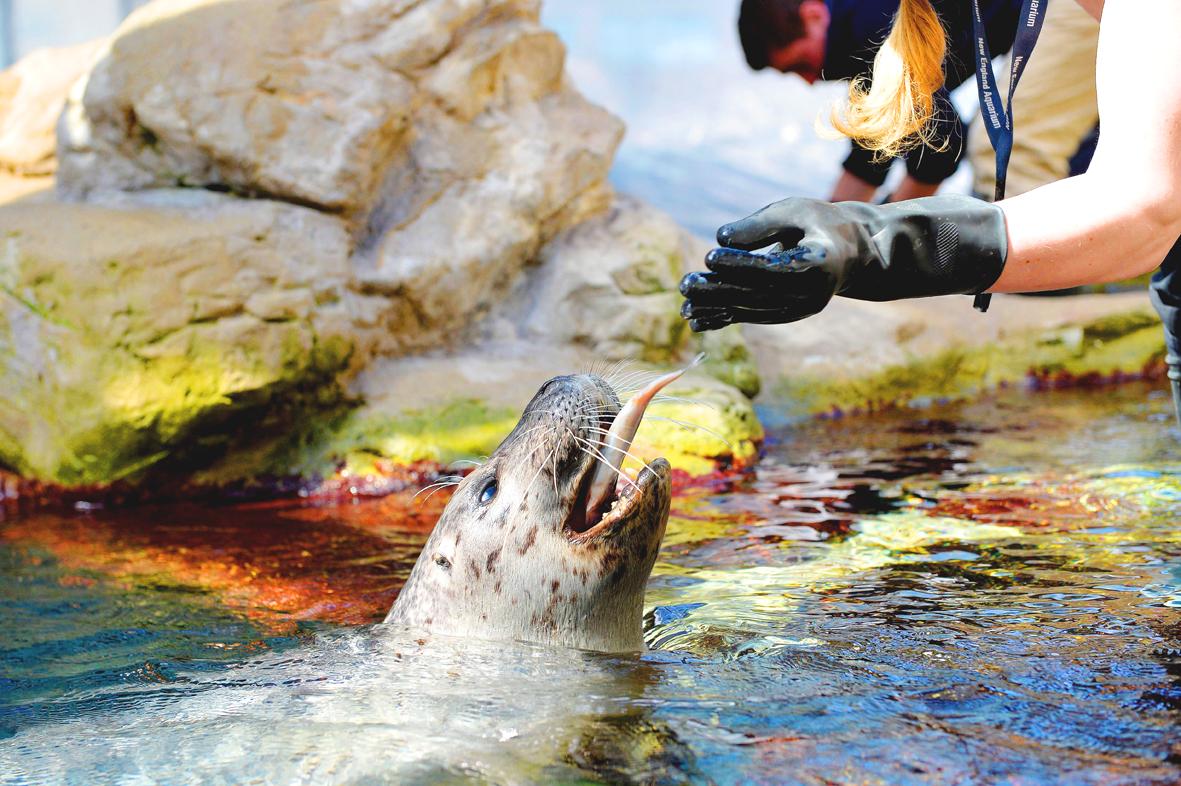
Photo: AFP
Fournet and colleagues reported in the journal Biology Letters that they lowered an array of microphones into Glacier Bay in Alaska and recorded underwater sounds between May and October 2015, before analyzing data from a nine-day period that overlapped with the peak breeding period for harbor seals.
Among the sounds recorded were roars of male harbor seals, as well as noise from other animals and passing ships.
“Vessels in general are one of the largest contributors to underwater sound in this area,” Fournet said.
Overall, the team analyzed recordings of 545 underwater roars, produced by at least four male harbor seals.
Fournet said that widespread animals, such as harbor seals, are generally thought to be resilient to human activity, but the team found little — if any — difference in the loudness of the seals’ roars during noisy periods, when cruise ships were known to be passing, compared with those made during quiet periods, when the ships were absent.
The duration or frequency of the roars also showed no tangible difference.
The team instead found that the loudness of a roar beyond the rest of the soundscape fell by about 0.86 decibels for every 1 decibel increase in noise in the environment caused by the cruise ships, meaning that the area over which they could communicate shrank.
“Because the harbor seals are already calling as loud as they can possibly call, as ocean noise gets louder, the ability to detect that signal goes down,” Fournier said, adding that the animals were likely calling loudly even during quiet periods, as this would be advantageous both in bagging a mate and defending territory — but it meant that they might not be able to turn up the volume when cruise ships passed by.
The findings might mean that it is more difficult for males to find a mate, not least since the peak time for vessels overlaps with the animals’ breeding season, the team said.
Further research is needed to see if this is the case, the team said, adding that the passage of cruise ships in Glacier Bay is concentrated to just two periods of the day.
The COVID-19 pandemic has opened up new opportunities for research, Fournier said.
“We are working right now on trying to get a hydrophone in the water so that we can listen [during breeding season] in the absence of ships for the first time,” she said.
Noise from human activity has been increasing in the oceans, a trend that could change animals’ behavior or mask sounds that they make for important activities, said University of Portsmouth marine scientist Sarah Marley, an expert on the effects of noise on marine animals and who was not involved in the study.
However, the new findings do not necessarily mean that harbor seals have failed to adapt, she said, adding that even quiet times in Glacier Bay might be noisier than locations without any shipping and hence require a louder roar.
“It could be that the seals are already roaring at maximum levels during the so-called ‘quiet’ periods, and just can’t go any further to communicate during the really noisy periods,” she said.
Marley added that the findings could have important ramifications for the UK, which has a population of about 43,000 harbor seals living in areas that, at least in part, overlap with those used by humans.
“If artificial noise is impeding the breeding success of harbor seals, this could have important repercussions at the local and national level for seal management and conservation,” she said.
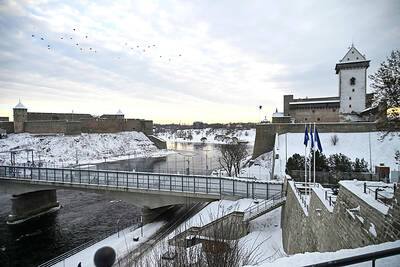
Two medieval fortresses face each other across the Narva River separating Estonia from Russia on Europe’s eastern edge. Once a symbol of cooperation, the “Friendship Bridge” connecting the two snow-covered banks has been reinforced with rows of razor wire and “dragon’s teeth” anti-tank obstacles on the Estonian side. “The name is kind of ironic,” regional border chief Eerik Purgel said. Some fear the border town of more than 50,0000 people — a mixture of Estonians, Russians and people left stateless after the fall of the Soviet Union — could be Russian President Vladimir Putin’s next target. On the Estonian side of the bridge,

Jeremiah Kithinji had never touched a computer before he finished high school. A decade later, he is teaching robotics, and even took a team of rural Kenyans to the World Robotics Olympiad in Singapore. In a classroom in Laikipia County — a sparsely populated grasslands region of northern Kenya known for its rhinos and cheetahs — pupils are busy snapping together wheels, motors and sensors to assemble a robot. Guiding them is Kithinji, 27, who runs a string of robotics clubs in the area that have taken some of his pupils far beyond the rural landscapes outside. In November, he took a team

Civil society leaders and members of a left-wing coalition yesterday filed impeachment complaints against Philippine Vice President Sara Duterte, restarting a process sidelined by the Supreme Court last year. Both cases accuse Duterte of misusing public funds during her term as education secretary, while one revives allegations that she threatened to assassinate former ally Philippine President Ferdinand Marcos Jr. The filings come on the same day that a committee in the House of Representatives was to begin hearings into impeachment complaints against Marcos, accused of corruption tied to a spiraling scandal over bogus flood control projects. Under the constitution, an impeachment by the
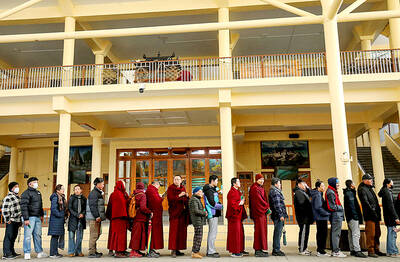
Exiled Tibetans began a unique global election yesterday for a government representing a homeland many have never seen, as part of a democratic exercise voters say carries great weight. From red-robed Buddhist monks in the snowy Himalayas, to political exiles in megacities across South Asia, to refugees in Australia, Europe and North America, voting takes place in 27 countries — but not China. “Elections ... show that the struggle for Tibet’s freedom and independence continues from generation to generation,” said candidate Gyaltsen Chokye, 33, who is based in the Indian hill-town of Dharamsala, headquarters of the government-in-exile, the Central Tibetan Administration (CTA). It


 RSS
RSS