


From meditation to memory games, former political prisoners in Myanmar are dishing out tips on surviving isolation during a pandemic as the country once severed from the world again closes its borders.
The Southeast Asian state spent nearly half a century under a paranoid, secretive junta that violently suppressed dissent, jailed its critics and locked the country off as it drove the economy into ruin.
Pro-democracy activist Bo Kyi, 56, was one of thousands jailed, spending eight years behind bars in the 1990s. His punishment included 12 months in solitary confinement in a 2.5m by 3.5m cell furnished with just a bowl for a toilet and a mat to sleep on.
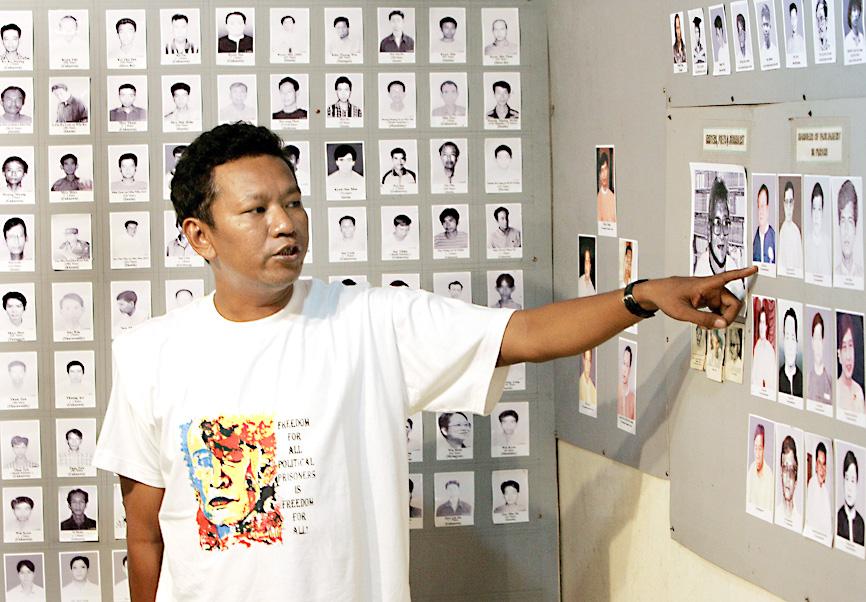
Photo: AFP
Last week he posted advice on Facebook about how to cope with isolation to his compatriots holed up at home, gripped by fears over the coronavirus in a country with a threadbare public health system.
“I wanted to make sure people don’t get too down,” Bo Kyi said.
“Do something! This is the best medicine when you are [in] isolation,” he wrote in the post, signed off “In Solidarity.”
During his detention, Bo Kyi devoted himself to learning English, helped by a friendly guard who each day smuggled in a page from a dictionary.
The prisoner would memorize every word, then eat the page to destroy the evidence.
Accepting his reality and avoiding negative news helped keep him sane, he said, adding he also used to meditate and walk 6,000 steps a day to keep healthy.
Myanmar has reported just 21 cases of COVID-19, including one death, but experts say the low number of people tested for the virus means the real figure is likely many times higher.
There are fears that the country’s health system would be easily overwhelmed when cases rise. Myanmar is thought to have fewer than 200 ventilators for a population of 55 million.
Borders and entry points are firmly shut as the country hunkers down, back in isolation sooner than many imagined possible after the end of outright military rule in 2011.
“We’re heading back to that situation again — and it’s not a happy one,” said analyst Khin Zaw Win, who also spent 11 years incarcerated.
State media have led cheerleading for a national spirit of self-reliance, championing those in self-imposed quarantine as “frontline prevention warriors.”
The upbeat jingle Go Away Corona, blasted from loudspeakers on trucks spraying disinfectant, urges people to wash their hands, eat healthily and stay inside.
“People are the key” is Myanmar’s motto of the moment, repeated in speeches by Burmese State Councilor Aung San Suu Kyi, the nation’s COVID-19 taskforce head.
She remains a heroine for most within Myanmar in spite of her tarnished reputation abroad.
A video of Suu Kyi demonstrating hand washing has clocked up likes online, while her supporters jumped to follow her new Facebook account, opened during the crisis to communicate better with a country addicted to the platform.
She is herself an authority on self-isolation, having languished under house arrest for 15 years in the junta era.
After her release in 2010, she described how she would meditate, listen to the radio and read voraciously.
“There is a very strong resilience embedded in Myanmar society,” Khin Zaw Win said.
He even asked whether older people might weather today’s isolation better than youngsters, saying: “My generation is used to this.”
Other ex-political prisoners contacted by reporters were similarly sanguine about today’s crisis.
They urged people to stay calm, support each other and devote time to neglected hobbies such as gardening or gaming.
Bo Kyi said he navigated the psychological torment of jail by not dwelling on his release date — a lesson for everyone during a pandemic with no immediate end in sight.
“Instead, focus on things in your control,” he said.
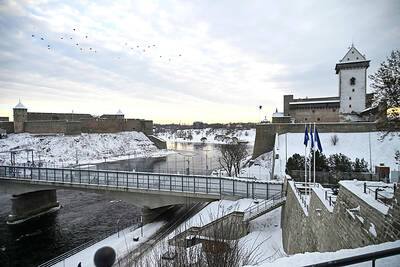
Two medieval fortresses face each other across the Narva River separating Estonia from Russia on Europe’s eastern edge. Once a symbol of cooperation, the “Friendship Bridge” connecting the two snow-covered banks has been reinforced with rows of razor wire and “dragon’s teeth” anti-tank obstacles on the Estonian side. “The name is kind of ironic,” regional border chief Eerik Purgel said. Some fear the border town of more than 50,0000 people — a mixture of Estonians, Russians and people left stateless after the fall of the Soviet Union — could be Russian President Vladimir Putin’s next target. On the Estonian side of the bridge,

Jeremiah Kithinji had never touched a computer before he finished high school. A decade later, he is teaching robotics, and even took a team of rural Kenyans to the World Robotics Olympiad in Singapore. In a classroom in Laikipia County — a sparsely populated grasslands region of northern Kenya known for its rhinos and cheetahs — pupils are busy snapping together wheels, motors and sensors to assemble a robot. Guiding them is Kithinji, 27, who runs a string of robotics clubs in the area that have taken some of his pupils far beyond the rural landscapes outside. In November, he took a team
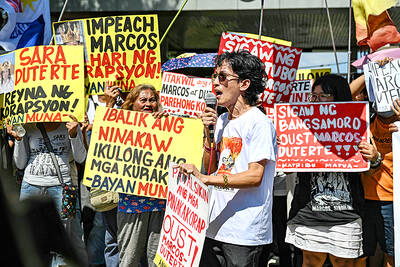
Civil society leaders and members of a left-wing coalition yesterday filed impeachment complaints against Philippine Vice President Sara Duterte, restarting a process sidelined by the Supreme Court last year. Both cases accuse Duterte of misusing public funds during her term as education secretary, while one revives allegations that she threatened to assassinate former ally Philippine President Ferdinand Marcos Jr. The filings come on the same day that a committee in the House of Representatives was to begin hearings into impeachment complaints against Marcos, accused of corruption tied to a spiraling scandal over bogus flood control projects. Under the constitution, an impeachment by the
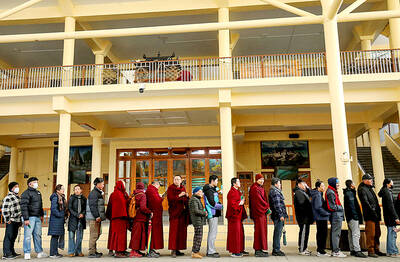
Exiled Tibetans began a unique global election yesterday for a government representing a homeland many have never seen, as part of a democratic exercise voters say carries great weight. From red-robed Buddhist monks in the snowy Himalayas, to political exiles in megacities across South Asia, to refugees in Australia, Europe and North America, voting takes place in 27 countries — but not China. “Elections ... show that the struggle for Tibet’s freedom and independence continues from generation to generation,” said candidate Gyaltsen Chokye, 33, who is based in the Indian hill-town of Dharamsala, headquarters of the government-in-exile, the Central Tibetan Administration (CTA). It


 RSS
RSS