


Room 911 at Hong Kong's Metropole Hotel was the epicenter of the global SARS outbreak. A year last Saturday, a sick doctor from southern China checked in, bringing with him a terrifying virus that would spread panic and death through Hong Kong and the world.
Yesterday was the anniversary of the day Professor Liu Jianlun was rushed to a nearby hospital after infecting at least 16 guests and visitors.
One year on, every room in the Kowloon hotel was full except for the one he stayed in -- room 911 no longer exists.
The room, which hotel management once considered turning into a museum dedicated to the SARS outbreak, has had the brass plaque bearing the infamous number on its door removed and has replaced it with the number 913.
Every subsequent odd-numbered room on the ninth floor, where Liu infected guests and visitors from Hong Kong, Canada and Singapore who would take the virus around the world, has had its number changed too.
Guests are apparently being told nothing of the hotel's bizarre decision to renumber room 911 out of existence.
A reporter who phoned to ask what had happened to room 911 was told brusquely by a duty manager: "The number of that room has always been 913."
A request to the operator on the in-house phone to put a call through to room 911 was met with the response: "I'm sorry but that line is engaged." A "clean up room" light was on outside room 913, showing it was occupied, though no one answered the door.
The role played by Liu and room 911 in the global SARS outbreak cannot be overstated. It was the subject of an investigation by the WHO, which believes most of the 8,422 cases and 916 deaths in 29 countries can be traced back to the Metropole, excluding those in China.
Liu, a respiratory diseases expert in one of Guangzhou's biggest hospitals, was already infected with SARS when he arrived in Hong Kong on Feb. 21, 2003. The next day he was admitted to the Kwong Wah Hospital hundreds of meters from the hotel, where he died on March 4.
At first it was thought that he spread the virus by coughing and sneezing on fellow guests as they waited for a lift together in the ninth floor corridor. Later, investigations found he may have been sick on the carpet outside room 911, which may have spread the virus.
Overseas guests -- including a 78-year-old woman from Toronto, an American-Chinese businessman bound for Hanoi and three Singaporeans -- carried the virus overseas while a 26-year-old airport technician visiting a friend on the ninth floor was later admitted to the Prince Of Wales Hospital, setting off an outbreak there.
Business continued as usual at the Metropole until its fatal link with the outbreak was discovered on March 19, setting off panic among guests and an exodus from the 487-room hotel.
It seemed in the months afterwards that business would never recover and resident manager Kaivin Ng said on June 22 last year, when occupancy rates recovered to 20 percent: "We might turn the whole floor, or just room 911 where Professor Liu stayed, into a museum."
Soon after, however, the ninth floor was reopened as the spectre of SARS passed and tourists -- particularly the growing number of Chinese tourists allowed in on package tours -- flooded back into Hong Kong with a vengeance.
On Saturday, the hotel's restaurant and lobby was bustling with guests mostly from China who seemed unconcerned about the grim history of the hotel.
Only one man walking into the lobby restaurant was wearing a face mask, the ubiquitous symbol of last year's Hong Kong SARS outbreak.
A receptionist said: "The hotel is fully booked."
A concierge remarked: "We're bursting at the seams. If you want to book a room, you should call at least a week in advance."
One guest, retired Geraldine Pearse from Swansea in Wales, who was staying at the Metropole for four nights as part of a package tour, said: "I thought this was the SARS hotel at the time I booked it but I didn't want to ask when I got here."
"Anyway I'm a great believer that when your time's up, your time's up," Pearse said.
Even if I'd known for sure it wouldn't have stopped me staying here. It must have been very scary here at the time but Hong Kong has been clear of SARS for a long time now," Pearse said.
I'd be more worried about going to Bangkok because of bird flu right now," Pearse said.
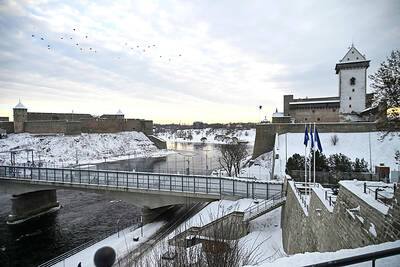
Two medieval fortresses face each other across the Narva River separating Estonia from Russia on Europe’s eastern edge. Once a symbol of cooperation, the “Friendship Bridge” connecting the two snow-covered banks has been reinforced with rows of razor wire and “dragon’s teeth” anti-tank obstacles on the Estonian side. “The name is kind of ironic,” regional border chief Eerik Purgel said. Some fear the border town of more than 50,0000 people — a mixture of Estonians, Russians and people left stateless after the fall of the Soviet Union — could be Russian President Vladimir Putin’s next target. On the Estonian side of the bridge,
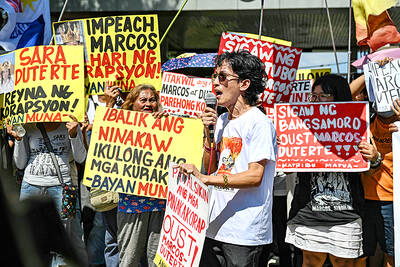
Civil society leaders and members of a left-wing coalition yesterday filed impeachment complaints against Philippine Vice President Sara Duterte, restarting a process sidelined by the Supreme Court last year. Both cases accuse Duterte of misusing public funds during her term as education secretary, while one revives allegations that she threatened to assassinate former ally Philippine President Ferdinand Marcos Jr. The filings come on the same day that a committee in the House of Representatives was to begin hearings into impeachment complaints against Marcos, accused of corruption tied to a spiraling scandal over bogus flood control projects. Under the constitution, an impeachment by the
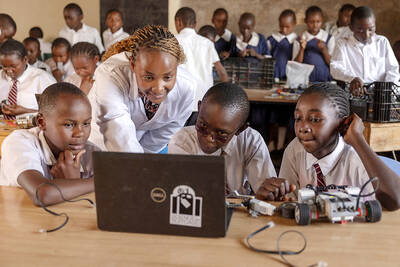
Jeremiah Kithinji had never touched a computer before he finished high school. A decade later, he is teaching robotics, and even took a team of rural Kenyans to the World Robotics Olympiad in Singapore. In a classroom in Laikipia County — a sparsely populated grasslands region of northern Kenya known for its rhinos and cheetahs — pupils are busy snapping together wheels, motors and sensors to assemble a robot. Guiding them is Kithinji, 27, who runs a string of robotics clubs in the area that have taken some of his pupils far beyond the rural landscapes outside. In November, he took a team
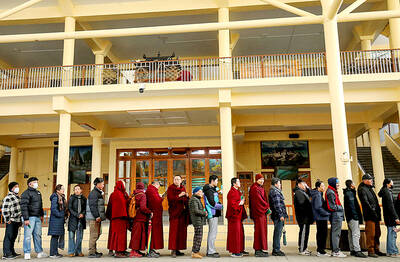
Exiled Tibetans began a unique global election yesterday for a government representing a homeland many have never seen, as part of a democratic exercise voters say carries great weight. From red-robed Buddhist monks in the snowy Himalayas, to political exiles in megacities across South Asia, to refugees in Australia, Europe and North America, voting takes place in 27 countries — but not China. “Elections ... show that the struggle for Tibet’s freedom and independence continues from generation to generation,” said candidate Gyaltsen Chokye, 33, who is based in the Indian hill-town of Dharamsala, headquarters of the government-in-exile, the Central Tibetan Administration (CTA). It


 RSS
RSS