

Four more Taiwanese have gone missing or been detained or had their freedom of movement restricted in China compared with the previous week, with the total reaching 449 since Jan. 1, 2024, the Mainland Affairs Council (MAC) said in a weekly report on Saturday.
Of the 449 cases, 168 people have been reported missing, up from 165 from the previous week, and 39 have been detained for questioning, unchanged from the previous week, the council said.
Another 242 people are suspected of having their freedom of movement restricted in China, up by one, it said.
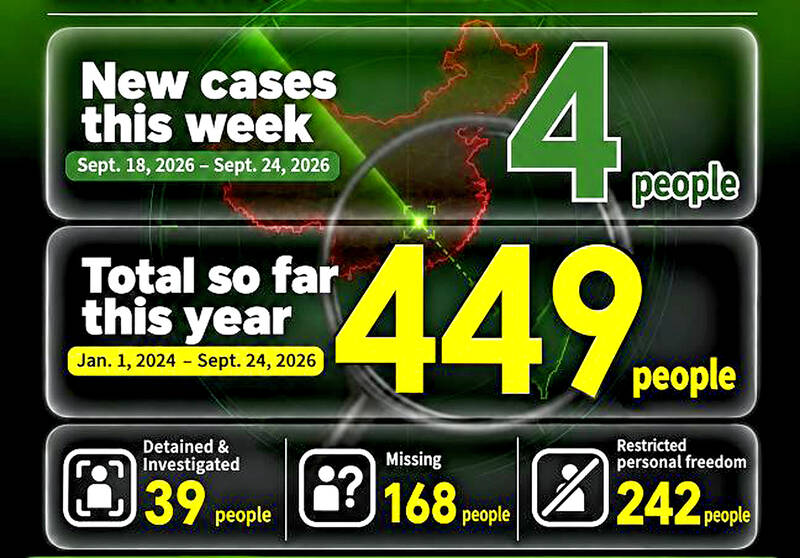
Photo: Screen grab from the Mainland Affairs Council’s Facebook page
With the new Chinese entry and exit regulation that took effect on Sept. 15, five groups should exercise caution when traveling to China, the MAC said.
First, people in the semiconductor and technology industries, should be aware of risks arising from the overlap of technical, commercial and national security regulations, it said.
Second, Taiwanese businesspeople and senior corporate executives could become entangled in investigations, judicial proceedings or exit bans stemming from commercial disputes, patent issues or contractual conflicts, it said.
Third, civil servants and people traveling to participate in cross-strait exchanges, whether traveling on official business or privately, should ensure they are in compliance with regulations governing travel to China.
Fourth, people engaging in religious exchanges, including attending religious gatherings or delivering sermons, should be aware of local regulations concerning religion and national security, it said.
Fifth, people who have publicly expressed their views on politics, human rights or other issues through social media, overseas events or related organizations should be mindful of uncertainties in the application and enforcement of local laws, the council said.
The US Department of State on Sept. 4 updated its Level 2 travel advisory for China, urging US citizens to “exercise increased caution” in China due to “the arbitrary enforcement of local laws, the use of exit bans without a fair and transparent process under the law, and the risk of unjust arrest or detention,” the MAC said.
The travel advisory highlighted five categories of US citizens who could be targeted by Chinese authorities: US citizens of Chinese heritage or origin; anyone involved in business disputes or who has ties to US corporate entities involved in business disputes in China; anyone with a current or prior affiliation with US law enforcement, military or intelligence agencies; anyone traveling on US government-funded programs; and people with current or former connections to the US government.
“Expansive national security, counterespionage and data security laws grant Chinese officials broad discretion to detain or interrogate foreign nationals,” the department said.
That places US citizens at risk for conducting even routine business, research or expression in the public domain, it said.
Local authorities have detained and charged US citizens involved in civil business disputes with criminal offenses under the laws, it added.
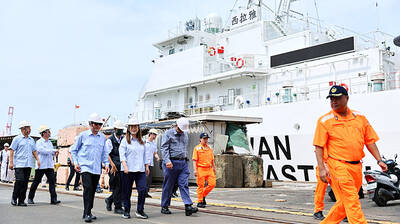
Ocean Affairs Council (OAC) Minister Kuan Bi-ling (管碧玲) on Wednesday said decommissioned coast guard vessels were given to the Philippines to enhance regional rescue capacity and would not affect Taiwanese fishers’ rights and benefits. Kuan made the remarks after confirmation on Tuesday that a 500-tonne Coast Guard Administration (CGA) patrol and rescue vessel would be given to the Philippine Coast Guard. The donation ceremony was reportedly done in Manila, but whether the vessel — previously numbered “CG123” and named Kinmen (金門) — has been handed over has yet to be confirmed. China’s Taiwan Affairs Office (TAO) on Wednesday criticized the donation for “taking
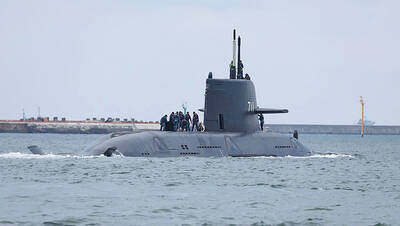
UPDATE: The submarine would need to undergo combined systems testing and crew training for navy personnel before it is ready for mission, an expert said Taiwan’s first domestically built submarine, the Hai Kun (Narwhal, 海鯤), could be delivered to the navy as early as next month, military expert and Taiwan Association for Security and Development chairman Chi Tung-yun (紀東昀) said yesterday. The submarine was yesterday morning observed departing for its 21st sea trial and its 15th submerged test. The vessel missed the initial delivery deadline of November last year due to “testing delays,” its primary contractor, shipbuilder CSBC Corp, Taiwan, said in June. The contractor also cited “political pressure from China” in procuring critical equipment. All testing operations are in the final stages, with the
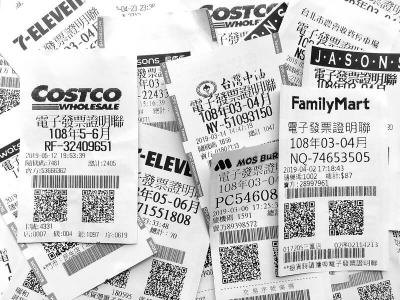
Six NT$10 million (US$315,527) special prizes and seven NT$2 million grand prizes in Taiwan's May-June uniform invoice lottery remained unclaimed as of today, including one NT$10 million winner who spent only NT$10 on an Uber Eats delivery order, the Ministry of Finance said. The ministry said the 13 winners need to claim their prizes by Nov. 5. The eight-digit serial number that won the NT$10 million special prize for May-June was 38548029, with 18 winning receipts in total. The NT$2 million grand prize number was 10138845, of which there were 22 winning receipts, the ministry said. In addition to the receipt issued for an
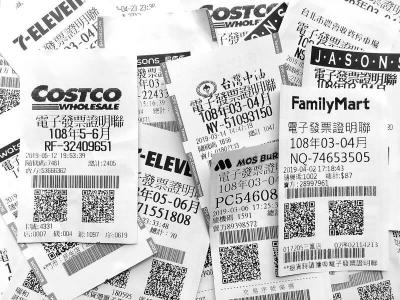
The Ministry of Finance today announced the winning numbers for the July-August uniform invoice lottery. The winning number for the NT$10 million (US$314,663) special prize is 89996565, while the winning number for the NT$2 million grand prize is 91098182. Three numbers were drawn for the NT$200,000 first prize: 54348835, 44991397 and 06595111. Those with receipts matching the last seven digits of any of the first-prize numbers can claim the NT$40,000 second prize, while those matching the last six digits qualify for the NT$10,000 third prize. Those whose receipts match the last five digits of the first-prize numbers are eligible for the NT$4,000 fourth prize,


 RSS
RSS