

The Ministry of Agriculture’s Taiwan Agricultural Research Institute on Wednesday said it has developed soybean-based umami seasoning powder that is low in sodium and sugar, and high in protein.
The institute said that it fermented and aged domestically produced soybeans, converting their soy protein into free, umami amino acids.
The amino acids were further processed into additive-free umami seasoning powder, it said.
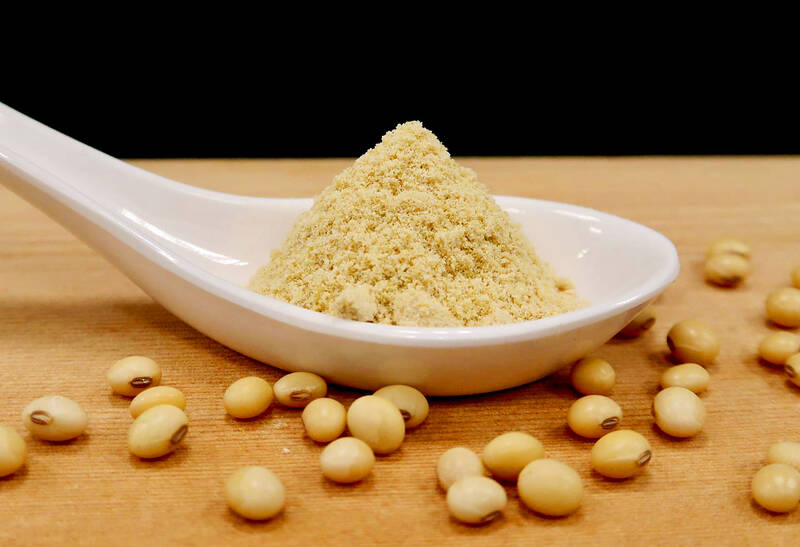
Photo courtesy of the Ministry of Agriculture’s Taiwan Agricultural Research Institute
Typical salt consumption in Taiwan tends to be high and most umami seasoning products on the market, such as mushroom seasoning powder, have relatively high sodium content, the institute said.
A key concern for Taiwan’s food industry is to balance keeping the umami flavor while reducing sodium content in seasonings, it said.
Its technique helps microorganisms decompose the proteins in soybeans, which releases a lot of umami amino acids and flavor compounds, the institute said.
The substances can be processed into seasoning products via drying, milling and sieving before being mixed with other raw materials, it said.
Soybean-based umami seasoning alone can provide rich flavors without any additives, it added.
The technique shortens the fermentation and aging process compared with other processes to produce fermented soybean seasonings such as soy sauce and miso, it said.
It also produces seasoning with lower sodium content, given that it does not rely on salt preservation, the institute said.
Most seasoning products on the market either have low sodium and high sugar, or low sugar and high sodium, it said.
However, the newly developed soybean seasoning has low sodium and sugar, it said.
It contains about 2.9g of sodium and 2g of sugar per 100g of powder, much lower than its counterparts’ sodium levels ranging from 15.5g to 20.2g and sugar content at up to 71g per 100g of powder, the institute said.
Its powder also boasts higher protein content at 30.3g per 100g than all of the seasoning products it was compared against, it said.
The seasoning has broad applications, such as becoming an ingredient in the food processing industry that intensifies the flavors of instant foods, soups and snacks, it said.
Aside from the business-to-business market, it can also penetrate the business-to-consumer market to fulfill consumers’ demand for healthy and low-salt foods, it said, adding that its technique was transferred to industry players in May.
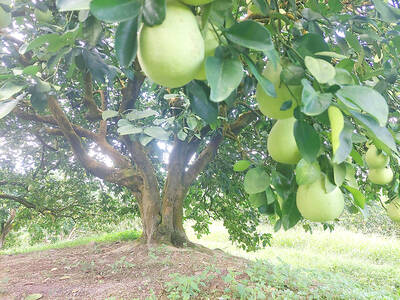
A Hualien pomelo farmer refused to sell to China after the country announced it would permit more Taiwanese pomelo imports, prompting widespread support from Taiwanese consumers, who rallied to buy his fruit. China’s Taiwan Affairs Office last month said that China’s General Administration of Customs registered an additional 79 Taiwanese pomelo orchards and packing facilities in Hualien County, allowing more Taiwanese producers to export pomelos to China. “I am a Hualien fruit farmer and I refuse to sell to China,” Liu Tzu-hao (劉子豪) from Ruisui Township (瑞穗) said in an online post. Liu is a well-known farmer in the community and has served
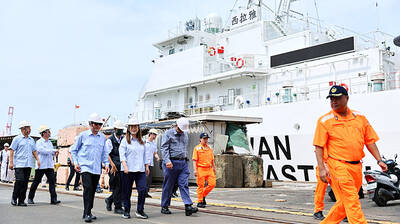
Ocean Affairs Council (OAC) Minister Kuan Bi-ling (管碧玲) on Wednesday said decommissioned coast guard vessels were given to the Philippines to enhance regional rescue capacity and would not affect Taiwanese fishers’ rights and benefits. Kuan made the remarks after confirmation on Tuesday that a 500-tonne Coast Guard Administration (CGA) patrol and rescue vessel would be given to the Philippine Coast Guard. The donation ceremony was reportedly done in Manila, but whether the vessel — previously numbered “CG123” and named Kinmen (金門) — has been handed over has yet to be confirmed. China’s Taiwan Affairs Office (TAO) on Wednesday criticized the donation for “taking
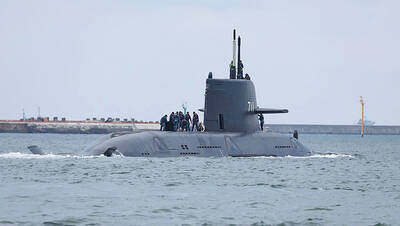
UPDATE: The submarine would need to undergo combined systems testing and crew training for navy personnel before it is ready for mission, an expert said Taiwan’s first domestically built submarine, the Hai Kun (Narwhal, 海鯤), could be delivered to the navy as early as next month, military expert and Taiwan Association for Security and Development chairman Chi Tung-yun (紀東昀) said yesterday. The submarine was yesterday morning observed departing for its 21st sea trial and its 15th submerged test. The vessel missed the initial delivery deadline of November last year due to “testing delays,” its primary contractor, shipbuilder CSBC Corp, Taiwan, said in June. The contractor also cited “political pressure from China” in procuring critical equipment. All testing operations are in the final stages, with the
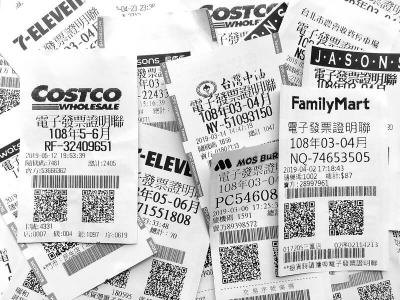
Six NT$10 million (US$315,527) special prizes and seven NT$2 million grand prizes in Taiwan's May-June uniform invoice lottery remained unclaimed as of today, including one NT$10 million winner who spent only NT$10 on an Uber Eats delivery order, the Ministry of Finance said. The ministry said the 13 winners need to claim their prizes by Nov. 5. The eight-digit serial number that won the NT$10 million special prize for May-June was 38548029, with 18 winning receipts in total. The NT$2 million grand prize number was 10138845, of which there were 22 winning receipts, the ministry said. In addition to the receipt issued for an


 RSS
RSS