

The Executive Yuan yesterday budgeted for a provisional increase of nearly 6 percent in pensions for public-sector retirees, adding NT$11.4 billion (US$357.1 million) to planned government spending.
Pensions for retired government workers are provisionally budgeted to increase by 5.89 percent to keep up with inflation, based on the cumulative consumer price index as of May, an Executive Yuan spokesperson told a news conference after a Cabinet meeting.
The central government is to contribute NT$7.4 billion and local governments are to contribute NT$4 billion to cover the cost of the increase, officials said.
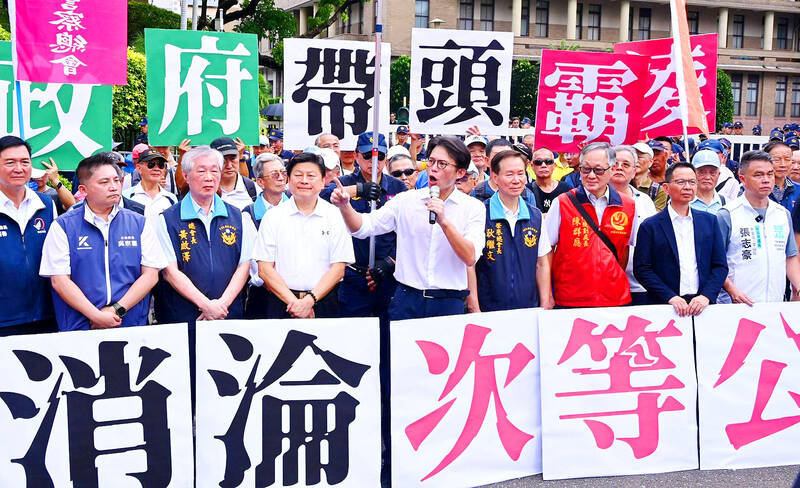
Photo: Liu Hsin-de, Taipei Times
Although the increase is more than the 4 percent pay raise planned for public-sector workers, the Cabinet said it would adjust benefits and increase professional and supervisory-position allowances by NT$2,000, in addition to the pay raise.
That would result in a cumulative 5.88 to 9.98 percent pay raise for nonsupervisory civil servants and a 6.39 percent to 11.56 percent cumulative raise for supervisors, it said.
A Directorate-General of Personnel Administration spokesperson said military service members are included in the pay increases and would receive other allowances depending on their occupational specialty.
The Executive Yuan in February approved making personnel in qualifying drone units eligible for the combat unit allowance, they said.
Combat unit allowance eligibility was broadened to include personnel in operational-sustainment units at or below brigade level, they said.
The scheme would allow conscripts in combat units to receive the same combat unit allowances as volunteers serving in the same roles, they said.
It would increase the monthly salary of a private second class to NT$57,330 and a battalion commander holding the rank of lieutenant colonel to NT$100,360, up 48.43 percent and 33.12 percent respectively, they said.
Dangerous-duty allowance supplements for police officers and firefighters, which vary by locality, could reach a maximum additional 130 percent of the underlying allowance in Taipei and New Taipei City, while the criminal-work supplement for qualifying police officers would also increase, the spokesperson said.
The measure would benefit about 81,000 police officers and firefighters, they said.
Eligibility for performance-based bonuses and bonuses for dangerous or nighttime duties would also be broadened, they added.
During their review of the budget, opposition lawmakers had demanded a NT$30,000 monthly allowance for volunteer military personnel and a higher income replacement rate for police officers and firefighters.
As the measures were excluded from the budget, lawmakers yesterday led retired police officers and firefighters in a protest outside the Executive Yuan in Taipei.
Premier Cho Jung-tai (卓榮泰) said that the income replacement rate for a police officer with 35 years of service could already reach 69 percent.
Efforts to improve public-sector compensation are ongoing, he said, adding that salaries have been raised four times over the past decade, with a fifth raise planned for next year, and multiple allowances have been adjusted since last year.
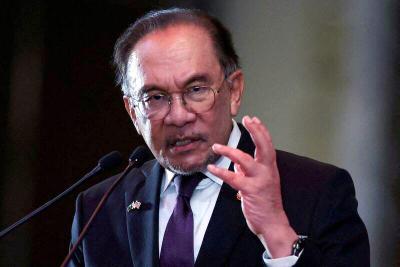
Malaysian Prime Minister Anwar Ibrahim’s remarks that Taiwan is a Chinese province seeking independence threaten regional peace and stability and could undermine Taiwanese businesses’ confidence in investing in Malaysia, the Ministry of Foreign Affairs (MOFA) said today. Anwar recently made remarks implying that Taiwan is a province seeking to separate from China, effectively legitimizing Beijing’s position on using force to take Taiwan, the ministry said in a statement. The Republic of China, Taiwan, is a sovereign, independent country and is not subordinate to the People’s Republic of China, MOFA said, adding that that fact would not be changed no matter
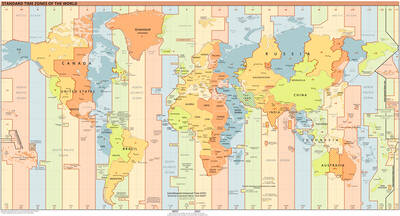
UNNECESSARY?: While some said that the switch would mean more sunlight exposure for workers, others said the government should promote flexible working hours instead An online debate has resurfaced on whether Taiwan should switch to the same time zone as Japan, with supporters citing its geographic location and saying that China would have no right to object. The debate erupted on Threads when users suggested that Taiwan should stop using the same time zone as China, Malaysia and Singapore, GMT+8, and instead switch one hour ahead to the same time zone as Japan and South Korea, GMT+9, which it is geographically closer to. Under GMT+9 the sun would set later year-round, meaning that people would see sunlight after getting off work even in the winter and
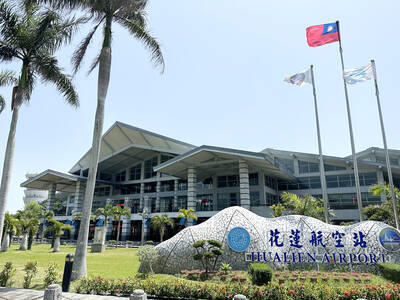
The Civil Aviation Administration (CAA) yesterday confirmed that Uni Air has submitted an application to suspend its Taipei-Hualien flights due to persistently low passenger rates. The airline, which is the only operator of the Taipei-Hualien route, proposed to suspend the service after Mandarin Airlines, another domestic flight carrier, applied to suspend flights to Hualien departing from Kaohsiung and Taichung earlier this year. The average load factor of the Taipei-Hualien flights during the first six months was 24.2 percent, CAA data showed. The average seat occupancy rate dropped even further to 17 percent last month, even though it was the beginning
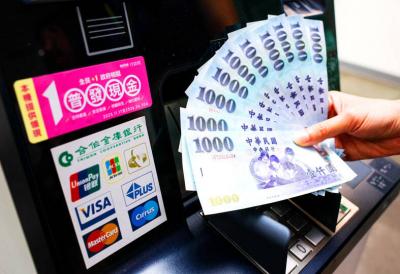
The government would distribute a NT$10,000 cash handout to all citizens next year as Taiwan’s economy continues to grow, President William Lai (賴清德) said today, emphasizing that economic growth could reach a 39-year high. The president made the remarks this morning at the Presidential Office after being briefed on the Executive Yuan’s proposed central government budget for next year for the second time. The forecasts for Taiwan’s economic growth have continued to improve, driven by its longstanding strengths in semiconductors, information and communications technology and manufacturing supply chains, Lai said. The government would focus on five key policies next year: advancing its new


 RSS
RSS