

A mother and daughter in Tainan have become the first people to complete their official registration as Siraya after the government on July 30 recognized Siraya as Taiwan’s 17th indigenous group.
The registration of the mother, Mai Fang-chi (買方祺), and daughter, Shih Ya-hsin (石亞欣), was completed yesterday at Tainan’s South District Household Registration Office and witnessed by Tainan Mayor Huang Wei-che (黃偉哲), the city said in a statement.
Huang said the registration marked an important milestone for Siraya, who have long sought recognition of their identity and place in history after preserving and passing down their culture in Tainan for generations.
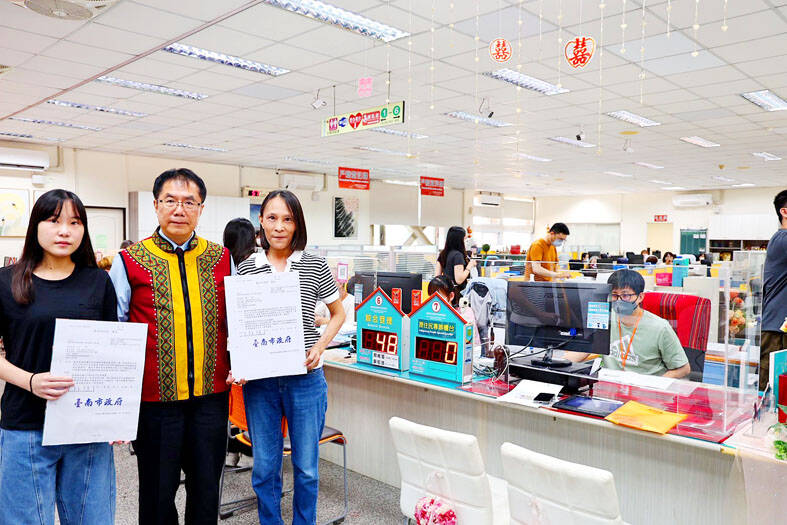
Photo courtesy of the Tainan City Government
Tainan’s household registration offices began accepting applications for Siraya identification on Thursday last week, after the Council of Indigenous Peoples announced the eligibility criteria the same day, the statement said.
As of Tuesday, the offices had received 1,545 applications, of which 10 of the first 12 applications reviewed met the requirements, the city government said.
Of the 10, Mai and Shih were the first to go to the office to complete their registration.
Tainan has since 2005 recognized the indigenous status of people seen as “assimilated indigenous peoples.”
Under the new system, those who complete the registration process would receive “Plains indigenous” status recognized under national law, the city said.
The eligibility requirements for Siraya registration lean heavily on precedent.
Applicants or their direct ancestors have to have been registered as “Plains” or assimilated indigenous peoples under Japanese rule (1895 to 1945), and they had to be registered as living in Siraya regions during that time period.
If that is not an option, applicants must present other evidence of their indigenous Taiwanese ancestry dating back to the Japanese colonial period.
Siraya are the first “Plains” indigenous group to be officially recognized by the government, following the legislature’s passage of the Pingpu Indigenous People’s Status Act (平埔原住民族群身分法) in October last year.
Also referred to as “assimilated indigenous peoples” during the Japanese colonial period, “Plains” indigenous peoples have struggled to gain recognition because they were deemed to have largely become Sinicized.
As a result, the government previously officially recognized only “highland” indigenous tribes.
Premier Cho Jung-tai (卓榮泰) last month said that eight other “Plains” indigenous groups had submitted applications for recognition that were awaiting review by the council.
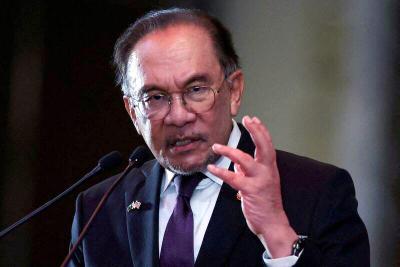
Malaysian Prime Minister Anwar Ibrahim’s remarks that Taiwan is a Chinese province seeking independence threaten regional peace and stability and could undermine Taiwanese businesses’ confidence in investing in Malaysia, the Ministry of Foreign Affairs (MOFA) said today. Anwar recently made remarks implying that Taiwan is a province seeking to separate from China, effectively legitimizing Beijing’s position on using force to take Taiwan, the ministry said in a statement. The Republic of China, Taiwan, is a sovereign, independent country and is not subordinate to the People’s Republic of China, MOFA said, adding that that fact would not be changed no matter
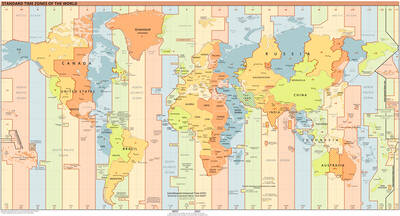
UNNECESSARY?: While some said that the switch would mean more sunlight exposure for workers, others said the government should promote flexible working hours instead An online debate has resurfaced on whether Taiwan should switch to the same time zone as Japan, with supporters citing its geographic location and saying that China would have no right to object. The debate erupted on Threads when users suggested that Taiwan should stop using the same time zone as China, Malaysia and Singapore, GMT+8, and instead switch one hour ahead to the same time zone as Japan and South Korea, GMT+9, which it is geographically closer to. Under GMT+9 the sun would set later year-round, meaning that people would see sunlight after getting off work even in the winter and
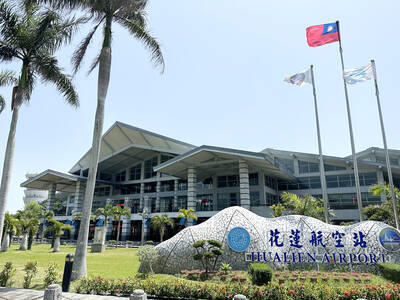
The Civil Aviation Administration (CAA) yesterday confirmed that Uni Air has submitted an application to suspend its Taipei-Hualien flights due to persistently low passenger rates. The airline, which is the only operator of the Taipei-Hualien route, proposed to suspend the service after Mandarin Airlines, another domestic flight carrier, applied to suspend flights to Hualien departing from Kaohsiung and Taichung earlier this year. The average load factor of the Taipei-Hualien flights during the first six months was 24.2 percent, CAA data showed. The average seat occupancy rate dropped even further to 17 percent last month, even though it was the beginning

Philippine President Ferdinand Marcos Jr today said that the Philippines would not allow any attacks from its territory in the event of a conflict in the Taiwan Strait, as it “has no desire to be a belligerent nation in the region.” Marcos later said that his country would continue to follow the “one China” policy while maintaining its existing ties with Taiwan within that framework. The Philippine president made the comments while attending the Foreign Correspondents Association of the Philippines Presidential Luncheon in Manila. He was asked whether he would allow the US military to launch an attack from Philippine bases in the


 RSS
RSS