


The government is planning to significantly increase public payments to maternity health services to stabilize frontline medical capacity, with the new regulations expected to take effect as early as the second half of this year, Minister of Health and Welfare Shih Chung-liang (石崇良) said yesterday.
Shih was responding to a warning by Taiwan Association of Obstetrics and Gynecology secretary-general Huang Jian-pei (黃建霈), who on Sunday urged the government to raise payment for childbirth services or risk a worsening shortage of obstetricians mainly due to the nation’s low birthrate.
Deaths in Taiwan have outnumbered births for 61 consecutive months, and the number of newborns dropped to a record low of about 108,000 last year, from roughly 134,000 births in 2024.
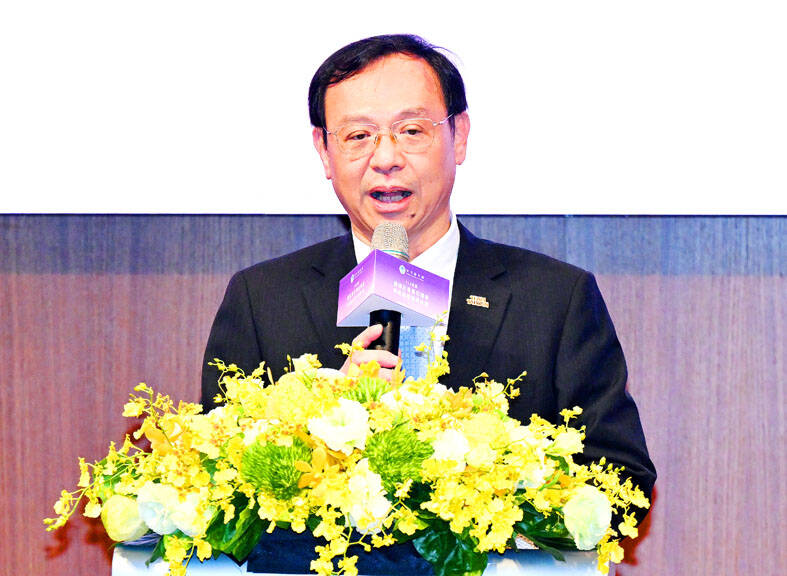
Photo: Liao Chen-huei, Taipei Times
There were only 6,523 newborns last month — the lowest monthly number on record.
Huang said there were more than 200 healthcare facilities providing childbirth in Taiwan, but with a declining birthrate and the current payment system, 23 maternity clinics shut down last year.
While the national recruitment quota for obstetrics and gynecology (OB-GYN) resident doctors is set at 70, it is expected to be filled by only 60 to 70 percent, which is even worse than that for pediatric departments, he said.
If the trend continues, the association is concerned that no one would want to enter the OB-GYN field, he said.
Coupled with the gradual loss of existing practitioners, OBY-GYN doctors might become “extinct” in Taiwan, he added.
“The association certainly does not want to see this situation unfold,” he said.
The association has suggested that the government increase delivery fees to help maternity clinics continue operating and ensure that residents in rural areas have access to maternity care, he said.
“If the government wants to fix the declining birthrate, it must first save the obstetricians, or there would be no obstetricians left in the future,” he said.
The association has made its suggestions to the health ministry and looks forward to a positive outcome, he added.
Shih said the ministry is finalizing an overhaul of the payment structure and improving healthcare access, which could be implemented as early as the second half of this year.
The ministry is planning to increase child delivery fees for doctors and certified midwives by 50 percent for natural birth and Cesarean section cases, 100 percent for high-risk pregnancies and possibly triple the amount for critical cases involving placenta previa or severe postpartum hemorrhage, he said.
In addition to raising surgery fees, diagnostic and examination fees for hospitalized high-risk pregnancy cases would also be increased, he said.
More than NT$1 billion (US$33.3 million) would be allocated for this cause, as the ministry hopes to improve the long-standing “high-risk, low-reward” burden that obstetricians carry, he said.
To improve healthcare access, it is working on a “minimum guarantee mechanism,” he said.
The ministry has identified 51 medical sub-regions across the nation where only one or two maternity clinics remain, and they would serve as “lighthouse hospitals,” receiving a guaranteed baseline funding, regardless of the actual number of newborns, he said.
The mechanism ensures that even in areas with low birthrates, maternity clinics’ basic operations can be maintained, so that expectant mothers in remote areas would have access to essential maternity care, he said.
Reflecting on the crisis, Shih said the combination of declining births and the rising average age of mothers has placed unprecedented pressure on the field of obstetrics, as high-risk pregnancies become more common.
“We can no longer rely on market mechanisms alone to sustain the field,” he said, adding that the dual-track approach of payment adjustments and regional guarantee is needed to stabilize the nation’s obstetric medical capacity.
The proposal was discussed at a joint meeting on Thursday, with a final review scheduled for May, aiming for a rollout later this year, he added.
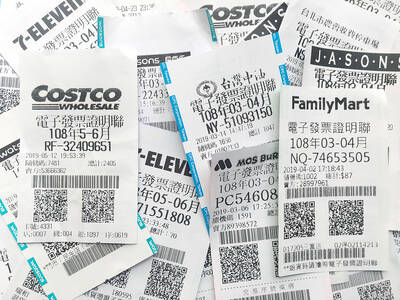
A NT$39 receipt for two bottles of tea at a FamilyMart was among the NT$10 million (US $312,969) special prize winners in the January-February uniform invoice lottery. FamilyMart said that two NT$10 million-winning receipts were issued at its stores, as well as two NT$2 million grand prizes and three NT$200,000 first prizes. The two NT$10 million receipts were issued at stores in Pingtung County and Yilan County’s Dongshan Township (冬山). One winner spent just NT$39 on two bottles of tea, while another spent NT$80 on water, tea and coffee, the company said. Meanwhile, 7-Eleven reported three NT$10 million winners — in New Taipei

Considering that most countries issue more than five denominations of banknotes, the central bank has decided to redesign all five denominations, the bank said as it prepares for the first major overhaul of the banknotes in more than 24 years. Central bank Governor Yang Chin-lung (楊金龍) is expected to report to the Legislative Yuan today on the bank’s operations and the redesign’s progress. The bank in a report sent to the legislature ahead of today’s meeting said it had commissioned a survey on the public’s preferences. Survey results showed that NT$100 and NT$1,000 banknotes are the most commonly used, while NT$200 and NT$2,000

ANNUAL EVENT: Two massive Pokemon balloons are to be set up in Daan Park, with an event zone operating from 10am to 6pm This year’s Taipei Floral Picnic is to be held at Daan Park today and tomorrow, featuring an exclusive Pokemon Go event, a themed food market, a coffee rave picnic area and stage performances, the Taipei Department of Information and Tourism said yesterday. Two massive Pokemon balloons are to be set up in the park as attractions, with an exclusive event zone operating from 10am to 6pm, it said. Participants who complete designated tasks on-site would have a chance to receive limited-edition souvenirs, it added. People could also try the newly launched game Pokemon Pokopia in the trial area, the department said. Three PokeStops are
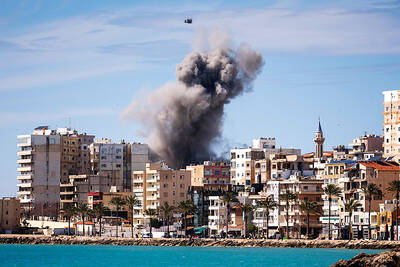
Taiwan is concerned that China could exploit the US’ war in the Middle East, with state media citing examples from the conflict to cast doubt on the efficiency of US weapons Taiwan would use to repel an invasion. Taiwanese officials said the resumption of Beijing’s large-scale air force incursions near Taiwan after an unusual decline show that China wants to take advantage of the redeployment of US forces from East Asia to the Middle East. “This is a moment for China to exercise influence,” a senior Taiwanese security official said, speaking on condition of anonymity. “What China is trying to create is a


 RSS
RSS