


The navy’s Chien Lung-class submarines, the Hai Hu (海虎, Sea Tiger) and the Hai Lung (海龍, Sea Dragon), would undergo combat system trials next year, after upgrades to the Hai Hu are completed by the end of the year, military sources said yesterday.
The two submarines, bought from the Netherlands in the 1980s, have been undergoing combat system upgrades since 2018, which have cost NT$7.41 billion (US$231.78 million).
The changes to the Hai Hu include upgrading the submarine’s torpedo arsenal from AEG SUT 264 torpedoes to Mk-48 Mod 6 Advanced Technology torpedoes, the sources said, but added that delivery of the new torpedoes had been delayed and now expected to arrive next year.
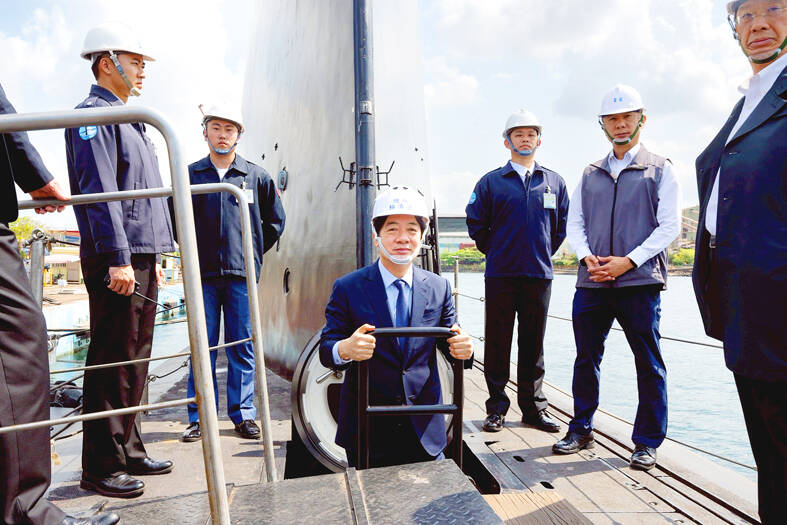
Photo courtesy of the Presidential Office
The Hai Lung has already completed its upgrades.
Both submarines are to participate in major military exercises next year to assess their upgraded combat capabilities, sources said.
The overhaul also replaces the original Dutch-made systems with a combat system jointly developed by Chungshan Institute of Science and Technology, and Lockheed Martin, which would significantly improve the submarines’ target acquisition and tracking capabilities, the sources said.
The submarines’ sonar, electronic support measures and guidance radar systems were also upgraded, enhancing stealth and situational awareness, they added.
Maintenance work included removing corrosion from torpedo tubes, and repainting and replacing key components to extend service life, the sources said.
In related news, President William Lai (賴清德) on Thursday visited the Hai Kun (海鯤, Narwhal), prompting questions about whether the vessel could be delivered to the navy as early as June, as some analysts have suggested.
Minister of National Defense Wellington Koo (顧立雄) said the ministry is proceeding step by step, ensuring all testing is completed safely.
“We will not set an arbitrary delivery date,” he said.
Asked whether Lai would be invited to join a test dive, Koo said such decisions should be left up to experts, adding that trials require naval personnel, technical specialists and shipbuilder CSBC Corp personnel on board.
The navy’s other two submarines, the Hai Shih (海獅, Sea Lion) and the Hai Pao (海豹, Seal), would continue to be used for training purposes, he added.
Additional reporting by CNA and Reuters
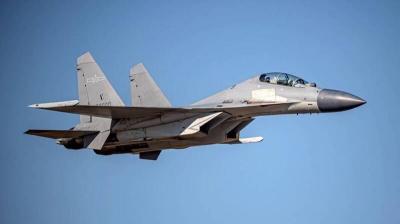
Eight Chinese naval vessels and 24 military aircraft were detected crossing the median line of the Taiwan Strait between 6am yesterday and 6am today, the Ministry of National Defense said this morning. The aircraft entered Taiwan’s northern, central, southwestern and eastern air defense identification zones, the ministry said. The armed forces responded with mission aircraft, naval vessels and shore-based missile systems to closely monitor the situation, it added. Eight naval vessels, one official ship and 36 aircraft sorties were spotted in total, the ministry said.
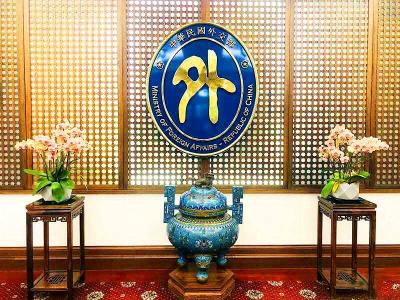
The Ministry of Foreign Affairs (MOFA) today said that if South Korea does not reply appropriately to its request to correct Taiwan’s name on its e-Arrival card system before March 31, it would take corresponding measures to alter how South Korea is labeled on the online Taiwan Arrival Card system. South Korea’s e-Arrival card system lists Taiwan as “China (Taiwan)” in the “point of departure” and “next destination” fields. The ministry said that it changed the nationality for South Koreans on Taiwan’s Alien Resident Certificates from “Korea” to “South Korea” on March 1, in a gesture of goodwill and based on the

Taiwanese officials were shown the first of 66 F-16V fighter jets purchased by Taiwan from the United States, the Ministry of National Defense said yesterday, adding the aircraft has completed an initial flight test and is expected to be delivered later this year. A delegation led by Deputy Minister of National Defense Hsu Szu-chien (徐斯儉) visited Lockheed Martin’s F-16 C/D Block 70 (also known as F-16V) assembly line in South Carolina on March 16 to view the aircraft. The jet will undergo a final acceptance flight in the US before being delivered to Taiwan, the
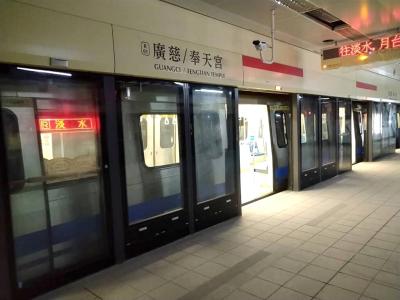
The New Taipei Metro's Sanyin Line and the eastern extension of the Taipei Metro's Tamsui-Xinyi Line (Red Line) are scheduled to begin operations in June, the National Development Council said today. The Red Line, which terminates at Xiangshan Station, would be connected by the 1.4km extension to a new eastern terminal, Guangci/Fengtian Temple Station, while the Sanyin Line would link New Taipei City's Tucheng and Yingge stations via Sanxia District (三峽). The council gave the updates at a council meeting reviewing progress on public construction projects for this year. Taiwan's annual public infrastructure budget would remain at NT$800 billion (US$25.08 billion), with NT$97.3


 RSS
RSS