


Taiwan is “very important” to Japan for three strategic reasons, a Japanese academic said on Friday while discussing scenarios under which the Japan Self-Defense Forces could be mobilized.
The issue has drawn attention since Japanese Prime Minister Sanae Takaichi commented in November last year on what might constitute a “survival-threatening situation” for Japan in the event of a Chinese naval blockade of Taiwan, which increased tensions between Tokyo and Beijing.
Speaking at a cybersecurity conference in Washington, Japanese National Institute for Defense Studies research fellow Ryo Kiridori said Tokyo views Taiwan as strategically vital due to its geographic proximity, role in key sea lines of communication and economic importance.
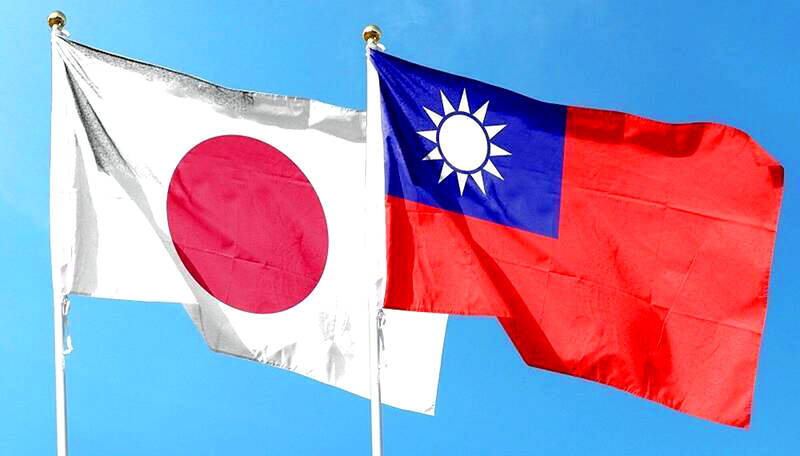
Photo:Reuters
Any contingency involving Taiwan would heighten Japan’s sense of insecurity, he said, adding that Taiwan lies only about 111km from Yonaguni Island, Japan’s westernmost point.
Kiridori also showed images of maritime traffic highlighting heavy shipping flows around Taiwan, including in the Taiwan Strait and the Bashi Channel, which he described as critical choke points for the Japanese economy.
Japan is increasingly dependent on semiconductors imported from Taiwan, which accounts about two-thirds of global semiconductor output, Kiridori said.
Japan’s interpretation of collective self-defense applies to situations in which Japan is under attack, or when an armed attack against a country with close ties to Tokyo poses a clear threat to Japan’s survival, he said.
What Takaichi said is if there is a naval blockade of Taiwan and if force is used, Japan could consider the situation a threat to its survival, he said.
“This is exactly in line with Japanese law and is essentially a restatement of existing legal principles,” he added.
Kiridori rejected the view that Japan has moved toward strategic clarity on Taiwan — some interpreted Takaichi’s remarks on simulated scenarios as the country’s most explicit public stance to date.
“I would say there are still ambiguities and uncertainties in the decisionmaking process,” he said, adding that any response would be determined on a case-by-case basis following comprehensive assessments.
What is certain is that Japan seeks to avoid confrontation, Kiridori said.
“We don’t want confrontation between the United States and China, and we don’t want a destabilized Taiwan Strait,” he added.

Nipah virus infection is to be officially listed as a category 5 notifiable infectious disease in Taiwan in March, while clinical treatment guidelines are being formulated, the Centers for Disease Control (CDC) said yesterday. With Nipah infections being reported in other countries and considering its relatively high fatality rate, the centers on Jan. 16 announced that it would be listed as a notifiable infectious disease to bolster the nation’s systematic early warning system and increase public awareness, the CDC said. Bangladesh reported four fatal cases last year in separate districts, with three linked to raw date palm sap consumption, CDC Epidemic Intelligence

Two Taiwanese prosecutors were questioned by Chinese security personnel at their hotel during a trip to China’s Henan Province this month, the Mainland Affairs Council (MAC) said yesterday. The officers had personal information on the prosecutors, including “when they were assigned to their posts, their work locations and job titles,” MAC Deputy Minister and spokesman Liang Wen-chieh (梁文傑) said. On top of asking about their agencies and positions, the officers also questioned the prosecutors about the Cross-Strait Joint Crime-Fighting and Judicial Mutual Assistance Agreement, a pact that serves as the framework for Taiwan-China cooperation on combating crime and providing judicial assistance, Liang
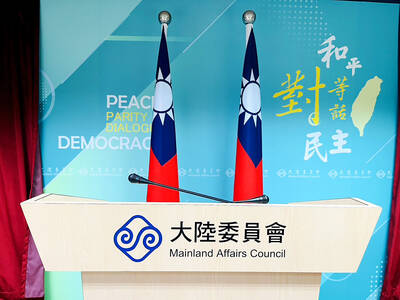
Reports of Taiwanese going missing, being detained or interrogated, or having their personal liberties restricted in China increased about fourfold annually last year, the Mainland Affairs Council (MAC) said yesterday. Last year, 221 Taiwanese who traveled to China were reported missing, were detained and interrogated, or otherwise had their personal freedom restricted, up from 55 the previous year, the council said. Reopening group tours to China would be risky, as it would leave travelers with no way to seek help through official channels after Beijing shut down dialogue between the associations tasked with handling cross-strait tourism, the MAC said. Taipei’s Taiwan Strait Tourism
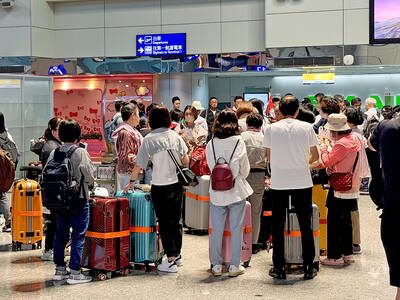
SHIFT: Taiwan is evolving from a transit stop into a tourist destination, with more international travelers willing to spend on tours, dining and cultural activities Taiwan rose three places in the World Tourism Barometer to 36th globally in 2024, with international tourism revenue of US$10.028 billion, the Tourism Administration said on Monday. The UN Tourism Organization publication said that its focus has switched from whether a country has returned to pre-COVID-19 levels of tourism to the amount spent by a tourist during an overseas trip. The nation last year welcomed 8.57 million international tourists, about 9 percent more than in 2024, with most tourists coming from Japan, South Korea, and Hong Kong and Macau, all of which accounted for at least 1 million tourists each. During the first


 RSS
RSS