


While absentee voting is a global trend, implementing it for the local elections in November would be a disaster at this stage, as it would involve complex logistics, Central Election Commission (CEC) chair nominee Michael You (游盈隆) said today.
The biggest challenge in implementing absentee voting is feasibility, while foreign interference is a secondary concern, You said in response to concerns that it could lead to ballot tampering or Chinese interference.
The Legislative Yuan’s Internal Administration and Judiciary and Organic Laws and Statutes committees met today to review nominations to the CEC.

Photo: George Tsorng, Taipei Times
Chinese Nationalist Party (KMT) Legislator Niu Hsu-ting (牛煦庭) asked You if domestic absentee voting could be properly implemented and how much time would it take to prepare.
The question is currently making its way through the legislature, after the Taiwan People’s Party on Dec. 12 last year proposed a bill to enable absentee voting.
The CEC would put its full efforts into carrying out the legislation according to the law if it is passed, You said.
Absentee voting is a global trend and many people in Taiwan feel it is the right direction for the nation, he said.
“I definitely see it as progressive thinking,” he added.
However, practical realities cannot be ignored, and looking at the current election system, implementing absentee voting would involve extremely complex logistics, You said.
Implementing it for this year’s local elections in November “would definitely be a disaster at this stage,” he said.
The CEC previously said that implementing absentee voting for the upcoming elections would result in nearly 9,000 different ballots and risk tarnishing Taiwan’s globally respected elections.
Taiwan has never implemented absentee voting, so it is necessary to first conduct comprehensive research and consider all factors before proceeding, You said.
The CEC’s current step-by-step approach is feasible, but implementing comprehensive absentee voting for the upcoming local elections is “too bold, risky and foolhardy,” he said.
It would be better to begin with public referendums, gradually gain experience, address public concerns and move forward in stages, he added.
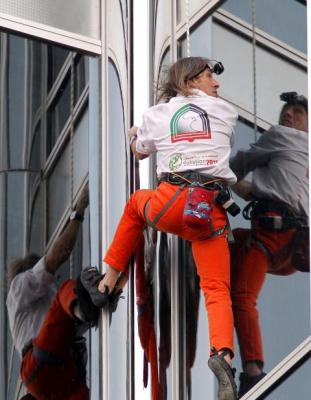
Alain Robert, known as the "French Spider-Man," praised Alex Honnold as exceptionally well-prepared after the US climber completed a free solo ascent of Taipei 101 yesterday. Robert said Honnold's ascent of the 508m-tall skyscraper in just more than one-and-a-half hours without using safety ropes or equipment was a remarkable achievement. "This is my life," he said in an interview conducted in French, adding that he liked the feeling of being "on the edge of danger." The 63-year-old Frenchman climbed Taipei 101 using ropes in December 2004, taking about four hours to reach the top. On a one-to-10 scale of difficulty, Robert said Taipei 101

Nipah virus infection is to be officially listed as a category 5 notifiable infectious disease in Taiwan in March, while clinical treatment guidelines are being formulated, the Centers for Disease Control (CDC) said yesterday. With Nipah infections being reported in other countries and considering its relatively high fatality rate, the centers on Jan. 16 announced that it would be listed as a notifiable infectious disease to bolster the nation’s systematic early warning system and increase public awareness, the CDC said. Bangladesh reported four fatal cases last year in separate districts, with three linked to raw date palm sap consumption, CDC Epidemic Intelligence
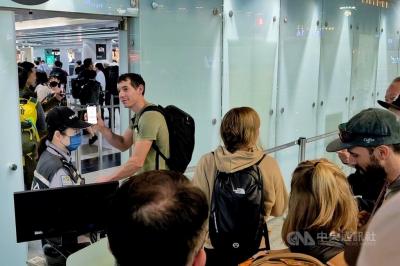
US climber Alex Honnold left Taiwan this morning a day after completing a free-solo ascent of Taipei 101, a feat that drew cheers from onlookers and gained widespread international attention. Honnold yesterday scaled the 101-story skyscraper without a rope or safety harness. The climb — the highest urban free-solo ascent ever attempted — took just more than 90 minutes and was streamed live on Netflix. It was covered by major international news outlets including CNN, the New York Times, the Guardian and the Wall Street Journal. As Honnold prepared to leave Taiwan today, he attracted a crowd when he and his wife, Sanni,

Two Taiwanese prosecutors were questioned by Chinese security personnel at their hotel during a trip to China’s Henan Province this month, the Mainland Affairs Council (MAC) said yesterday. The officers had personal information on the prosecutors, including “when they were assigned to their posts, their work locations and job titles,” MAC Deputy Minister and spokesman Liang Wen-chieh (梁文傑) said. On top of asking about their agencies and positions, the officers also questioned the prosecutors about the Cross-Strait Joint Crime-Fighting and Judicial Mutual Assistance Agreement, a pact that serves as the framework for Taiwan-China cooperation on combating crime and providing judicial assistance, Liang


 RSS
RSS