


Chiayi City, Miaoli County and Tainan have higher average hotel booking rates during the Lunar New Year holiday than other administrative regions, the Tourism Administration said yesterday.
Chiayi City, Miaoli County and Tainan surpassed other administrative regions with higher average hotel booking rates — at 55.91 percent, 51.32 percent and 49.55 percent respectively — during the first eight days of the holiday, which this year begins on Feb. 17 and is to last nine days.
The average hotel booking rate nationwide is 38.33 percent.

Photo courtesy of the Alishan Hotel
All three regions usually have higher booking rates during the holiday, with Chiayi also receiving tourists visiting Alishan Forest Railway and other areas, the agency said.
The average rates also exceeded the national average in New Taipei City, Taichung, and Nantou, Chiayi and Taitung counties.
Hotel booking rates in most cities and counties are higher from Feb. 17 to Feb. 19, agency data showed.
The Tourism Administration said it would release updated data two weeks before the holiday, as most Taiwanese prefer to book their trips close to the start of the break.
In other news, domestic travel spending by Taiwanese reached NT$515.8 billion (US$16.33 billion) in 2024, more than 30 percent higher than 2019, the agency said.
The growth momentum continued last year and is expected to persist this year, it said.
The agency estimated that 222.03 million trips were taken by domestic travelers in 2024, a 31.36 percent increase from 2019.
In the first three quarters of last year, 186 million domestic trips were recorded, a 12.57 percent increase from the same period in 2024, it said.
The data showed that domestic tourism is gradually becoming more balanced throughout the year, it said.
The growth in domestic tourism did not raise accommodation costs, with the average room price at hotels and bed-and-breakfasts (B&Bs) was NT$2,960 per night in 2024, NT$35 less than in 2023. The average room price last year fell further to NT$2,954.
The average room price at a B&B was NT$2,405 in 2024, down from NT$2,509 in 2023.
During the first six months of last year, a room at a B&B cost NT$2,442 on average, down from NT$2,481 during the same period in 2024.
The agency also responded to complaints about high room costs in Taiwan.
Accommodation costs vary by region, time of year and room size.
Hotels and B&Bs are often perceived as expensive during major holidays or at popular tourist destinations, but that view could change when looking at annual average prices or rates during weekdays and off-peak periods, the Tourism Administration said.
Instead of spending multiple days traveling domestically during major holidays or on long weekends, more Taiwanese prefer to take frequent short-distance trips on weekends or short holidays, it said.
That change has shifted domestic tourism from a few peak periods and major attractions every year to more varied locations throughout the year, it said.

Taiwanese can file complaints with the Tourism Administration to report travel agencies if their activities caused termination of a person’s citizenship, Mainland Affairs Council Minister Chiu Chui-cheng (邱垂正) said yesterday, after a podcaster highlighted a case in which a person’s citizenship was canceled for receiving a single-use Chinese passport to enter Russia. The council is aware of incidents in which people who signed up through Chinese travel agencies for tours of Russia were told they could obtain Russian visas and fast-track border clearance, Chiu told reporters on the sidelines of an event in Taipei. However, the travel agencies actually applied

New measures aimed at making Taiwan more attractive to foreign professionals came into effect this month, the National Development Council said yesterday. Among the changes, international students at Taiwanese universities would be able to work in Taiwan without a work permit in the two years after they graduate, explainer materials provided by the council said. In addition, foreign nationals who graduated from one of the world’s top 200 universities within the past five years can also apply for a two-year open work permit. Previously, those graduates would have needed to apply for a work permit using point-based criteria or have a Taiwanese company
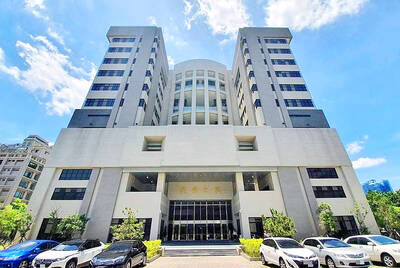
The Shilin District Prosecutors’ Office yesterday indicted two Taiwanese and issued a wanted notice for Pete Liu (劉作虎), founder of Shenzhen-based smartphone manufacturer OnePlus Technology Co (萬普拉斯科技), for allegedly contravening the Act Governing Relations Between the People of the Taiwan Area and the Mainland Area (臺灣地區與大陸地區人民關係條例) by poaching 70 engineers in Taiwan. Liu allegedly traveled to Taiwan at the end of 2014 and met with a Taiwanese man surnamed Lin (林) to discuss establishing a mobile software research and development (R&D) team in Taiwan, prosecutors said. Without approval from the government, Lin, following Liu’s instructions, recruited more than 70 software

Chinese spouse and influencer Guan Guan’s (關關) residency permit has been revoked for repeatedly posting pro-China videos that threaten national security, the National Immigration Agency confirmed today. Guan Guan has said many controversial statements in her videos posted to Douyin (抖音), including “the red flag will soon be painted all over Taiwan” and “Taiwan is an inseparable part of China,” and expressing hope for expedited reunification. The agency last year received multiple reports alleging that Guan Guan had advocated for armed reunification. After verifying the reports, the agency last month issued a notice requiring her to appear and explain her actions. Guan


 RSS
RSS