


Taiwan and Japan today voiced concern over Chinese military activities in the region, after Beijing deployed a large number of vessels across East Asian waters this week in its largest maritime show of force to date.
Reuters yesterday reported that China was deploying a large number of naval and coast guard ships across East Asian waters — at one point more than 100 — citing sources and intelligence reports that it had reviewed.
The Chinese activity was not confined to the Taiwan Strait, but stretched from the Yellow Sea down through waters near the disputed Diaoyutai Islands (釣魚台列嶼, also known as the Senkaku Islands in Japan) in the East China Sea, into the South China Sea and the western Pacific, Presidential Office spokesperson Karen Kuo (郭雅慧) told reporters in Taipei.
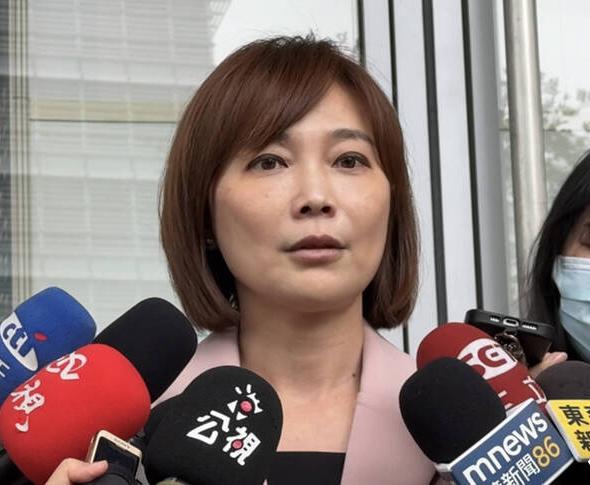
Photo: Chiu Chih-jou, Taipei Times
“This indeed poses a threat and impact to the Indo-Pacific and the whole region," she said. "We also especially call on China to live up to its responsibilities as a major power and to exercise restraint in its actions."
President William Lai (賴清德) has instructed security forces to maintain full situational awareness and provide timely updates, Kuo said, adding that Taiwan would keep close contact and cooperate with unspecified "friendly partners" to jointly safeguard peace and stability in the Indo-Pacific.
Asked in Tokyo about Chinese activity in the East China Sea, Japanese Minister of Defense Shinjiro Koizumi said that Japan was aware of the reports and was watching Chinese military movements "with great attention."
He declined to comment on the specific deployment.
"China has been expanding and stepping up its military activities in the areas surrounding Japan, and we make a constant effort to gather and analyze information on Chinese military movements with great attention," he told reporters without giving a time frame of the Chinese activities.
"In any event, the government will continue to monitor developments around Japan with deep concern, and will make every effort to ensure thorough information gathering and surveillance," he said.
China's military has not commented, but Chinese Ministry of Foreign Affairs spokesperson Lin Jian (林劍) said its navy and coast guard activities in "relevant maritime areas" adhered strictly to domestic and international law.
"There is no need for any party to overreact, over-interpret or engage in baseless speculation," he said in Beijing.
November and December are traditionally a busy season for Chinese military exercises, although the People's Liberation Army has not made any announcements of large-scale officially named drills.
The operations exceed China's mass naval deployment in December last year that prompted Taiwan to raise its alert level, the sources said.
The rise in activity is happening as China and Japan are in a diplomatic crisis after Japanese Prime Minister Sanae Takaichi last month said that a hypothetical Chinese attack on Taiwan could trigger a military response from Tokyo.
Beijing has also been angered by Lai’s announcement last month of an extra NT$1.25 trillion (US$40 billion) in defense spending to better counter China's threats.


UPGRADE: The Kang Ding-class frigate is replacing its Chaparall missiles with Tien Chien II and Hua Yang VLS, which would provide it with long-range, 360° air defense Taiwan plans to produce 1,200 to 1,376 Hai Chien II missiles (海劍二, Sea Sword II) — also known as TC-2N — to serve as the standard air defense system of the navy’s surface combatant fleet, a source said yesterday. Last week, the Hai Chien II, the naval version of the Tien Kung II missile (天劍二, Sky Sword II), completed a live-fire test in waters off the National Chungshan Institute of Science and Technology’s Jiupeng facility (九鵬) in Pingtung County’s Manjhou Township (滿州). The MIM72 Chaparral and other dated air defense missiles that currently arm Taiwanese ships have inadequate range to combat Chinese

REASONS FOR TRAVEL: An assistant professor said that proposed amendments to penalize drivers if they used drugs overseas would not deter people from traveling People who operate a motor vehicle under the influence of marijuana would have their driver’s license revoked, even if they used the substance while overseas, the Ministry of Transportation and Communications said yesterday, citing proposed amendments to the Road Traffic Management and Penalty Act (道路交通管理處罰條例). The amendments would also authorize the government to revoke the licenses of people determined to have used Category 1 or Category 2 narcotics, even if they were not operating a vehicle while under the influence of drugs, as well as ban them from taking the license test for three years, the ministry said. People aged 18 or

Johanne Liou (劉喬安), a Taiwanese woman who shot to unwanted fame during the Sunflower movement protests in 2014, returned to Taiwan last night after being deported from the US. She is to stand trial in Taiwan for charges involving embezzlement, fraud and drug crimes. The Criminal Investigation Bureau (CIB) said it took her into custody at Taiwan Taoyuan International Airport and would first question her before transferring her to the New Taipei District Prosecutors’ Office. She was arrested upon disembarking a flight from San Francisco that landed shortly before 7pm. Liou absconded to the US in 2019 after jumping bail
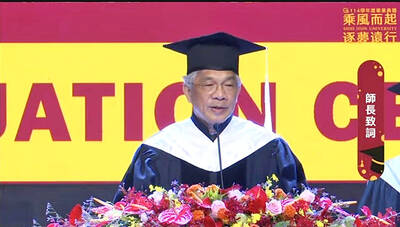
Shih Hsin University President Chen Ching-he (陳清河) yesterday issued a public apology for comments made in his commencement speech last week, stating that he has asked the school to suspend his duties and halt his wages for two months as a show of contrition. At the commencement ceremony on May 30, Chen said, “If you don’t manage your time well, or your own emotions, or your health, then I am telling every one of you — put a quick end to ‘you,’ because the world has no need for ‘you.’” The comments have sparked significant controversy online, and Chen through an open


 RSS
RSS