


The Legislative Yuan today passed a bill clearly defining workplace bullying and stipulating preventive and response measures, with offenders facing fines up to NT$1 million (US$31,804).
The legislature passed the third reading of the amendment to the Occupational Safety and Health Act (職業安全衛生法), adding a new section dedicated to preventing workplace bullying.
The legislation defines workplace bullying as when an employee uses their position or power to go beyond what is necessary for work and repeatedly engages in offensive, threatening, dismissive, isolating, insulting or inappropriate conduct that harms another worker’s physical or mental health.
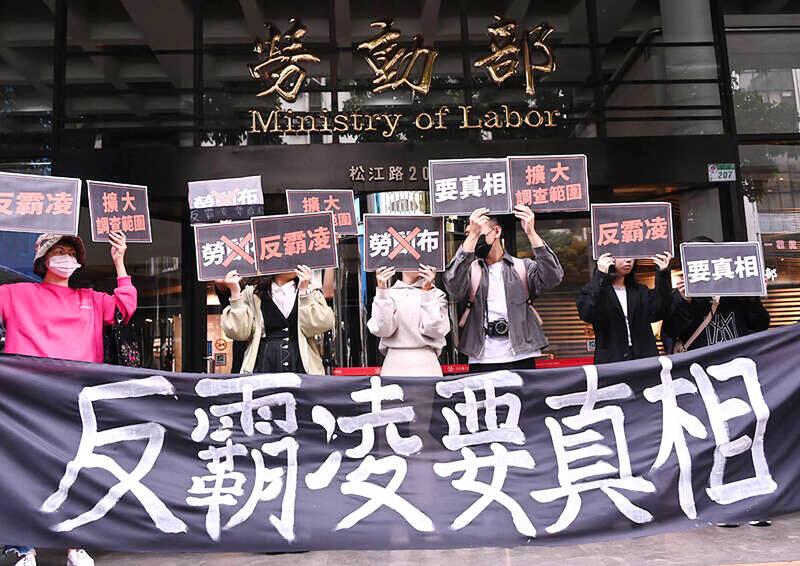
Photo: Taipei Times
If the situation is severe, it need not be repetitive to qualify as workplace bullying, the bill says.
The legislation also stipulates that employers must take necessary measures to prevent workplace bullying, including reporting all complaints via the competent authority’s Web site to prevent selective reporting.
If an employer knows an employee has been bullied, but fails to assist or investigate, they may be fined between NT$30,000 and NT$750,000, the amendment says.
If a top executive is guilty of workplace bullying, they may be fined from NT$10,000 to NT$1 million.
Investigations into workplace bullying must be objective, impartial and fair, and organizations above a certain size must form an investigation committee with at least half its members from outside the organization, the bill says.
If an employee is filing a complaint against the top executive, they may file it directly with the local government, it says.
The amendment also increases criminal penalties, fines and administrative penalties for offenders.
For incidents that lead to fatalities, it raises the maximum prison term from three to five years and the maximum fine to NT$1.5 million.
It also raises the maximum administrative fine to NT$750,000.
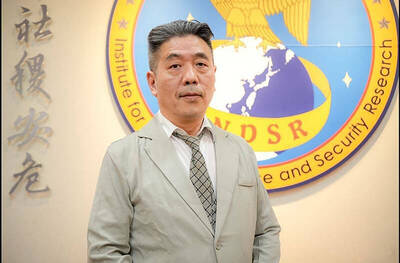
The year 2027 is regarded as the year China would likely gain the capability to invade Taiwan, not the year it would launch an invasion, Taiwanese defense experts said yesterday. The experts made the remarks after President William Lai (賴清德) told a news conference on Wednesday that his administration would introduce a NT$1.25 trillion (US$39.8 billion) special defense budget bill to boost Taiwan’s overall defense posture over the next eight years. Lai said that Beijing aims for military unification of Taiwan by 2027. The Presidential Office later clarified that what Lai meant was that China’s goal is to “prepare for military unification

HOW RUDE: Joe Biden’s Indo-Pacific defense chief condemned China’s response to Takaichi’s remarks as inappropriate and heavy-handed, while praising Japan’s nerve A former US defense official under former US president Joe Biden has voiced support for Japanese Prime Minister Sanae Takaichi for her remarks suggesting that Japan could help defend Taiwan, while describing Beijing’s response as “inappropriate.” Ely Ratner, who served as assistant secretary of defense for Indo-Pacific security affairs from 2021 to this year, said in a CNA interview that Takaichi’s comments on Taiwan simply reflected Japan’s position and stance on Taiwan. On Nov. 7, the Japanese prime minister commented in a parliamentary session that a Chinese attack on Taiwan could constitute “a situation threatening Japan’s survival” that could trigger a military
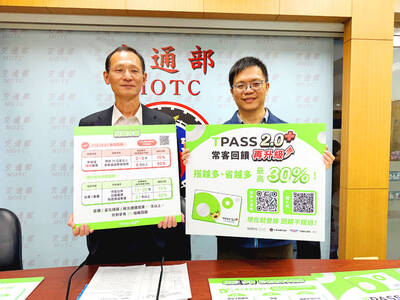
Starting next month, people who signed up for the TPass 2.0 program can receive a 15 percent rebate for trips on mid to long-distance freeway buses or on buses headed to the east coast twice every month, the Highway Bureau said. Bureau Director-General Lin Fu-shan (林福山) said the government started TPass 2.0 to offer rebates to frequent riders of public transportation, or people who use city buses, highway buses, trains or MRTs at least 11 times per month. As of Nov. 12, 265,000 people have registered for TPass 2.0, and about 16.56 million trips between February and September qualified for

China’s campaign to deprive Taiwan of diplomatic recognition might have a rare reversal this month when voters in Honduras choose their next president. The two front-runners in tomorrow’s election both pledge to sever ties with Beijing and re-establish them with Taipei. The candidates, former Honduran vice president Salvador Nasralla and former Tegucigalpa mayor Nasry Asfura, also want to forge a closer relationship with the US, the nation’s top trading partner and main destination for migrants. Nasralla led a poll last month with Asfura in second ahead of tomorrow’s single-round vote. US President Donald Trump called on Hondurans to back Asfura, saying in a post


 RSS
RSS