


Chinese Nationalist Party (KMT) caucus deputy secretary-general Lo Chih-chiang (羅智強) yesterday said his caucus would propose legislation in the next session that aims to penalize officials who lie.
Lo made the remark after Premier Cho Jung-tai (卓榮泰) denounced opposition parties for cutting and freezing the central government’s total budget.
KMT and Taiwan People’s Party (TPP) lawmakers cut NT$93.98 billion (US$2.9 billion) from the central government’s general budget on Friday.
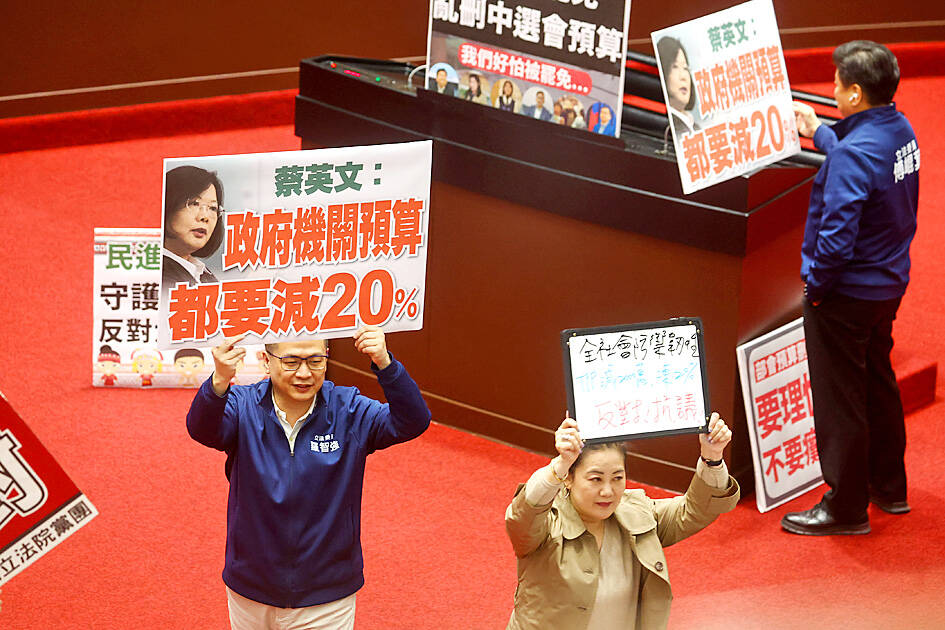
Photo: CNA
The legislature continued its budget review yesterday and today, and was projected to cut another NT$100 billion at least.
As agencies under the Cabinet have been claiming that the budget cut would affect social welfare, the KMT caucus would propose bills to introduce an “honest government act and lying offenses for officials,” Lo said.
“The DPP should explore the example of [Tesla CEO] Elon Musk. When [US president-elect] Donald Trump proposed the Department of Government Efficiency to restructure the government, he [Musk] proposed a US$2 trillion cut in budget. Has the US been destroyed?” he said.
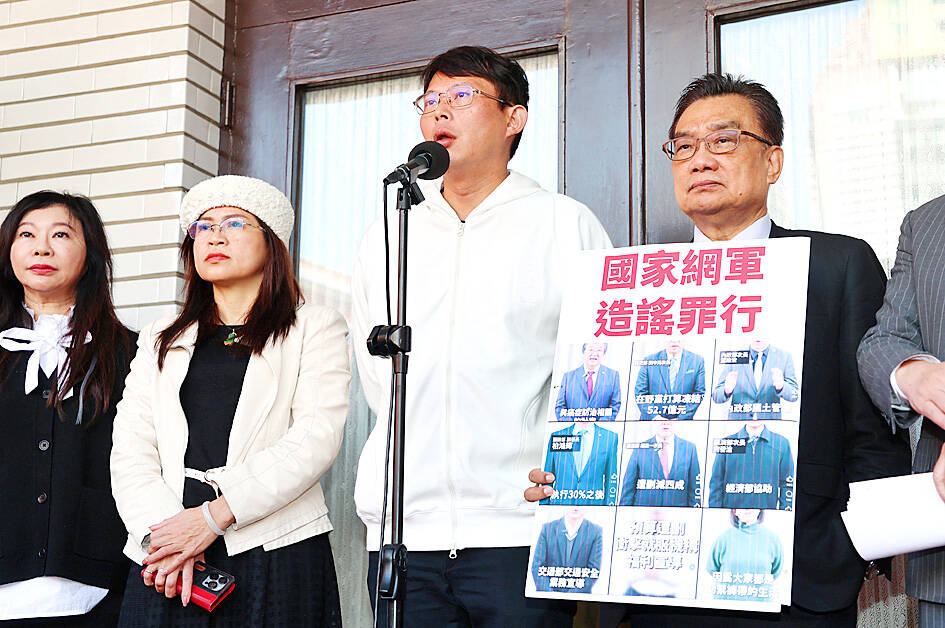
Photo: Tien Yu-hua, Taipei Times
In the past, former president “Tsai Ing-wen (蔡英文) said the budget cut should be 20 percent. A budget cut of 10 percent cannot make the government change; a cut of 20 percent can transform its structure,” he added.
The corruption case of Ultra Source’s (超思) egg imports squandered NT$500 million from the national treasury, while corruption in the Tainan solar energy project and Taiwan Power Co’s (Taipower) deficit cost the government at least NT$10 billion and NT$100 billion respectively, Lo said.
“The opposition parties strive to safeguard people’s wallets. How can we paralyze the government with just a 3 percent budget cut?” he said, adding that the government was spreading rumors and that officials were lying, because they would not be penalized.
“Although Constitutional justices protect the right of governmental officials to lie at the legislature, they do not ensure their right to lie about political affairs. We are exploring the possibility of proposing the legislation of the honest government act and lying offenses for officials in the next legislative session. Let the public decide whether the officials are spreading rumors and lying,” Lo said.
Separately yesterday, KMT caucus secretary-general Lin Szu-ming (林思銘) said it is lawmakers’ duty to review the budget and cut inefficient or inappropriately listed budget items.
The DPP government has long exploited budget items such as “operating expenses” and “media propaganda expenses” to fund “cyberwarriors,” wasting public funds without producing benefits, Lin said.
The KMT caucus strengthened its legislative supervision by freezing the budget, which is not equivalent to removing the budget, he said.
Agencies only have to report to the legislature on progress when a certain part of the budget has been spent, to ensure that taxpayers’ money were used to improve people’s livelihoods, instead of being used for political manipulation, Lin said.
The opposition’s budget cut proposals are not final, so ministries and departments should be more proactive in communicating and explaining their budget plans, he added.
TPP caucus whip Huang Kuo-chang (黃國昌) yesterday said the central government’s total budget for this year reached a new high of NT$3.2 trillion.
The TPP caucus reviewed the budget and proposed a total cut of slightly more than NT$100 billion and denied the NT$100 billion budget to subsidize Taipower’s deficit, he said.
With these cuts, the Cabinet still has a budget of NT$2.9 billion, but Cho chose to incite the public by circulating biased information through administrative departments and state-level cyberwarriors instead of facing and solving the problem, Huang said.
If Cho is so incompetent that he does not know how to do his job with NT$2.9 billion in his hands, he should resign as premier instead of polarizing society and causing conflicts, he said.
Additional reporting by Lin Che-yuan

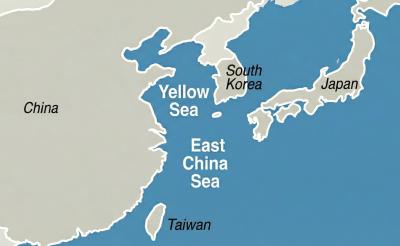
China has reserved offshore airspace in the Yellow Sea and East China Sea from March 27 to May 6, issuing alerts usually used to warn of military exercises, although no such exercises have been announced, the Wall Street Journal (WSJ) reported yesterday. Reserving such a large area for 40 days without explanation is an “unusual step,” as military exercises normally only last a few days, the paper said. These alerts, known as Notice to Air Missions (Notams), “are intended to inform pilots and aviation authorities of temporary airspace hazards or restrictions,” the article said. The airspace reserved in the alert is

South Korea is planning to revise its controversial electronic arrival card, a step Taiwanese officials said prompted them to hold off on planned retaliatory measures, a South Korean media report said yesterday. A Yonhap News Agency report said that the South Korean Ministry of Foreign Affairs is planning to remove the “previous departure place” and “next destination” fields from its e-arrival card system. The plan, reached after interagency consultations, is under review and aims to simplify entry procedures and align the electronic form with the paper version, a South Korean ministry official said. The fields — which appeared only on the electronic form

A bipartisan group of US senators has introduced a bill to enhance cooperation with Taiwan on drone development and to reduce reliance on supply chains linked to China. The proposed Blue Skies for Taiwan Act of 2026 was introduced by Republican US senators Ted Cruz and John Curtis, and Democratic US senators Jeff Merkley and Andy Kim. The legislation seeks to ease constraints on Taiwan-US cooperation in uncrewed aerial systems (UAS), including dependence on China-sourced components, limited access to capital and regulatory barriers under US export controls, a news release issued by Cruz on Wednesday said. The bill would establish a "Blue UAS
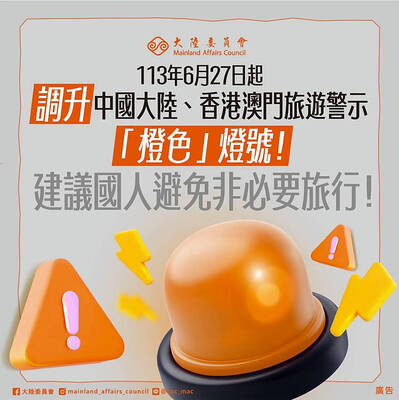
More than 6,000 Taiwanese students have participated in exchange programs in China over the past two years, despite the Mainland Affairs Council’s (MAC) “orange light” travel advisory, government records showed. The MAC’s publicly available registry showed that Taiwanese college and university students who went on exchange programs across the Strait numbered 3,592 and 2,966 people respectively. The National Immigration Agency data revealed that 2,296 and 2,551 Chinese students visited Taiwan for study in the same two years. A review of the Web sites of publicly-run universities and colleges showed that Taiwanese higher education institutions continued to recruit students for Chinese educational programs without


 RSS
RSS