


The Taipei District Prosecutors’ Office and the Agency Against Corruption taskforce yesterday morning requested the Taipei District Court to detain chief financial officer of the Taiwan People’s Party’s presidential campaign Lee Wen-tsung (李文宗) and former Dingyue Development Corp (鼎越開發) president Chu Yea-hu (朱亞虎) for alleged involvement in the Core Pacific City case.
The court held a detention hearing at 6:50pm yesterday, which was ongoing at press time last night.
Prosecutors said they filed a request to detain the two suspects after questioning them on Friday, as they were suspected to be heavily involved in the case and allegedly violated the Anti-Corruption Act (貪污治罪條例).
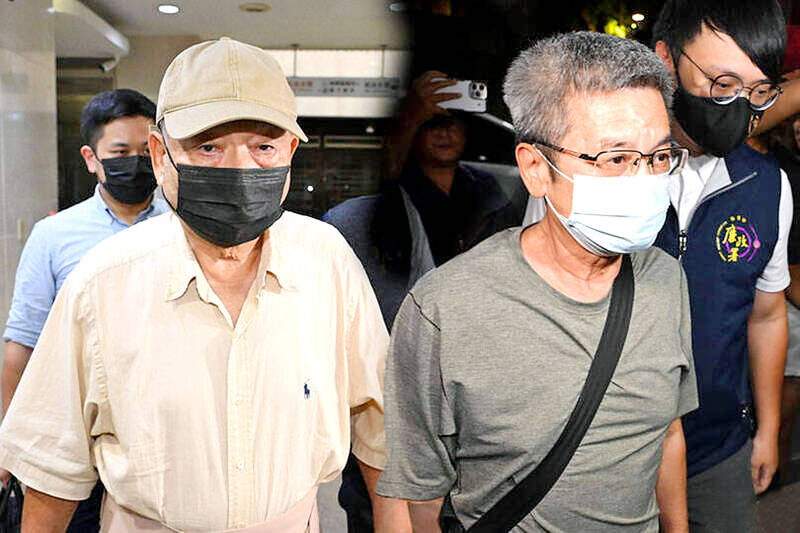
Photo: Taipei Times file
The two were among 10 defendants accused of corruption, allegedly giving preferential treatment to Core Pacific City Co during the tenure of then-Taipei mayor Ko Wen-je (柯文哲) and raising the floor area ratio (FAR) of the redevelopment project in 2020 to boost the value of the property.
Lee was Ko’s high-school classmate, served as his campaign office’s financial manager and was formerly the director-general of the Taipei mayor’s office, the taskforce said.
The taskforce said it suspected Lee was in the know and might have played a pivotal role in the scandal regarding Ko’s unreported political donations from his presidential bid earlier in the year.
Meanwhile, Chu is suspected of being an intermediary between Core Pacific and the Taipei City Government, and allegedly handled the funds used for bribery.
Other defendants include Core Pacific supervisor Chang Chih-cheng (張志澄) and Core Pacific Group legal affairs manager Chen Chun-yuan (陳俊源), who have been allowed to post bail for NT$2.5 million (US$78,894) and NT$1.5 million respectively. Former news anchor Tung Chung-pai (童中白), former Core Pacific Rental manager Hung Hsiu-feng (洪秀鳳) and supervisor Fan Ya-chi (范雅琪) have been released without bail.
Witnesses included Ko’s former bodyguard Chen Wen-chung (陳文鐘), Ko’s former itinerary secretary Huang Hsin-hsiang (黃心緗), former secretary Huang Chieh-ying (黃婕穎) and Lin Ting-feng (林鼎峰). They have been released without bail.

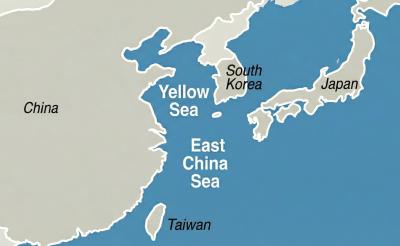
China has reserved offshore airspace in the Yellow Sea and East China Sea from March 27 to May 6, issuing alerts usually used to warn of military exercises, although no such exercises have been announced, the Wall Street Journal (WSJ) reported yesterday. Reserving such a large area for 40 days without explanation is an “unusual step,” as military exercises normally only last a few days, the paper said. These alerts, known as Notice to Air Missions (Notams), “are intended to inform pilots and aviation authorities of temporary airspace hazards or restrictions,” the article said. The airspace reserved in the alert is

South Korea is planning to revise its controversial electronic arrival card, a step Taiwanese officials said prompted them to hold off on planned retaliatory measures, a South Korean media report said yesterday. A Yonhap News Agency report said that the South Korean Ministry of Foreign Affairs is planning to remove the “previous departure place” and “next destination” fields from its e-arrival card system. The plan, reached after interagency consultations, is under review and aims to simplify entry procedures and align the electronic form with the paper version, a South Korean ministry official said. The fields — which appeared only on the electronic form

A bipartisan group of US senators has introduced a bill to enhance cooperation with Taiwan on drone development and to reduce reliance on supply chains linked to China. The proposed Blue Skies for Taiwan Act of 2026 was introduced by Republican US senators Ted Cruz and John Curtis, and Democratic US senators Jeff Merkley and Andy Kim. The legislation seeks to ease constraints on Taiwan-US cooperation in uncrewed aerial systems (UAS), including dependence on China-sourced components, limited access to capital and regulatory barriers under US export controls, a news release issued by Cruz on Wednesday said. The bill would establish a "Blue UAS
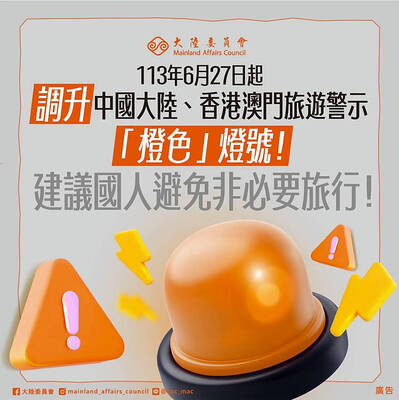
More than 6,000 Taiwanese students have participated in exchange programs in China over the past two years, despite the Mainland Affairs Council’s (MAC) “orange light” travel advisory, government records showed. The MAC’s publicly available registry showed that Taiwanese college and university students who went on exchange programs across the Strait numbered 3,592 and 2,966 people respectively. The National Immigration Agency data revealed that 2,296 and 2,551 Chinese students visited Taiwan for study in the same two years. A review of the Web sites of publicly-run universities and colleges showed that Taiwanese higher education institutions continued to recruit students for Chinese educational programs without


 RSS
RSS