


A portion of funds for the procurement of US arms totaling approximately NT$24.4 billion is being held up in the US, a report by the National Audit Office said.
The total amount for the procurement included a certain percentage that US authorities would set aside in case Taiwan terminated the contract midway, which was in line with regulations stipulated in section C9.9.1.5.4 of the US Department of Defense Security Assistance Management Manual, the office said.
“We have switched to providing that percentage through a letter of guarantee from a bank. However, if the issuing bank is not a US bank, it must obtain a license from the US Federal Reserve, according to US regulations,” it said. “Since the US branches of Taiwan’s banks have failed to secure that license, the funds are being held up.”
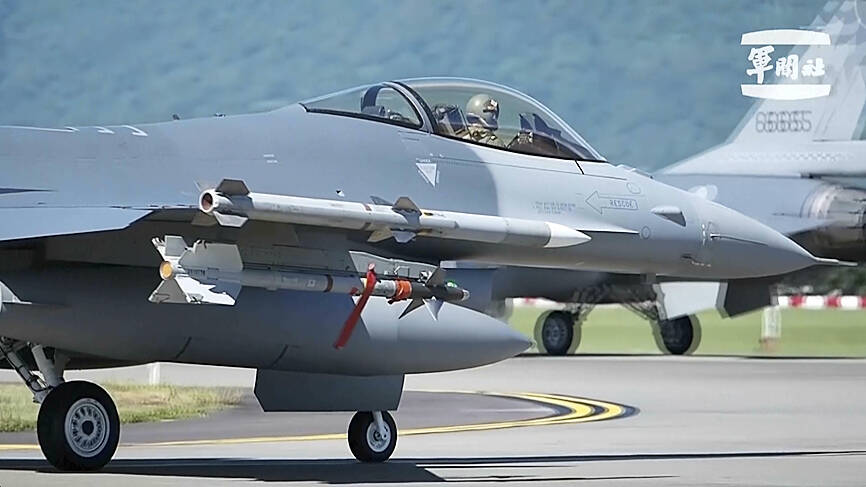
Photo courtesy of the Taiwan Military News Agency via AP
The National Audit Office asked the ministry at the end of 2022 to have the contract-termination funds provided to the US contractor through a letter of guarantee issued by a bank that complies with US regulations, rather than transferring the funds from the ministry’s budget.
In response, the Ministry of National Defense said that its representatives to the US were communicating with the US department’s Defense Security Cooperation Agency (DSCA) on getting the US Federal Reserve to provide a Taiwanese bank with a license.
The ministry in February last year formed a task force to look at how to issue letters of guarantee that comply with US regulations, and had aimed to meet the requirements by the end of this year, the audit office said.
However the banks the ministry had been working with failed to receive licenses by the end of last year as planned, it said.
“The Ministry of National Defense contacted the DSCA twice last year to evaluate relaxing the eligibility criteria for banks to issue credit,” it said. “However, the DSCA said this was not possible since it involved policy adjustments which could harm the rights and interests of the US.”
The US Department of State, the US Department of the Treasury and other US agencies are evaluating rules for arms procurement from US contractors, and hope to find a consistent solution for all global purchasers, it said.
However, it is unknown when this can be completed, it added.
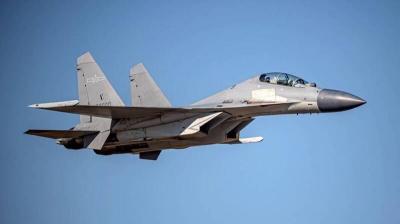
Eight Chinese naval vessels and 24 military aircraft were detected crossing the median line of the Taiwan Strait between 6am yesterday and 6am today, the Ministry of National Defense said this morning. The aircraft entered Taiwan’s northern, central, southwestern and eastern air defense identification zones, the ministry said. The armed forces responded with mission aircraft, naval vessels and shore-based missile systems to closely monitor the situation, it added. Eight naval vessels, one official ship and 36 aircraft sorties were spotted in total, the ministry said.
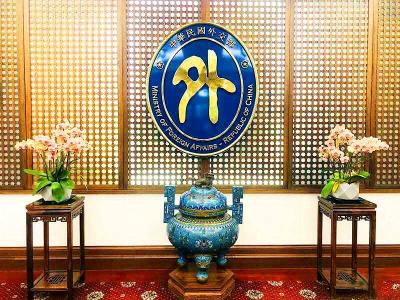
The Ministry of Foreign Affairs (MOFA) today said that if South Korea does not reply appropriately to its request to correct Taiwan’s name on its e-Arrival card system before March 31, it would take corresponding measures to alter how South Korea is labeled on the online Taiwan Arrival Card system. South Korea’s e-Arrival card system lists Taiwan as “China (Taiwan)” in the “point of departure” and “next destination” fields. The ministry said that it changed the nationality for South Koreans on Taiwan’s Alien Resident Certificates from “Korea” to “South Korea” on March 1, in a gesture of goodwill and based on the

Taiwanese officials were shown the first of 66 F-16V fighter jets purchased by Taiwan from the United States, the Ministry of National Defense said yesterday, adding the aircraft has completed an initial flight test and is expected to be delivered later this year. A delegation led by Deputy Minister of National Defense Hsu Szu-chien (徐斯儉) visited Lockheed Martin’s F-16 C/D Block 70 (also known as F-16V) assembly line in South Carolina on March 16 to view the aircraft. The jet will undergo a final acceptance flight in the US before being delivered to Taiwan, the
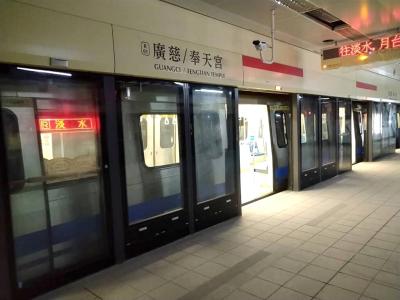
The New Taipei Metro's Sanyin Line and the eastern extension of the Taipei Metro's Tamsui-Xinyi Line (Red Line) are scheduled to begin operations in June, the National Development Council said today. The Red Line, which terminates at Xiangshan Station, would be connected by the 1.4km extension to a new eastern terminal, Guangci/Fengtian Temple Station, while the Sanyin Line would link New Taipei City's Tucheng and Yingge stations via Sanxia District (三峽). The council gave the updates at a council meeting reviewing progress on public construction projects for this year. Taiwan's annual public infrastructure budget would remain at NT$800 billion (US$25.08 billion), with NT$97.3


 RSS
RSS