


A research team at Academia Sinica’s Institute of Molecular Biology has published findings on large-scale cell death during embryonic development, which it said can contribute to studies on cancer therapy by finding ways to inhibit tumor growth.
The process of rapid cell differentiation during early embryonic development in various lifeforms leading to growth of the multicelluar organism has been observed since the 19th century, but scientists were puzzled by the accompanying phase of massive cell death, Chen Sheng-hong (陳昇宏) and his team members said at a news conference in Taipei yesterday.
The team’s findings were published online this month in the science journal Nature, entitled, “Emergence of large-scale cell death through ferroptotic trigger wave,” which Chen coauthored with Hannah Katrina C. Co (許碧領), Wu Chia-chou (吳嘉洲) and Lee Yi-chen.
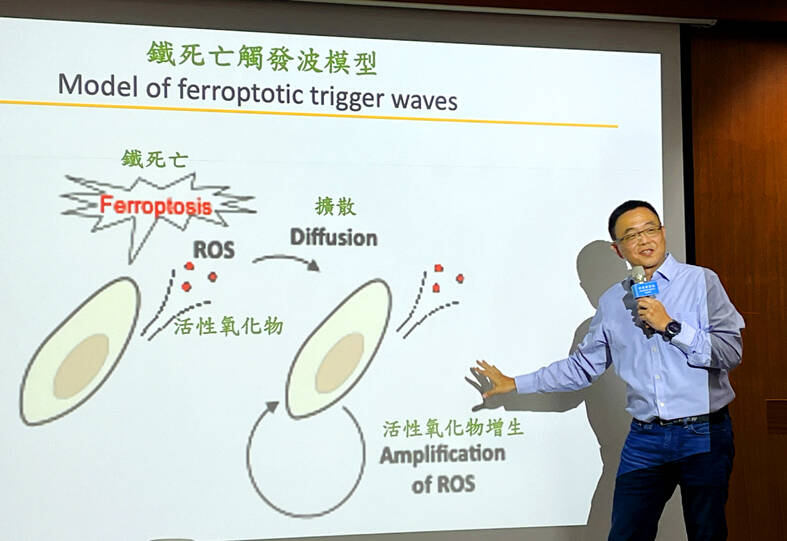
Photo: Chen Chia-yi, Taipei Times
The team discovered that reactive oxygen species (ROS) is the trigger that initiates the ferroptosis process, an iron and lipid-peroxidation-dependent form of programmed cell death, Chen said, adding that the process is biochemically distinct from other forms of regulated cell death.
The study can contribute to cancer therapy, as activation of the process plays a regulatory role on growth of tumor cells in the human body, he said.
The study found the mechanism for ROS in regulating the ferroptotic trigger wave, with the team showing color images of trigger waves of ferroptosis propagating outward from dead cells through lipid peroxidation signals at the wave fronts.
The results also indicated that ferroptotic stress through suppression of amino acid cysteine uptake activates the ROS feedback loops.
The team demonstrated that ferroptosis and its propagation accompany the massive, yet spatially restricted, cell death events in their research on muscle growth of embryonic avian limbs.
“Our findings highlight the role of ferroptosis in coordinating cell death events, providing a paradigm for investigating large-scale cell death in embryonic development and human pathologies,” Chen said.
Other team members showed research modeling and illustrations on how ferroptotic cell death propagates through a cell population via self-regenerating ROS wave fronts.
Wu likened constructing a mathematical model for the ferroptotic trigger waves to assembling building blocks, selecting and arranging equations to resemble the regulatory logic underlying dynamics of ferroptotic trigger waves.
Chen said the team used 24-hour time-lapse imaging to capture cellular activity, and found that the propagation wave was like creating a work of art, where large-scale cell death helped the growing embryo to clean up and sculpt new regions for cellular growth.
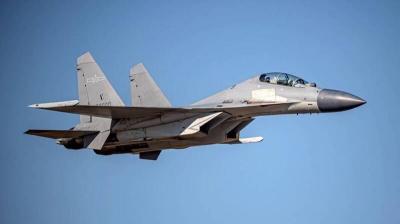
Eight Chinese naval vessels and 24 military aircraft were detected crossing the median line of the Taiwan Strait between 6am yesterday and 6am today, the Ministry of National Defense said this morning. The aircraft entered Taiwan’s northern, central, southwestern and eastern air defense identification zones, the ministry said. The armed forces responded with mission aircraft, naval vessels and shore-based missile systems to closely monitor the situation, it added. Eight naval vessels, one official ship and 36 aircraft sorties were spotted in total, the ministry said.
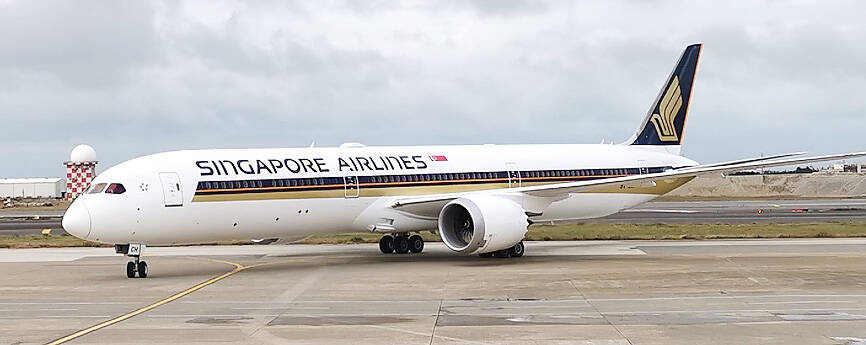
INCREASED CAPACITY: The flights on Mondays, Wednesdays, Fridays and Sundays would leave Singapore in the morning and Taipei in the afternoon Singapore Airlines is adding four supplementary flights to Taipei per week until May to meet increased tourist and business travel demand, the carrier said on Friday. The addition would raise the number of weekly flights it operates to Taipei to 18, Singapore Airlines Taiwan general manager Timothy Ouyang (歐陽漢源) said. The airline has recorded a steady rise in tourist and business travel to and from Taipei, and aims to provide more flexible travel arrangements for passengers, said Ouyang, who assumed the post in July last year. From now until Saturday next week, four additional flights would depart from Singapore on Monday, Wednesday, Friday
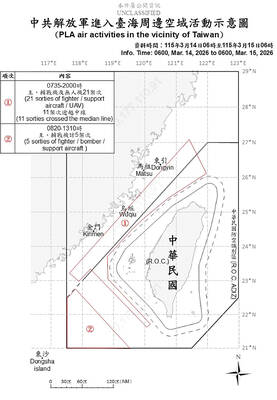
The Ministry of National Defense yesterday reported the return of large-scale Chinese air force activities after their unexplained absence for more than two weeks, which had prompted speculation regarding Beijing’s motives. China usually sends fighter jets, drones and other military aircraft around the nation on a daily basis. Interruptions to such routine are generally caused by bad weather. The Ministry of National Defense said it had detected 26 Chinese military aircraft in the Taiwan Strait over the previous 24 hours. It last reported that many aircraft on Feb. 25, when it spotted 30 aircraft, saying Beijing was carrying out another “joint combat

Taiwan successfully defended its women’s 540 kilogram title and won its first-ever men’s 640 kg title at the 2026 World Indoor Tug of War Championships in Taipei yesterday. In the women’s event, Taiwan’s eight-person squad reached the final following a round-robin preliminary round and semifinals featuring teams from Ukraine, Japan, Thailand, Vietnam, the Basque Country and South Korea. In the finals, they swept the Basque team 2-0, giving the team composed mainly of National Taiwan Normal University students and graduates its second championship in a row, and its fourth in five years. Team captain


 RSS
RSS