


The presidential candidates of the Democratic Progressive Party (DPP) and the Chinese Nationalist Party (KMT) yesterday weighed in on the death of a ninth-grade student in New Taipei City on Wednesday, who was reportedly stabbed in the neck and chest several times during a quarrel with a fellow student on Monday.
“The Ministry of Education and other government agencies are providing assistance to the family of the student who was killed,” Vice President William Lai (賴清德), the DPP’s candidate, wrote on Facebook.
“They are also helping the students and teachers who witnessed the incident to mitigate any symptoms of post-traumatic stress disorder,” Lai added.
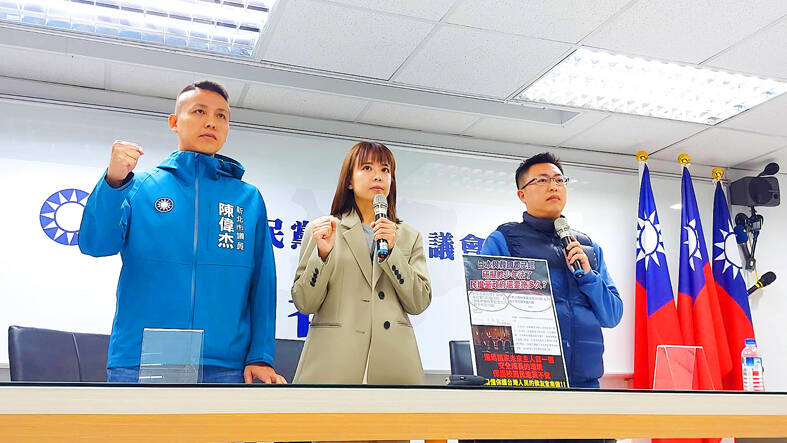
Photo: Huang Tzu-yang, Taipei Times
“The incident also has exposed the problem of school bullying, and we must try to prevent similar tragedies from happening again,” he said.
Lai said that if he is elected, he would thoroughly implement a three-tier counseling system that extends to elementary-school students by proposing an amendment to the Student Guidance and Counseling Act (學生輔導法).
The government would offer more counseling to high-risk families, train more counselors to assist school administrators and teachers to help students with problems, and establish a bridging mechanism between counseling and legal disciplinary services, he said.
“School bullying has become a global issue and the government should devote more resources to tackling it at the source,” he said. “My administration would ensure that students learn to respect and acknowledge differences in others.”
New Taipei City Mayor Hou You-yi (侯友宜), the KMT’s candidate, said that many people, including the family of the student who died, have called for a comprehensive review of the Juvenile Justice Act (少年事件處理法) following the incident, with a focus on the age of accountability, discipline and criminal liability of juveniles involved in major crimes.
“As school bullying is highly correlated with school violence, Japan promulgated the Act for the Promotion of Measures to Prevent Bullying,” Hou wrote on Facebook. “Taiwan should learn from the principles of that law by reinforcing moral education among students, identifying early bullying behavior, monitoring bullying online, assisting people affected by bullying, and punishing and counseling bullies.”
“School administrators can work with local police departments if they think that a school bullying incident is a criminal matter,” he said. “Bullying can be mitigated through early intervention and offering care to high-risk people.”
The government should put more resources toward recruiting counselors, and ensuring the mental and physical health of young people, he said.
The social safety net should be bolstered to prevent bullying through well-coordinated efforts among public and private agencies, Hou said.
“Security at schools is not a local issue, it is a serious issue that the nation must confront together,” he said. “Organized crime groups have begun recruiting teenagers. The government needs to impose stricter sanctions on these groups and prevent the next generation from being destroyed by criminal elements.”
New Power Party Chairwoman Claire Wang (王婉諭), whose daughter was decapitated by man in Taipei’s Neihu District (內湖) in 2016, said the most urgent task is that counselors at junior-high schools should care for the mental health of the family of the student who died, as well as his teachers and classmates.
“We are worried that the incident might encourage copycats,” Wang wrote on Facebook. “News media should refrain from giving overly detailed descriptions of the murder, and the public should avoid labeling specific groups.”
As a legislator, she has repeatedly warned about the counselor shortage on campuses being a loophole in the social safety net, Wang said.
“The issues of school bullying and safety have become more complicated,” she said. “Children are getting improper information from social media. This is a problem that the government, society, families and schools should resolve together.”
“Taiwan cannot afford to make changes only after multiple tragedies have occurred,” she said. “This would be too slow and too painful for families broken by tragedies.”

The Centers for Disease Control (CDC) yesterday reported the first case of a new COVID-19 subvariant — BA.3.2 — in a 10-year-old Singaporean girl who had a fever upon arrival in Taiwan and tested positive for the disease. The girl left Taiwan on March 20 and the case did not have a direct impact on the local community, it said. The WHO added the BA.3.2 strain to its list of Variants Under Monitoring in December last year, but this was the first imported case of the COVID-19 variant in Taiwan, CDC Deputy Director-General Lin Ming-cheng (林明誠) said. The girl arrived in Taiwan on

South Korea is planning to revise its controversial electronic arrival card, a step Taiwanese officials said prompted them to hold off on planned retaliatory measures, a South Korean media report said yesterday. A Yonhap News Agency report said that the South Korean Ministry of Foreign Affairs is planning to remove the “previous departure place” and “next destination” fields from its e-arrival card system. The plan, reached after interagency consultations, is under review and aims to simplify entry procedures and align the electronic form with the paper version, a South Korean ministry official said. The fields — which appeared only on the electronic form

The Ministry of Foreign Affairs (MOFA) is suspending retaliation measures against South Korea that were set to take effect tomorrow, after Seoul said it is updating its e-arrival system, MOFA said today. The measures were to be a new round of retaliation after Taiwan on March 1 changed South Korea's designation on government-issued alien resident certificates held by South Korean nationals to "South Korea” from the "Republic of Korea," the country’s official name. The move came after months of protests to Seoul over its listing of Taiwan as "China (Taiwan)" in dropdown menus on its new online immigration entry system. MOFA last week
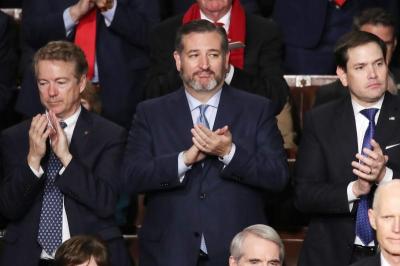
A bipartisan group of US senators has introduced a bill to enhance cooperation with Taiwan on drone development and to reduce reliance on supply chains linked to China. The proposed Blue Skies for Taiwan Act of 2026 was introduced by Republican US senators Ted Cruz and John Curtis, and Democratic US senators Jeff Merkley and Andy Kim. The legislation seeks to ease constraints on Taiwan-US cooperation in uncrewed aerial systems (UAS), including dependence on China-sourced components, limited access to capital and regulatory barriers under US export controls, a news release issued by Cruz on Wednesday said. The bill would establish a "Blue UAS


 RSS
RSS