


The Cabinet yesterday passed a draft amendment that would allow five types of public servants to form “special associations” amid calls to allow unionization following a deadly fire last month.
The amendment would allow firefighters to form separate groups from police as current law requires.
The amendment, if passed, would allow five types of public servants — judicial officials, accountants, customs officers, police and medical personnel — to form such associations.
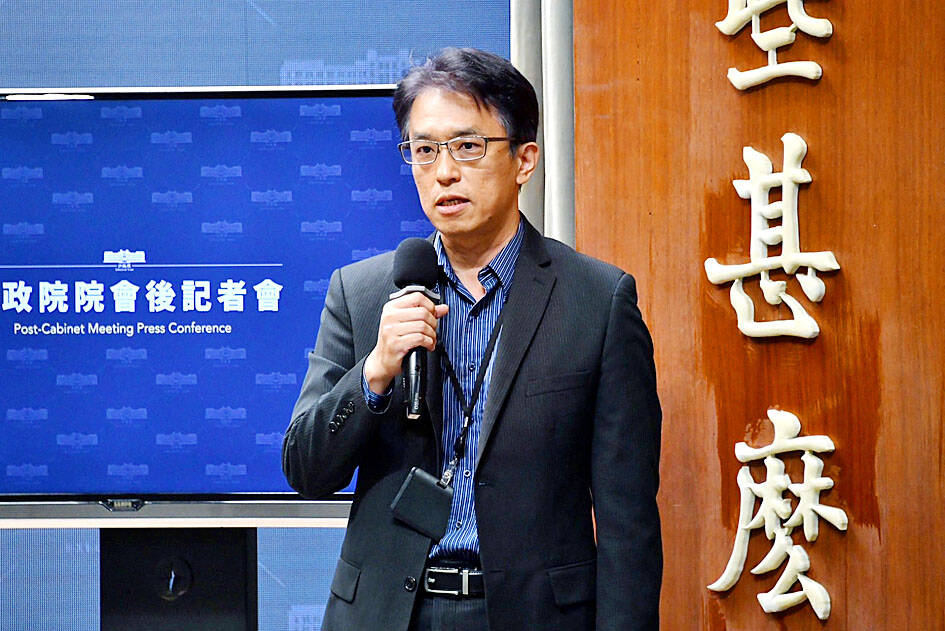
Photo courtesy of the Executive Yuan
According to the amendment, the associations would fall under the same law’s authority.
The Ministry of Civil Service would be responsible for reviewing and approving applications for the formation of special associations if there seems to be a discrepancy between the actual work being conducted and the professional nature of the job.
For example, firefighters and police officers both observe the Police Personnel Management Act (警察人員人事條例), even though their professions are different, Directorate-General of Personnel Administration General Planning Division Director Chou Wei-ting (周威廷) said.
The amendment also states that the formation of special agency-specific associations at Category 3 government agencies would require a minimum of 200 members, while special associations for the five types of public servants would need at least 400.
The number of people required to form special agency-specific associations under the central government and in municipalities would also be reduced from 800 to 400.
As for criticism that the threshold was too high, Chou said that public servants eligible to form special associations numbered 3,800 or above, adding that firefighters had an even higher headcount nationwide.
Chou said that the agency set a threshold to ensure that the groups would be proportionate enough to represent their vocation’s collective views while reasonably relaxing restrictions.
The amendment would allow special associations to make suggestions or attend committees, bodies or meetings, as long as the issues discussed pertain to the interest of its members.
It would also set standards on performance evaluations, and special associations could negotiate with local authorities regarding training, further education, and assistance for employee mental and physical health.
Negotiations would see certain constraints imposed, preventing the government from holding endless meetings, Chou said, adding that other measures are being introduced to ensure that the special associations could uphold the rights of their members.
Separately, Executive Yuan spokesman Lin Tzu-lun (林子倫) quoted Premier Chen Chien-jen (陳建仁) as saying that the amendment was introduced in response to labor trends and demands, and the government hoped that the introduction of special associations would maintain amity between the government and public servants.
Additional reporting by CNA
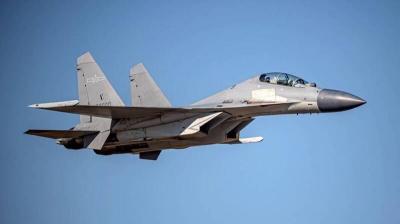
Eight Chinese naval vessels and 24 military aircraft were detected crossing the median line of the Taiwan Strait between 6am yesterday and 6am today, the Ministry of National Defense said this morning. The aircraft entered Taiwan’s northern, central, southwestern and eastern air defense identification zones, the ministry said. The armed forces responded with mission aircraft, naval vessels and shore-based missile systems to closely monitor the situation, it added. Eight naval vessels, one official ship and 36 aircraft sorties were spotted in total, the ministry said.
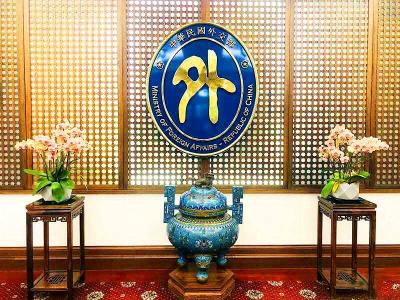
The Ministry of Foreign Affairs (MOFA) today said that if South Korea does not reply appropriately to its request to correct Taiwan’s name on its e-Arrival card system before March 31, it would take corresponding measures to alter how South Korea is labeled on the online Taiwan Arrival Card system. South Korea’s e-Arrival card system lists Taiwan as “China (Taiwan)” in the “point of departure” and “next destination” fields. The ministry said that it changed the nationality for South Koreans on Taiwan’s Alien Resident Certificates from “Korea” to “South Korea” on March 1, in a gesture of goodwill and based on the
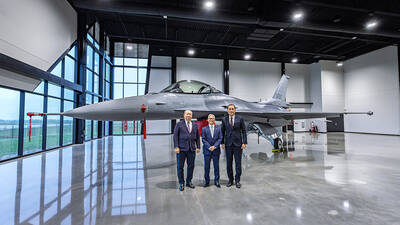
Taiwanese officials were shown the first of 66 F-16V fighter jets purchased by Taiwan from the United States, the Ministry of National Defense said yesterday, adding the aircraft has completed an initial flight test and is expected to be delivered later this year. A delegation led by Deputy Minister of National Defense Hsu Szu-chien (徐斯儉) visited Lockheed Martin’s F-16 C/D Block 70 (also known as F-16V) assembly line in South Carolina on March 16 to view the aircraft. The jet will undergo a final acceptance flight in the US before being delivered to Taiwan, the
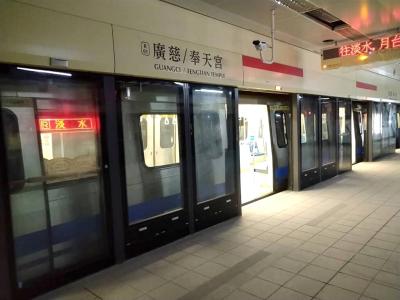
The New Taipei Metro's Sanyin Line and the eastern extension of the Taipei Metro's Tamsui-Xinyi Line (Red Line) are scheduled to begin operations in June, the National Development Council said today. The Red Line, which terminates at Xiangshan Station, would be connected by the 1.4km extension to a new eastern terminal, Guangci/Fengtian Temple Station, while the Sanyin Line would link New Taipei City's Tucheng and Yingge stations via Sanxia District (三峽). The council gave the updates at a council meeting reviewing progress on public construction projects for this year. Taiwan's annual public infrastructure budget would remain at NT$800 billion (US$25.08 billion), with NT$97.3


 RSS
RSS