


The government yesterday denied suggestions that the National Treasury Administration (NTA) interfered in a lottery tender at the request of the American Institute in Taiwan (AIT).
CTBC Financial Holding, which operates the national lottery, last week announced a lucrative worldwide tender for technical services.
A report published yesterday by the Chinese-language United Daily News said that an AIT official visited NTA Director-General Hsiao Chia-chi (蕭家旗) to give him information about the Nevada-based firm International Game Technology.
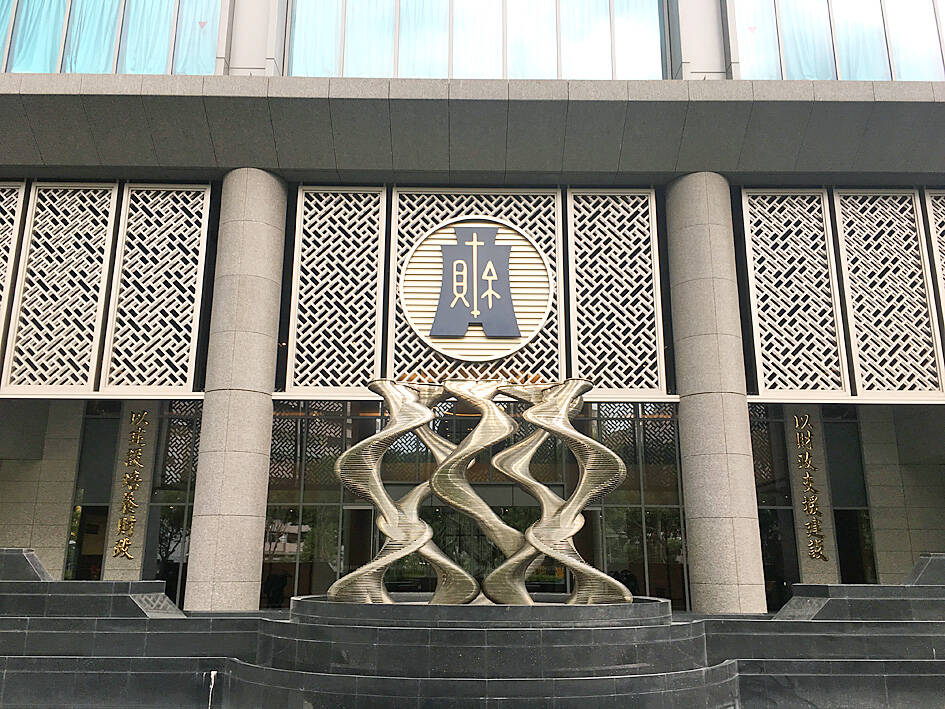
Photo: Clare Cheng, Taipei Times
The NTA passed along the information to CTBC for “reference,” the paper reported, quoting an unnamed former Ministry of Finance official as saying that the “inappropriate” action put pressure on the firm to choose the US company.
Hsiao said that the agency only gave the information to CTBC for reference, but did not make a recommendation or interfere in the tender process.
Any firm interested in tendering an offer may do so, he said, adding that he also reiterated to the AIT official that the agency cannot influence the selection process.
In a brief statement, an AIT spokesperson said that officials from around the world, including the US, have always advocated for their nation’s business interests in a variety of ways.
Such forms of “regularized commercial engagement” promote trade and investment links in the global economy, and help strengthen global supply chains, the spokesperson said.
The Ministry of Foreign Affairs agreed, saying that it is natural for governments to advocate for their nation’s companies.
The NTA and AIT have responded clearly, emphasizing that the case is an example of “regularized commercial engagement,” the ministry said in a statement.
No pressure was put on CTBC, nor was there any interference, it said, condemning “certain media” for spreading baseless rumors, vilifying the actions of the US and alleging that friendly relations between the two nations are reliant on profit.
After witnessing its many contributions to the international community over the past few years, countries want to deepen their relations with Taiwan, the ministry said.
As Beijing becomes more expansionist, like-minded nations are willing to stand up and defend peace and stability in the Taiwan Strait, it added.

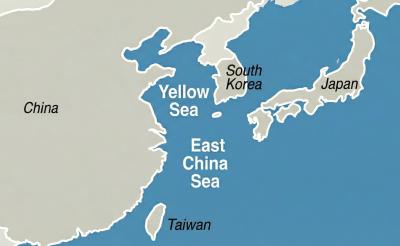
China has reserved offshore airspace in the Yellow Sea and East China Sea from March 27 to May 6, issuing alerts usually used to warn of military exercises, although no such exercises have been announced, the Wall Street Journal (WSJ) reported yesterday. Reserving such a large area for 40 days without explanation is an “unusual step,” as military exercises normally only last a few days, the paper said. These alerts, known as Notice to Air Missions (Notams), “are intended to inform pilots and aviation authorities of temporary airspace hazards or restrictions,” the article said. The airspace reserved in the alert is
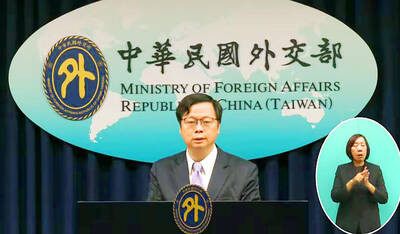
NAMING SPAT: The foreign ministry called on Denmark to propose an acceptable solution to the erroneous nationality used for Taiwanese on residence permits Taiwan has revoked some privileges for Danish diplomatic staff over a Danish permit that lists “Taiwan” as “China,” Eric Huang (黃鈞耀), head of the Ministry of Foreign Affairs’ Department of European Affairs, told a news conference in Taipei yesterday. Reporters asked Huang whether the Danish government had responded to the ministry’s request that it correct the nationality on Danish residence permits of Taiwanese, which has been listed as “China” since 2024. Taiwan’s representative office in Denmark continues to communicate with the Danish government, and the ministry has revoked some privileges previously granted to Danish representatives in Taiwan and would continue to review
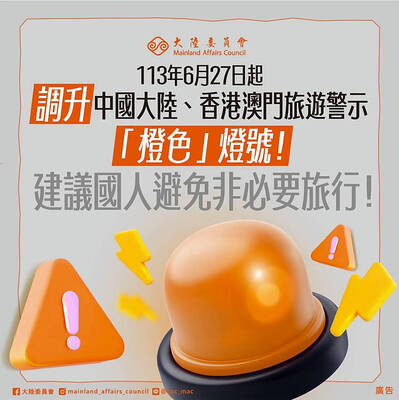
More than 6,000 Taiwanese students have participated in exchange programs in China over the past two years, despite the Mainland Affairs Council’s (MAC) “orange light” travel advisory, government records showed. The MAC’s publicly available registry showed that Taiwanese college and university students who went on exchange programs across the Strait numbered 3,592 and 2,966 people respectively. The National Immigration Agency data revealed that 2,296 and 2,551 Chinese students visited Taiwan for study in the same two years. A review of the Web sites of publicly-run universities and colleges showed that Taiwanese higher education institutions continued to recruit students for Chinese educational programs without

China has reserved offshore airspace over the Yellow Sea and East China Sea from March 27 to May 6, issuing alerts that are usually used to warn of military exercises, although no such exercises have been announced, the Wall Street Journal (WSJ) reported on Sunday. Reserving such a large area for 40 days without explanation is an “unusual step,” as military exercises normally only last a few days, the paper said. The alerts, known as notice to air missions (NOTAMs), “are intended to inform pilots and aviation authorities of temporary airspace hazards or restrictions,” the article said. The airspace reserved in the alert


 RSS
RSS