


Starlux Airlines yesterday announced Sept. 23 as the launch date for a new direct service to Singapore now that the Southeast Asian nation has relaxed the quarantine requirement for Taiwanese travelers.
Singapore is an important economic and aviation hub for Asia, and has been a popular Southeast Asian tourist destination for Taiwanese, the airline said.
The Singaporean government said that Taiwanese can apply for an air travel pass if they have remained in Taiwan for at least 21 consecutive days prior to entry.
All arriving passengers are to undergo a polymerase chain reaction test upon arrival at the Changi Airport, and would be allowed to proceed regularly if they test negative, it said.
The airline is to launch a direct flight service between Taiwan and Singapore to better serve business travelers and Taiwanese expatriates in Singapore, it said, adding that it is also eyeing the air cargo market between the two countries.
Starting on Sept. 23, flights to Singapore are scheduled to depart from Taiwan Taoyuan International Airport at 9:20am every Tuesday and Thursday, with return flights departing Changi Airport at 3:05pm on the same days, the airline said.
In October, flights are to be dispatched every Tuesday, Thursday and Saturday, it said, adding that flights are open now for booking.
The Taipei-Singapore service is the ninth flight route operated by Starlux since it was founded in May 2018, following the launch of services to Macau, Penang, Bangkok, Tokyo, Osaka, Kuala Lumpur, Ho Chi-Minh City and Manila, the airline said.
All flights are operated using its Airbus 321neo fleet, it said.
“We will strictly follow the COVID-19 disease prevention guidelines as stipulated by the Central Epidemic Command Center. Aircraft cabins and items used on board will be thoroughly disinfected, while flight attendants will wear masks, waterproof gloves, face shields and protective suits throughout the flight,” the airline added.
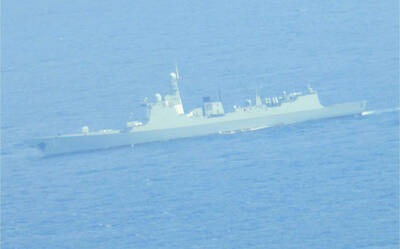
The military has spotted two Chinese warships operating in waters near Penghu County in the Taiwan Strait and sent its own naval and air forces to monitor the vessels, the Ministry of National Defense (MND) said. Beijing sends warships and warplanes into the waters and skies around Taiwan on an almost daily basis, drawing condemnation from Taipei. While the ministry offers daily updates on the locations of Chinese military aircraft, it only rarely gives details of where Chinese warships are operating, generally only when it detects aircraft carriers, as happened last week. A Chinese destroyer and a frigate entered waters to the southwest
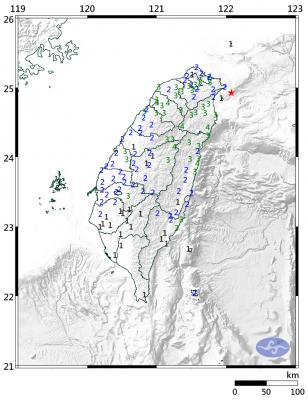
A magnitude 6.1 earthquake struck off the coast of Yilan County at 8:39pm tonight, the Central Weather Administration (CWA) said, with no immediate reports of damage or injuries. The epicenter was 38.7km east-northeast of Yilan County Hall at a focal depth of 98.3km, the CWA’s Seismological Center said. The quake’s maximum intensity, which gauges the actual physical effect of a seismic event, was a level 4 on Taiwan’s 7-tier intensity scale, the center said. That intensity level was recorded in Yilan County’s Nanao Township (南澳), Hsinchu County’s Guansi Township (關西), Nantou County’s Hehuanshan (合歡山) and Hualien County’s Yanliao (鹽寮). An intensity of 3 was
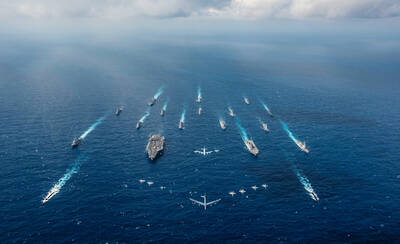
Japanese Prime Minister Sanae Takaichi’s comment last year on Tokyo’s potential reaction to a Taiwan-China conflict has forced Beijing to rewrite its invasion plans, a retired Japanese general said. Takaichi told the Diet on Nov. 7 last year that a Chinese naval blockade or military attack on Taiwan could constitute a “survival-threatening situation” for Japan, potentially allowing Tokyo to exercise its right to collective self-defense. Former Japan Ground Self-Defense Force general Kiyofumi Ogawa said in a recent speech that the remark has been interpreted as meaning Japan could intervene in the early stages of a Taiwan Strait conflict, undermining China’s previous assumptions
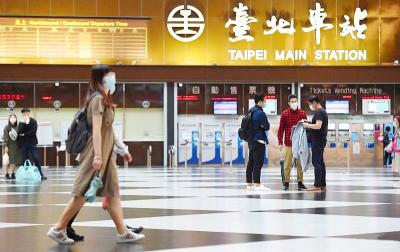
Taiwan Railways Corp (TRC) today announced that Shin Kong Mitsukoshi has been selected as the preferred bidder to operate the Taipei Railway Station shopping mall, replacing the current operator, Breeze Development Co Ltd. Among eight qualified firms that delivered presentations and were evaluated by a review committee, Shin Kong Mitsukoshi was ranked first, while Breeze was named the runner-up, the rail company said in a statement. Contract negotiations are to proceed in accordance with regulations, it said, adding that if negotiations with the top bidder fail, it could invite the second-ranked applicant to enter talks. Breeze in a statement today expressed doubts over


 RSS
RSS