


The national Olympic team yesterday departed for Japan to compete in the Tokyo Games starting on Friday.
The 134-strong Olympic delegation includes officials, support staff and 68 athletes, who are to compete in 18 sports through Aug. 8.
Taiwan is competing in the Games under the name Chinese Taipei.
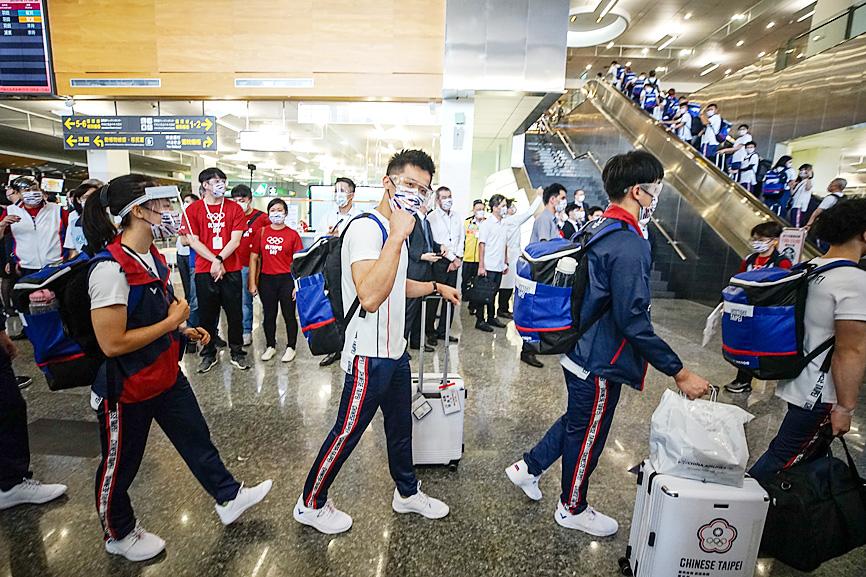
Photo: CNA
The delegation is led by Taiwan’s top female weightlifter, Kuo Hsing-chun (郭婞淳), who is to carry the team flag at the opening ceremony. It also includes world No. 1 women’s singles badminton player Tai Tzu-ying (戴資穎), as well as athletes who are to compete in cycling, taekwondo, judo, shooting, canoeing, rowing and archery events.
Taiwan is also to compete in swimming, artistic gymnastics, table tennis, boxing and tennis, among other events.
Team members wore the red, white and blue uniform of the national squad and matching masks as they boarded their chartered flight. They traveled in one group to avoid coming into contact with others, due to the COVID-19 pandemic.
Premier Su Tseng-chang (蘇貞昌), Minister Without Portfolio Audrey Tang (唐鳳), Minister of Education Pan Wen-chung (潘文忠) and other government officials were at Taipei International Airport (Songshan airport) to give the team an official send-off.
The government had urged Taiwanese not to visit the airport to send off the team due to the pandemic. The team’s departure was livestreamed online.
A smaller group of Taiwanese athletes and support staff arrived in Tokyo last week and several similar small groups are scheduled to depart Taiwan for Japan in the following days.
Disease prevention coordinators are among the support staff for the first time, due to the pandemic.
The Sports Administration is targeting medals in weightlifting, badminton, artistic gymnastics, boxing, archery, javelin and karate.
Taiwan won one gold and two bronze medals at the 2016 Olympics in Rio de Janeiro.
Yesterday, controversy erupted after Tai posted an Instagram story of herself sitting in economy class during the flight to Tokyo.
Pan had last year said that the nation’s Olympic team would travel in business class.
Su on Facebook last night said that he called Tai to apologize and instructed the Sports Administration to convey the government’s apologies to the rest of the team.
“The heroes of the Olympics are the athletes, not the accompanying officials,” Su said, after reports emerged that coaches and medics traveled in business class.
Su said that after the Olympics, he would instruct the Ministry of Education to report on the matter and hold those responsible to account.
The Sports Administration last night said that the athletes were seated in economy because of their number and the need to space them apart due to COVID-19 concerns.
On the return flight, it pledged to prioritize athletes for business-class seating.
Additional reporting by Lu Yi-hsuan

LOUD AND PROUD Taiwan might have taken a drubbing against Australia and Japan, but you might not know it from the enthusiasm and numbers of the fans Taiwan might not be expected to win the World Baseball Classic (WBC) but their fans are making their presence felt in Tokyo, with tens of thousands decked out in the team’s blue, blowing horns and singing songs. Taiwanese fans have packed out the Tokyo Dome for all three of their games so far and even threatened to drown out home team supporters when their team played Japan on Friday. They blew trumpets, chanted for their favorite players and had their own cheerleading squad who dance on a stage during the game. The team struggled to match that exuberance on the field, with
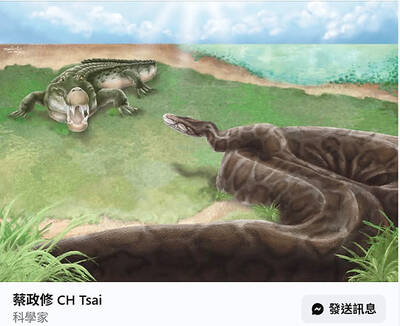
Taiwanese paleontologists have discovered fossil evidence that pythons up to 4m long inhabited Taiwan during the Pleistocene epoch, reporting their findings in the international scientific journal Historical Biology. National Taiwan University (NTU) Institute of Ecology and Evolutionary Biology associate professor Tsai Cheng-hsiu (蔡政修) led the team that discovered the largest snake fossil ever found in Taiwan. The single trunk vertebra was discovered in Tainan at the Chiting Formation, dated to between 400,000 and 800,000 years ago in the Middle Pleistocene, the paper said. The area also produced Taiwan’s first avian fossil, as well as crocodile, mammoth, saber-toothed cat and rhinoceros fossils, it said. Discoveries

Taiwanese paleontologists have discovered fossil evidence that pythons up to 4m long inhabited Taiwan during the Pleistocene epoch, reporting their findings in the international scientific journal Historical Biology. National Taiwan University (NTU) Institute of Ecology and Evolutionary Biology associate professor Tsai Cheng-hsiu (蔡政修) led the team that discovered the largest snake fossil ever found in Taiwan. A single trunk vertebra was discovered in Tainan at the Chiting Formation, dated to between 800,000 to 400,000 years ago in the Middle Pleistocene, the paper said. The area also produced Taiwan’s first avian fossil, as well as crocodile, mammoth, sabre-toothed cat and rhinoceros fossils, it said. Discoveries
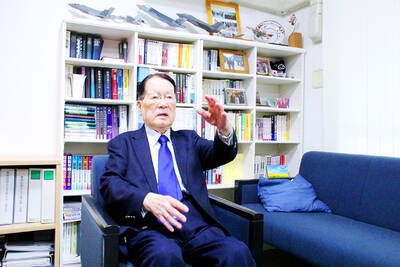
Whether Japan would help defend Taiwan in case of a cross-strait conflict would depend on the US and the extent to which Japan would be allowed to act under the US-Japan Security Treaty, former Japanese minister of defense Satoshi Morimoto said. As China has not given up on the idea of invading Taiwan by force, to what extent Japan could support US military action would hinge on Washington’s intention and its negotiation with Tokyo, Morimoto said in an interview with the Liberty Times (sister paper of the Taipei Times) yesterday. There has to be sufficient mutual recognition of how Japan could provide


 RSS
RSS