


The importation of pork containing the feed additive ractopamine is not about politics, and legislators will be held accountable by the public and by history when they vote on the executive order covering the lifting of the ban on such imports, Chinese Nationalist Party (KMT) Chairman Johnny Chiang (江啟臣) said yesterday.
Pork products with traces of ractopamine and food safety are “public issues, not political issues,” Chiang said on the sidelines of an event in Hualien County after reporters asked him if the KMT had planned any strategies on handling the vote planned for this week in the Legislative Yuan.
Public opposition to the government’s decision to allow imports of US pork containing ractopamine residue has remained strong since President Tsai Ing-wen (蔡英文) announced on Aug. 28 that the government would ease the ban, he said.

Photo: CNA
People’s health should not be used as a bargaining chip, he added.
When members of the Legislative Yuan vote, they would be representing public opinion, not themselves, Chiang said.
Urging lawmakers to consider public opinion and concerns voiced by the public, he said that when they vote, they must be “accountable to history and to the people.”
“Many people joined the ‘Autumn Struggle’ march on Nov. 22, but the Democratic Progressive Party [DPP] chooses not to see or hear [them],” Chiang said later in the day, reiterating plans for the KMT to take to the streets of Taipei again this week.
While the KMT has fewer votes in the legislature than the DPP, DPP lawmakers should “stand on the side of public opinion,” he said.
The KMT would also begin collecting a second round of signatures for its two referendum proposals — one on when referendums are held, and the second on the importation of pork, pig offal and other products containing ractopamine, he said.
“If [the legislature] cannot block [the policy], we will use the people’s votes to block it,” he said.
The Central Election Commission on Friday announced that the two proposals could advance to the second stage of gathering signatures.
Also on Friday, cross-caucus negotiations reached a consensus that the legislature on Thursday would review nine administrative directives related to allowing US imports of pork containing ractopamine residue, and a vote on the nine directives is expected.
KMT caucus whip Lin Wei-chou (林為洲) on Saturday announced that the KMT caucus would stage two rallies in front of the Legislative Yuan’s Chun-hsien Building — on Wednesday evening and Thursday — to protest the government’s decision to lift the ban on the importation of US pork with ractopamine residue.
A large screen would be erected at the rally site to allow participants to watch a live broadcast of the legislative vote, Lin added.

Yangmingshan National Park authorities yesterday urged visitors to respect public spaces and obey the law after a couple was caught on a camera livestream having sex at the park’s Qingtiangang (擎天崗) earlier in the day. The Shilin Police Precinct in Taipei said it has identified a suspect and his vehicle registration number, and would summon him for questioning. The case would be handled in accordance with public indecency charges, it added. The couple entered the park at about 11pm on Thursday and began fooling around by 1am yesterday, the police said, adding that the two were unaware of the park’s all-day live

A former soldier and an active-duty army officer were yesterday indicted for allegedly selling classified military training materials to a Chinese intelligence operative for a total of NT$79,440. The Taipei District Prosecutors’ Office indicted Chen Tai-yin (陳泰尹) and Lee Chun-ta (李俊達) for contravening the National Security Act (國家安全法) and the Anti-Corruption Act (貪污治罪條例). Chen left the military in September 2013 after serving alongside then-staff sergeant Lee, now an army lieutenant, at the 21st Artillery Command of the army’s Sixth Corps from 2011 to 2013, according to the indictment. Chen met a Chinese intelligence operative identified as “Wang” (王) through a friend in November

Minister of Digital Affairs Lin Yi-ching (林宜敬) yesterday cited regulatory issues and national security concerns as an expert said that Taiwan is among the few Asian regions without Starlink. Lin made the remarks on Facebook after funP Innovation Group chief executive officer Nathan Chiu (邱繼弘) on Friday said Taiwan and four other countries in Asia — China, North Korea, Afghanistan and Syria — have no access to Starlink. Starlink has become available in 166 countries worldwide, including Ukraine, Malaysia, the Philippines and Vietnam, in the six years since it became commercial, he said. While China and North Korea block Starlink, Syria is not
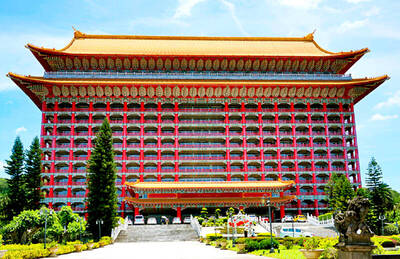
The Grand Hotel Taipei has rejected media reports claiming that the hotel had prevented CBS from broadcasting coverage of the Beijing summit between U.S. President Donald Trump and Chinese President Xi Jinping (習近平) on its premises. Media reports alleging that the hotel owner, dissatisfied with CBS’s coverage, prohibited the network from broadcasting political content on the hotel premises, are not true, the hotel said in a statement issued last night. The reports were “inconsistent with how the hotel actually handled the matter,” it said. The hotel said it received a refund request from a


 RSS
RSS