


The Central Epidemic Command Center (CECC) yesterday urged people undergoing a 14-day mandatory quarantine and those in mandatory seven-day self-health management to abide by the rules, as 899 people have been fined for violations.
However, the center reported no new case of COVID-19 and the number of confirmed cases in the nation remains at 495.
Minister of Health and Welfare Chen Shih-chung (陳時中), head of the center, also said that Vietnam has been moved to the list of “low infection risk countries or areas,” from which short-term business travelers can apply for a shorter quarantine period of five days.
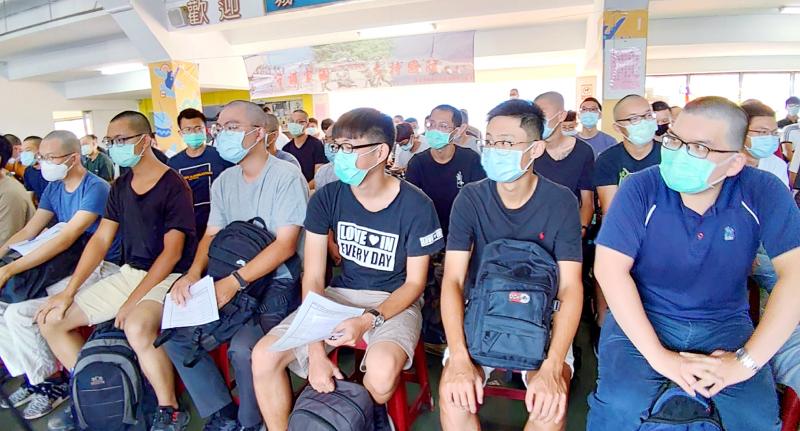
Photo: Lin Yi-chang, Taipei Times, courtesy of Chiayi City Councilor Cheng Kuang-hung’s office
Meanwhile, Hong Kong has been moved to the list of “low to medium infection risk countries or areas,” for which the quarantine period can be shortened to seven days upon approved application, Chen added.
He said that the center in the past few weeks noticed that some people have let their guard down and neglected the quarantine orders, citing local news reports on Tuesday about the chairman of a New Taipei City-based company being fined NT$500,000 (US$16,932) for violating quarantine rules.
Kang Hsuan Educational Publishing Group chairman Mike Lee (李萬吉) was reported to have left his home quarantine to exercise and attend business meetings at his company, after having returned from China. The company issued a statement on Tuesday saying that Lee appologize for his behavior.
Deputy Minister of the Interior Chen Tsung-yen (陳宗彥), who is also the deputy head of the center, said that Lee had left his mobile phone at home so that the “electronic fence” system could not track him.
The system notifies police if people leave their quarantine locations or turn off their mobile phones.
Among more than 270,000 people who have been put under quarantine in Taiwan, the violation rate is below 0.35 percent, he said, adding that Lee represents a very rare case.
The fines imposed on 899 people total NT$116.04 million, he said.
Local media yesterday reported the case of a 26-year-old military draftee who did not report to his unit about having had close contact with his brother, who is under home quarantine after returning from Spain on Friday last week, before boarding a bus with 30 other draftees.
All the draftees on the bus were later put under home quarantine.
Asked about the case, Centers for Disease Control (CDC) Deputy Director-General Chuang Jen-hsiang (莊人祥), who is also the CECC spokesman, said the man and his brother had stayed on different floors with separate bathrooms at their home, but had close contact for a short period of time.
However, as the brother is not a confirmed COVID-19 case, those who had close contact with him are not required to quarantine under CECC guidelines, and the decision to impose quarantines was made by the military, Chuang said.
In addition, Chen Shih-chung said that people who purchased masks with “Carry mask” imprints through the government’s rationing system could still exchange them for new ones at National Health Insurance-contracted pharmacies and local public health centers after Friday, the original deadline.
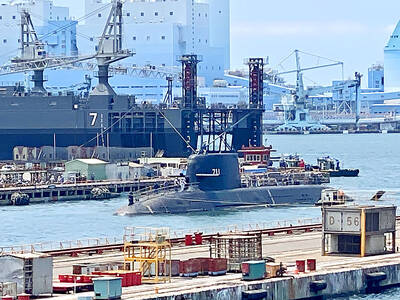
AGING: While Japan has 22 submarines, Taiwan only operates four, two of which were commissioned by the US in 1945 and 1946, and transferred to Taiwan in 1973 Taiwan would need at least 12 submarines to reach modern fleet capabilities, CSBC Corp, Taiwan chairman Chen Cheng-hung (陳政宏) said in an interview broadcast on Friday, citing a US assessment. CSBC is testing the nation’s first indigenous defense submarine, the Hai Kun (海鯤, Narwhal), which is scheduled to be delivered to the navy next month or in July. The Hai Kun has completed torpedo-firing tests and is scheduled to undergo overnight sea trials, Chen said on an SET TV military affairs program. Taiwan would require at least 12 submarines to establish a modern submarine force after assessing the nation’s operational environment and defense
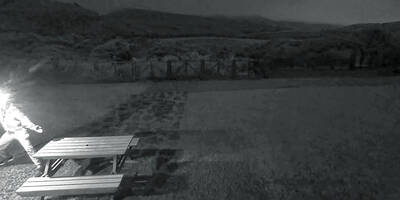
Yangmingshan National Park authorities yesterday urged visitors to respect public spaces and obey the law after a couple was caught on a camera livestream having sex at the park’s Qingtiangang (擎天崗) earlier in the day. The Shilin Police Precinct in Taipei said it has identified a suspect and his vehicle registration number, and would summon him for questioning. The case would be handled in accordance with public indecency charges, it added. The couple entered the park at about 11pm on Thursday and began fooling around by 1am yesterday, the police said, adding that the two were unaware of the park’s all-day live
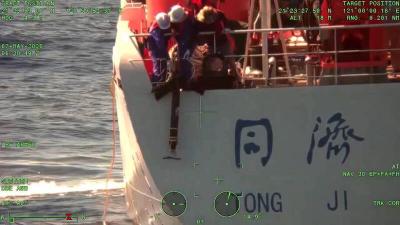
The coast guard today said that it had disrupted "illegal" operations by a Chinese research ship in waters close to the nation and driven it away, part of what Taipei sees a provocative pattern of China's stepped up maritime activities. The coast guard said that it on Thursday last week detected the Chinese ship Tongji (同濟號), which was commissioned only last year, 29 nautical miles (54km) southeast of the southern tip of Taiwan, although just outside restricted waters. The ship was observed lowering ropes into the water, suspected to be the deployment of scientific instruments for "illegal" survey operations, and the coast

A former soldier and an active-duty army officer were yesterday indicted for allegedly selling classified military training materials to a Chinese intelligence operative for a total of NT$79,440. The Taipei District Prosecutors’ Office indicted Chen Tai-yin (陳泰尹) and Lee Chun-ta (李俊達) for contravening the National Security Act (國家安全法) and the Anti-Corruption Act (貪污治罪條例). Chen left the military in September 2013 after serving alongside then-staff sergeant Lee, now an army lieutenant, at the 21st Artillery Command of the army’s Sixth Corps from 2011 to 2013, according to the indictment. Chen met a Chinese intelligence operative identified as “Wang” (王) through a friend in November


 RSS
RSS