


The Kaohsiung Harbor Police Department yesterday at the harbor seized 50 smuggled long-tailed chinchillas valued at NT$7.5 million (US$253,970).
The rodents, each worth NT$150,000 on the pet market, were seized after police officers Pan Shih-ying (潘詩盈) and Shen Ya-chin (沈雅欽) found them in a minivan at a harbor checkpoint, the department said.
The minivan’s driver, surnamed Yang (楊), appeared nervous and the officers heard animal noises coming from the back seat, prompting them to search the vehicle, the department said.
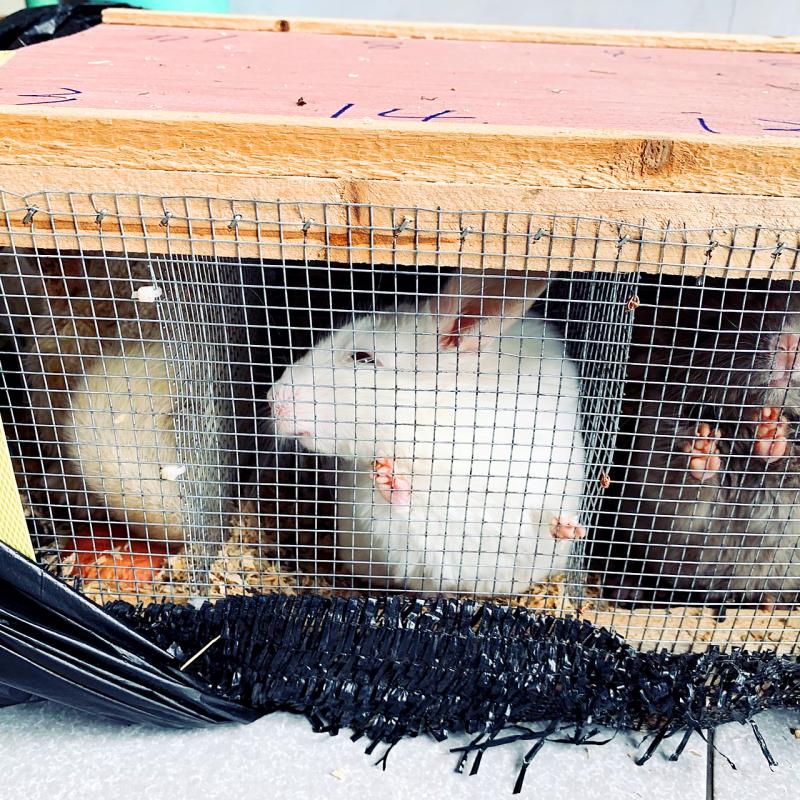
Photo copied by Hung Ting-hung, Taipei Times
The animals were likely smuggled from China, it said, adding that it was the largest number of illegally imported chinchillas the department has ever seized.
The department said it would hand over Yang, who has been detained, to prosecutors over contraventions of the Wildlife Conservation Act (野生動物保護法) and the Act for Prevention and Control of Infectious Animal Disease (動物傳染病防治條例).
While chinchillas bred in captivity are not considered endangered animals in Taiwan, they must be checked for diseases by the Bureau of Animal and Plant Health Inspection and Quarantine before they can be legally imported, according to the Forestry Bureau.
Chinchillas are native to the Andes mountains in South America, and live in rock crevices and caves at high elevations, the Taipei City Animal Protection Office said.
The rodents need extensive care, as their food has to be carefully selected and the temperature of their environment needs to be controlled, the office said.
Chinchillas are adapted to living in temperatures of 16°C to 18°C and have thick fur covering their entire body, and could die of heatstroke or heat exhaustion at higher temperatures, it said.
They can jump as high as 1.8m, so owners shold provide them with plenty of space, the office added.
Chinchillas have gained popularity in Taiwan in the past few years due to their docile disposition and appearance, which people liken to Totoro, the titular character from Hayao Miyazaki’s 1988 animation My Neighbor Totoro.
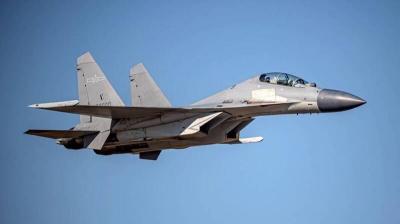
Eight Chinese naval vessels and 24 military aircraft were detected crossing the median line of the Taiwan Strait between 6am yesterday and 6am today, the Ministry of National Defense said this morning. The aircraft entered Taiwan’s northern, central, southwestern and eastern air defense identification zones, the ministry said. The armed forces responded with mission aircraft, naval vessels and shore-based missile systems to closely monitor the situation, it added. Eight naval vessels, one official ship and 36 aircraft sorties were spotted in total, the ministry said.
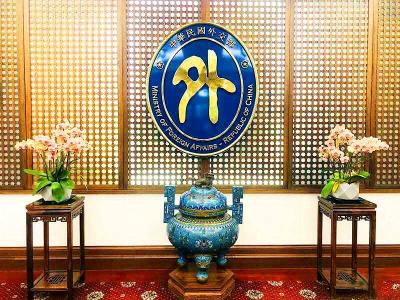
The Ministry of Foreign Affairs (MOFA) today said that if South Korea does not reply appropriately to its request to correct Taiwan’s name on its e-Arrival card system before March 31, it would take corresponding measures to alter how South Korea is labeled on the online Taiwan Arrival Card system. South Korea’s e-Arrival card system lists Taiwan as “China (Taiwan)” in the “point of departure” and “next destination” fields. The ministry said that it changed the nationality for South Koreans on Taiwan’s Alien Resident Certificates from “Korea” to “South Korea” on March 1, in a gesture of goodwill and based on the

Taiwanese officials were shown the first of 66 F-16V fighter jets purchased by Taiwan from the United States, the Ministry of National Defense said yesterday, adding the aircraft has completed an initial flight test and is expected to be delivered later this year. A delegation led by Deputy Minister of National Defense Hsu Szu-chien (徐斯儉) visited Lockheed Martin’s F-16 C/D Block 70 (also known as F-16V) assembly line in South Carolina on March 16 to view the aircraft. The jet will undergo a final acceptance flight in the US before being delivered to Taiwan, the
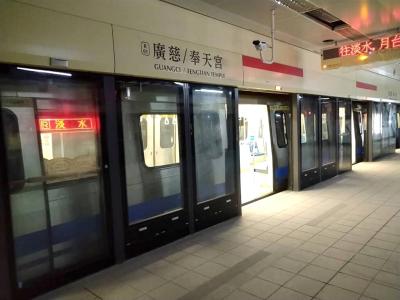
The New Taipei Metro's Sanyin Line and the eastern extension of the Taipei Metro's Tamsui-Xinyi Line (Red Line) are scheduled to begin operations in June, the National Development Council said today. The Red Line, which terminates at Xiangshan Station, would be connected by the 1.4km extension to a new eastern terminal, Guangci/Fengtian Temple Station, while the Sanyin Line would link New Taipei City's Tucheng and Yingge stations via Sanxia District (三峽). The council gave the updates at a council meeting reviewing progress on public construction projects for this year. Taiwan's annual public infrastructure budget would remain at NT$800 billion (US$25.08 billion), with NT$97.3


 RSS
RSS