


Forced labor, human rights abuses and illegal fishing practices continue to mar Taiwan’s deep-sea fishing industry, a new report by Greenpeace East Asia shows, Greenpeace Taiwan said yesterday as it called on the government to take legal action to end such abuses.
Choppy Waters — Forced Labour and Illegal Fishing in Taiwan’s Distant Water Fisheries details the results of a two-month investigation, including interviews with Indonesian migrant fishers working on vessels flagged or otherwise connected to Taiwan.
According to interview with four Indonesian fishers, six of the 11 International Labour Organization (ILO) indicators of forced labor were met, such as the lack of clean drinking water, being required to work 34 consecutive, wage withholding, monthly wage of less than US$450, Greenpeace Taiwan member Moffy Chen (陳瓊妤) told a news conference in Taipei.
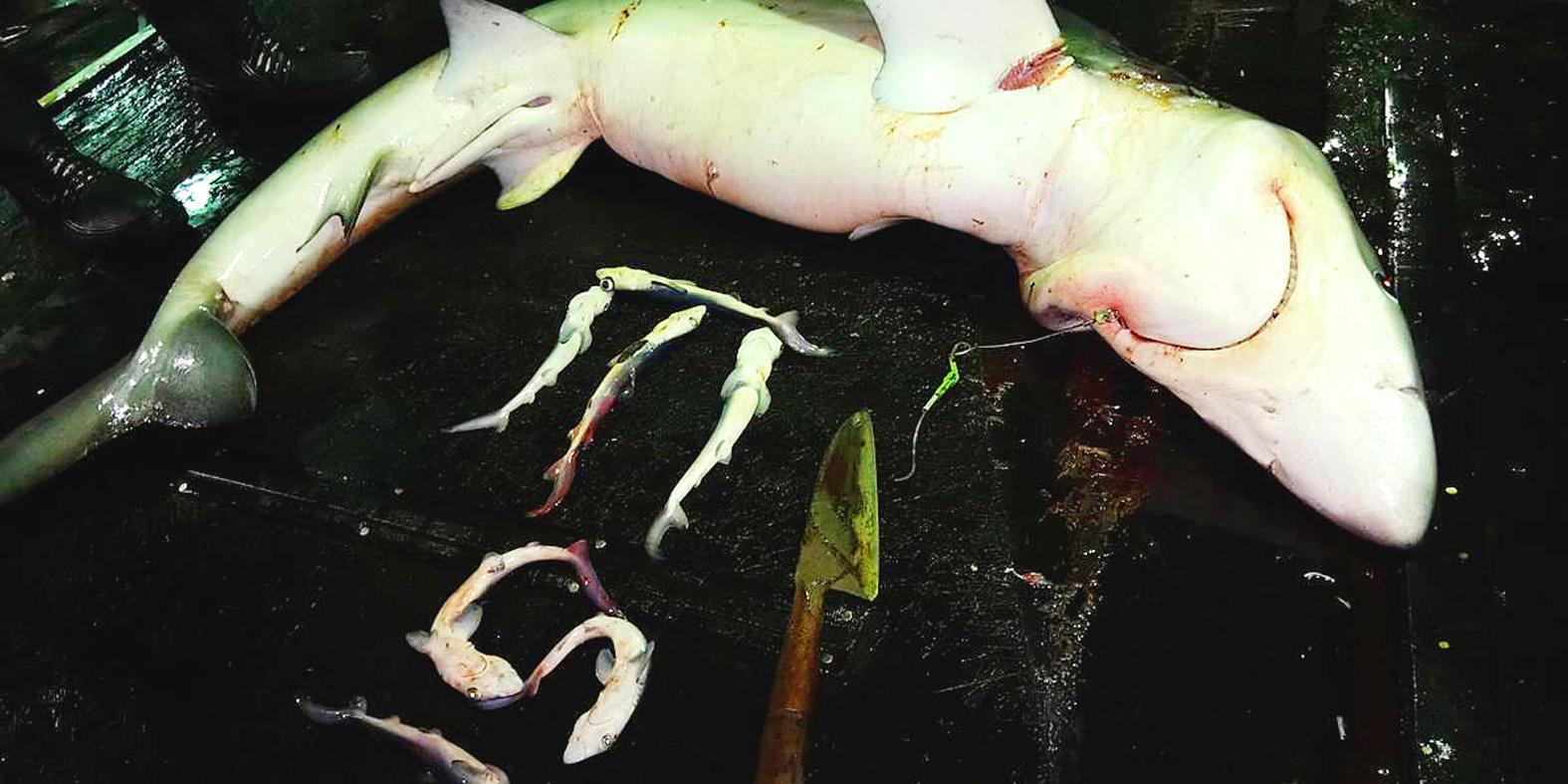
Photo courtesy of Greenpeace Taiwan
Two Taiwanese vessels linked to Fong Chun Formosa (FCF) were allegedly involved illegal shark finning and the illegal transfer of crew and shark fins, she said.
Greenpeace provided its investigation results to the Fisheries Agency two weeks ago, which should disclose the results of its official investigation, Chen said.
Greenpeace Taiwan campaigner Pearl Chen (陳珮瑜) said that while Taiwan’s government has amended regulations, it has not been enough.
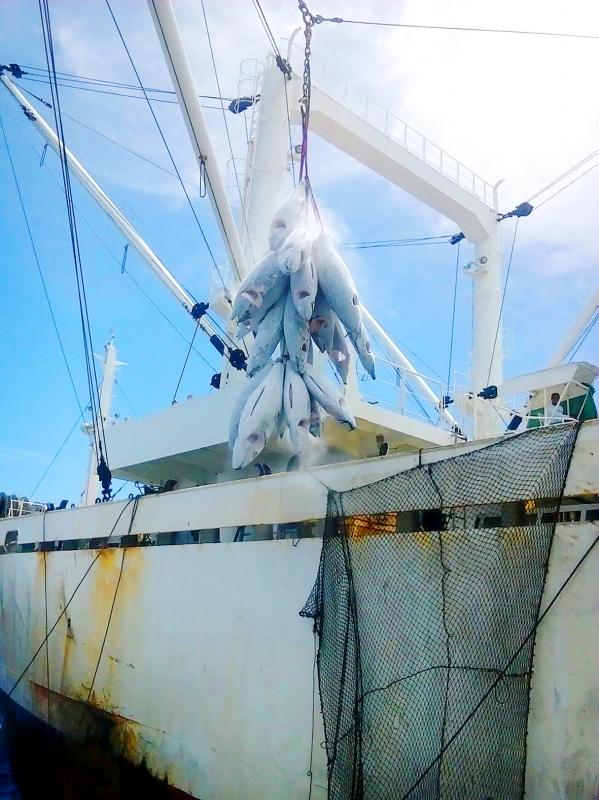
Photo courtesy of Greenpeace Taiwan
“We found fresh evidence that both government and corporations are failing to protect and respect the human rights of migrant fishers in Taiwan’s distant water fishing fleet,” she said.
“The cases of human rights abuse and environmental destruction we found are simply shocking, and major seafood corporations, like FCF, need to lead and uphold global fishery reform,” she said.
Fisheries Agency Director-General Chang Chih-sheng (張致盛) said that the agency needs to corroborate some of the details in the report with Greenpeace and the vessels involved to ensure a smooth follow-up investigation.
A Fisheries Agency official who declined to be named said the report did not give the names of the interviewees or the period of their employment, which would mean the agency would have to include every migrant fisher who ever worked on the vessels.
Verification of the allegations of illegal practices was also needed, as the interviews did not constitute solid evidence, the official said.
The agency would handle the allegations in accordance with the law if evidence of illegality is found, Chang said.
Additional reporting by Diane Baker

Actor Darren Wang (王大陸) was sentenced to six months in prison, commutable to a fine, by the New Taipei District Court today for contravening the Personal Data Protection Act (個人資料保護法) in a case linked to an alleged draft-dodging scheme. Wang allegedly paid NT$3.6 million (US$114,380) to an illegal group to help him evade mandatory military service through falsified medical documents, prosecutors said. He transferred the funds to Chen Chih-ming (陳志明), the alleged mastermind of a draft-evasion ring, although he lost contact with him as he was already in detention on fraud charges, they said. Chen is accused of helping a

SECURITY: Starlink owner Elon Musk has taken pro-Beijing positions, and allowing pro-China companies to control Taiwan’s critical infrastructure is risky, a legislator said Starlink was reluctant to offer services in Taiwan because of the nation’s extremely high penetration rates in 4G and 5G services, the Ministry of Digital Affairs said yesterday. The ministry made the comments at a meeting of the legislature’s Transportation Committee, which reviewed amendments to Article 36 of the Telecommunications Management Act (電信管理法). Article 36 bans foreigners from holding more than 49 percent of shares in public telecommunications networks, while shares foreigners directly and indirectly hold are also capped at 60 percent of the total, unless specified otherwise by law. The amendments, sponsored by Chinese Nationalist Party (KMT) Legislator Ko

The eastern extension of the Taipei MRT Red Line could begin operations as early as late June, the Taipei Department of Rapid Transit Systems said yesterday. Taipei Rapid Transit Corp said it is considering offering one month of free rides on the new section to mark its opening. Construction progress on the 1.4km extension, which is to run from the current terminal Xiangshan Station to a new eastern terminal, Guangci/Fengtian Temple Station, was 90.6 percent complete by the end of last month, the department said in a report to the Taipei City Council's Transportation Committee. While construction began in October 2016 with an

NON-RED SUPPLY: Boosting the nation’s drone industry is becoming increasingly urgent as China’s UAV dominance could become an issue in a crisis, an analyst said Taiwan’s drone exports to Europe grew 41.7-fold from 2024 to last year, with demand from Ukraine’s fight against Russian aggression the most likely driver of growth, a study showed. The Institute for Democracy, Society and Emerging Technology (DSET) in a statement on Wednesday said it found that many of Taiwan’s uncrewed aerial vehicle (UAV) sales were from Poland and the Czech Republic. These countries likely transferred the drones to Ukraine to aid it in its fight against the Russian invasion that started in 2022, it said. Despite the gains, Taiwan is not the dominant drone exporter to these markets, ranking second and fourth


 RSS
RSS