

Thirteen Maxim Trader Group executives and employees yesterday were found guilty by the New Taipei District Court of defrauding investors in Taiwan of about NT$13.9 billion (US$453 million at the current exchange rate) between 2013 and 2015.
Maxim Trader executives and its promoters touted the firm’s forex trading, mutual funds and other investment opportunities with a promised monthly return on investment (ROI) of between 3 and 8 percent and as much as 98 percent within a year.
However, an investigation determined the company was operating a Ponzi scheme, in which the main operators were Singaporeans who had registered the company in Malaysia and New Zealand.
About 50,000 people from Taiwan, Southeast Asia, Hong Kong, China, Japan, South Korea and Australia invested with the company before it collapsed in 2015.
Maxim Trader’s Taiwan chief executive Chang Chin-su (張金素) was sentenced to 11 years in prison and fined NT$100 million, while his chief assistant, Chia Hsiang-chieh (賈翔傑), was sentenced to nine years and fined NT$50 million.
Other local employees found guilty of contravening the Banking Act (銀行法), financial fraud and related charges included Chang’s sister, Chang Mu-tan (張牡丹), financial advisers and course instructors.
Chang Mu-tan was given a five-year sentence, while the others received terms ranging from three to eight years, and fines of up to NT$50 million.
Yesterday’s ruling was the first in the case and can be appealed.
A woman surnamed Ho (何) who attended the sentencing hearing said she had lost her life savings of NT$2.84 million.
“Some defendants changed their names and continue to deceive people with investment scams,” Ho said. “The sentences are too lenient. As a member of the victims’ group, I want to appeal for them to receive a sentence of at least 14 or 15 years. Only then can society deter such fraudsters.”
The defendants gained the trust of investors by claiming Maxim Trader was an affiliate of Royale Globe Holding, a NASDAQ-listed company.
However, investigators found they had simply registered shell entities in Taiwan and transferred investors’ money into bank accounts overseas.
Judicial authorities said Maxim Trader offices around the region held seminars and “financial investment courses” to attract investors, and encouraged investors to recruit other people.
The Ministry of Justice Investigation Bureau in 2015 raided 16 locations linked to the company, seizing about NT$75.96 million in cash, along with jewelry, luxury watches, brand-name handbags and luxury cars, including Maseratis, Bentleys and BMWs.
The company began operations in Malaysia, with ties to shell companies incorporated in the Seychelles and New Zealand.
Malaysian authorities earlier this year indicted three Singaporeans, New Zealand-incorporated Maxim Capital chief executive Andrew Lim Ann Hoe, and company executives Chin Ming Kam and Goh Seow Mooi on charges of promoting a pyramid selling scheme known as the Maxim Trader Compensation Plan.
Malaysian investigators estimated that 50,000 investors around Asia had lost a total of US$5 billion.
A total of 400 foreign “high- level” professionals have been naturalized as Republic of China (Taiwan) citizens over the past decade as the government has eased nationality rules to attract talent from a wider range of fields, the Ministry of the Interior said yesterday. The 400th high-level professional, who works in the electronics industry, was approved for ROC citizenship on Aug. 26, the MOI said. The MOI quoted the newly naturalized citizen as saying that Taiwan is a leader in fields such as semiconductors, electronics manufacturing, artificial intelligence development and energy technology. He also said
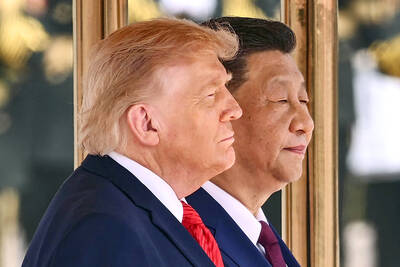
China has warned that it could cancel a planned US-China leaders’ summit if Washington approves new arms sales to Taiwan, a Japanese media outlet quoted sources as saying yesterday. US President Donald Trump, “apparently eager to showcase some diplomatic achievements ahead of November’s midterm congressional elections, places great importance on holding the summit with Chinese President Xi Jinping (習近平),” Japan’s Kyodo News reported. “While preparing for Xi’s upcoming trip, China has restated its position that the Taiwan issue is a ‘red line’ in bilateral relations,” the report said. The report said that when Xi met with Trump in Beijing in May, Xi said
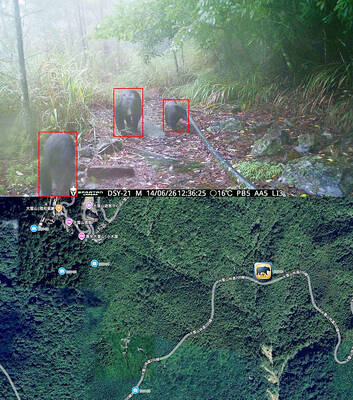
RARE PEEK: The footage released showed one of the bears staying in a cave for as long as 70 days, providing the first record of Formosan black bear’s overwintering The Forestry and Nature Conservation Agency yesterday released tracking records of released Formosan black bears for the first time, showing that they get much closer to human settlements than previously thought. The agency said it had captured two bears, Da Qu-ali (達古阿里) and Aziman (阿里曼), in indigenous villages in Hualien County and began to track them with a camera-mounted satellite collar after releasing them back into the wild. The results confirmed that the bears have moved from deep mountain areas into lowland hills closer to human communities, leading to an increase in human-bear conflicts, it said. The agency has introduced artificial intelligence-assisted early
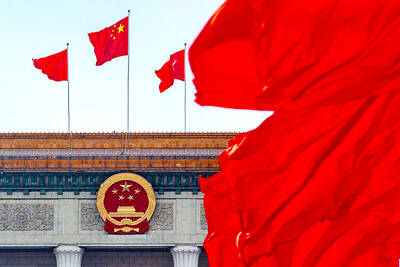
DIPLOMATIC TOUR: Chinese President Xi Jinping began a series of overseas visits last month to Kyrgyzstan, Egypt and India, aimed at securing leverage, an official said Recent Chinese diplomatic and military moves are aimed at creating pressure ahead of a planned meeting between Chinese President Xi Jinping (習近平) and US President Donald Trump, National Security Council adviser Huang Chung-yen (黃重諺) said. Trump when visiting China in May extended an invitation to Xi to visit Washington on Sept. 24. China is yet to officially announce plans for Xi’s visit to the US. In an interview with the Liberty Times (sister paper of the Taipei Times) on Thursday, Huang said Xi’s overseas visits, China’s “gray zone” activities along the First Island Chain and efforts to expand its trade surplus with the


 RSS
RSS