


When Taipei City Bureau of Health (BOH) Director Chiou Shu-ti (邱淑媞) was scolded yesterday by Taipei Mayor Ma Ying-jeou (馬英九), one of her major backers, yesterday, it marked her lowest point in the battle against SARS.
"I have already reprimanded Chiou and asked her to improve supervision," Ma said during the press conference yesterday regarding the administrative error made by bureau Secretary-General Hsiao Tung-ming (
This was the first time ever Ma expressed dissatisfaction in public toward Chiou's performance as the city's anti-SARS commander.
Meanwhile, anti-SARS expert Professor Yeh Chin-chuan also rebuked Chiou two days ago. Yeh is Chiou's predecessor, and it was he who originally recommended her for the directorship.
"Punish those who should be punished, and it's only right to do it quickly," Yeh said to Chiou.
The show of disapproval by a host of top guns may indicate that Chiou's status as Ma's star pupil has started to crumble.
Just two weeks earlier when Chiou handed in her resignation, Ma firmly asked her to stay, and shielded her from the media's and the city council's fierce attacks.
But now, especially after both the heads of the Department of Health and the Center for Disease Control were sacked and new directors installed, Ma finally seems to have stretched his protective wings too wide, and he may not be able or willing to shelter Chiou anymore.
While internal rifts appear to be forming, Chiou has long been criticized by the media.
The media's discontent rose to a new height on the same day Yeh let loose his temper, and almost all major papers trimmed Chiou's coattails yesterday.
First there was the strong contrast between the severe punishment of certificate revoking for the head of Jen Chi Hospital Liao Cheng-hsiung (
Although the Taipei City Government insisted that the decisions regarding how a doctor should be punished were made by an independent doctor's disciplinary board, no one really bought it.
Taipei City Government has been fairly quick and resolute to dish out fines and other forms of punishment to Jen Chi Hospital, which is privately owned, and Taipei Municipal Gandau Hospital, which is administered by Taipei Veterans General Hospital instead of the BOH.
On the other hand, when it came to any neglagence at the bureau's own Hoping, the government expressed hesitance to tread upon the subject.
Then there was the matter of Chiou's reluctance to deal with Hsiao's faults, and the fact of Chiou missing out on Hoping's punishment notice.
During the press conference, even a reporter who was known to be a Ma administration supporter lost her patience with what she perceives as Chiou's unpersuasive answers. She lashed out at Chiou, questioning Chiou with ferocity matching an opposing city councilor.
Last week Chiou also enraged another reporter from a major newspaper by declaring publicly the SARS chronicle printed by the paper was full of mistakes without being able to identify even one single error.

Yangmingshan National Park authorities yesterday urged visitors to respect public spaces and obey the law after a couple was caught on a camera livestream having sex at the park’s Qingtiangang (擎天崗) earlier in the day. The Shilin Police Precinct in Taipei said it has identified a suspect and his vehicle registration number, and would summon him for questioning. The case would be handled in accordance with public indecency charges, it added. The couple entered the park at about 11pm on Thursday and began fooling around by 1am yesterday, the police said, adding that the two were unaware of the park’s all-day live
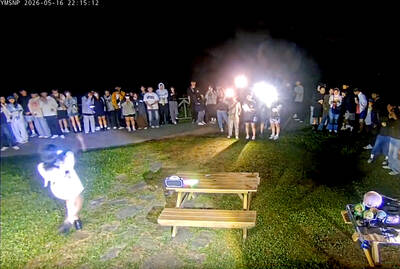
Yangmingshan National Park’s Qingtiangang (擎天崗) nature area has gone viral after a park livestream camera observed a couple in the throes of intimate congress, which was broadcast live on YouTube, drawing large late-night crowds and sparking a backlash over noise, bright lights and disruption to wildlife habitat. The area’s livestream footage appeared to show a couple engaging in sexual activity on a picnic table in the park on Friday last week, with the uncensored footage streamed publicly online. The footage quickly spread across social media, prompting a tide of visitors to travel to the site to “check in” and recreate the
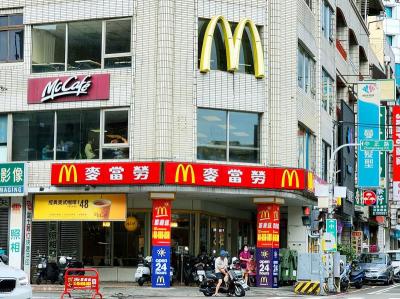
Fast food chain McDonald's is to raise prices by up to NT$5 on some products at its restaurants across Taiwan, starting on Wednesday next week, the company announced today. The prices of all extra value meals and sharing boxes are to increase by NT$5, while breakfast combos and creamy corn soup would go up by NT$3, the company said in a statement. The price of the main items of those meals, if ordered individually, would remain the same. Meanwhile, the price of a medium-sized lemon iced tea and hot cappuccino would rise by NT$3, extra dipping sauces for chicken nuggets would go up

Minister of Digital Affairs Lin Yi-ching (林宜敬) yesterday cited regulatory issues and national security concerns as an expert said that Taiwan is among the few Asian regions without Starlink. Lin made the remarks on Facebook after funP Innovation Group chief executive officer Nathan Chiu (邱繼弘) on Friday said Taiwan and four other countries in Asia — China, North Korea, Afghanistan and Syria — have no access to Starlink. Starlink has become available in 166 countries worldwide, including Ukraine, Malaysia, the Philippines and Vietnam, in the six years since it became commercial, he said. While China and North Korea block Starlink, Syria is not


 RSS
RSS