


A: According to CNN, there are 24 things to look forward to in 2024!
B: Really? What can we anticipate this year?
A: The first six big things are: 1. A leap year, 2. The Olympics and Paralympics, 3. New movies, 4. A total solar eclipse, 5. A return to the moon and 6. New TV and old favorites.

B: The Paris Olympics sounds so exciting. And what else?
A: The next six big things are: 7. Mickey goes public, 8. Facebook turns 20, 9. A new college football playoff picture, 10. New music, 11. New tours, and 12. More historical anniversaries.
A: 根據CNN,2024年將有24件令人期待的大事!
B: 真的嗎?有哪些大事啊?
A: 前6件大事是︰1.閏年、2.奧運、帕運、3.新電影、4.日全蝕、5.回到月球、6.新舊影集。
B: 巴黎奧運真令人期待,還有呢?
A: 接下來6件是︰7.(初版)米奇變公共財、8.臉書20歲、9.全新大學美式足球決賽陣容、10.新音樂、11.新旅遊、12.更多歷史週年。
(By Eddy Chang, Taipei Times/台北時報張聖恩)

K-pop oozes with talent, flair and hard work, but the spectacularly successful South Korean music industry also has a dark side — sometimes with tragic results. After BTS’s comeback concert on Saturday, AFP looks at the intense competition, the grueling training, the tight control over stars’ lives and the sometimes obsessive fan behavior in the industry. 300 GROUPS South Korean record labels launch dozens of new groups every year in the hope they will become the next BTS or Blackpink, but with some 300 outfits already out there, the big time is elusive. The tiny minority of the thousands of young hopefuls

A: K-pop supergroup BTS is set to tour Taiwan at the end of the year, putting on three shows in Kaohsiung on Nov. 19, 21 and 22. B: But before that, VieShow Cinemas across Taiwan will launch the “BTS World Tour ‘Arirang’ in Japan Live Viewing” from the Tokyo Dome on April 18. A: In recent years, BTS’ junior groups — Tomorrow X Together (TXT) and CORTIS, which debuted under the same label in 2019 and 2025 respectively — have also quickly become global sensations. B: I like those two groups, too. Didn’t TXT just perform at the Taipei Dome recently? Their popularity

Heavy rain brought by Typhoon Ragasa caused the barrier lake above Matai’an Creek in Hualien’s Guangfu Township to overflow on Sept. 23 of last year. The sudden rush of water and mud destroyed a major bridge and swept through nearby villages, leaving significant damage in its wake. The barrier lake was formed in July, when heavy rain caused landslides and blocked the creek’s natural flow. As rainwater built up, the lake grew increasingly unstable. When Typhoon Ragasa hit, the water level rose rapidly and finally overflowed. In the aftermath, volunteers across Taiwan, known as “shovel supermen,” stepped in
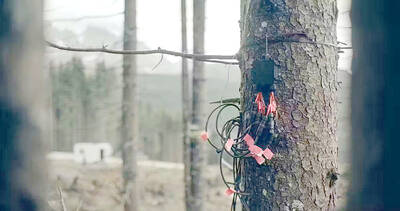
A new international study revealed that spruce trees in an Italian forest can respond to a solar eclipse. To be more specific, they actually anticipate it by synchronizing their bioelectrical signals hours before the event. To monitor this phenomenon, scientists attached special sensors to the trees to track their electrical activity. They discovered that older trees started changing their signals even before the eclipse occurred. Researchers believe these older trees may store memories of past events and send early warnings to younger ones. This bioelectrical signaling system appears to help the forest avoid problems like drying out during the


 RSS
RSS