


Retired teacher Sunny Hsu majored in advertising design and he is a former director of general affairs of National Keelung Commercial and Industrial Vocational Senior High School. His mother is in her 80s and suffered a brain injury that prevents her from expressing her thoughts clearly, so in 2018 he decided to go back to his hometown Penghu County to look after her, returning to Keelung for one week of each month to visit his wife and daughter. Being a keen photographer, when Hsu is staying in Penghu he often hops on a bus and goes around taking photos of rural and human scenes. On one occasion, he happened to take a bus to Longmen Village in Husi Township.
While he was in the countryside around Longmen, Hsu come across an old yellow cow. While chatting with the cow’s owner, he found out that she was 20 years old and because of her age and loss of strength in her hind legs, she could no longer plow the fields, so her three co-owners had sold her to a butcher. Having sought his elderly mother’s agreement, and with the encouragement of many friends and former students, Hsu bought the old yellow cow for NT$30,000 and named her “Sanwan,” which means 30,000. Sanwan also sounds like the Taiwanese Hoklo for “three slows,” which means “come over in your own time, take your time eating and do not rush to leave.” From that day on, Hsu has been getting his first-ever experience of keeping cattle.
Every morning, Hsu and his elderly mother go to the Beichen Market, where he asks the vegetable vendors for corn leaves and other leftover vegetables, which he then drives over to Jianshan Village in Husi Township. When the vegetable vendors found out about Hsu’s act of kindness, they wrote a poem to express their gratitude. Hsu has also applied his talents to designing Sanwan-themed stored value cards and greetings cards, and because of Sanwan he came to know a group of artists who were staying in Penghu and working to pay for their lodgings. He also made sketch of Sanwan into a calendar and gave copies of it to the friends and relatives who had helped him. As for Sanwan’s ultimate destiny, Hsu still hopes she can return to her hometown of Longmen and stay there for the rest of her life. Many elderly people from Longmen have gone to visit Sanwan and they all say they would like to see that happen.
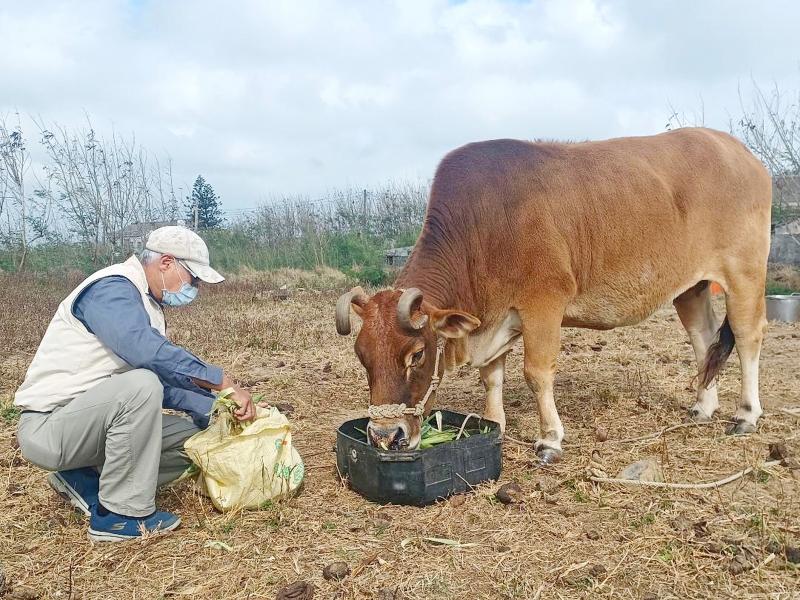
Photo: Liu Yu-ching, Liberty Times 照片:自由時報劉禹慶
(Liberty times, translated by Julian Clegg)
主攻廣告設計、從基隆七堵商工總務主任退休的許光晴老師,因老母親已八十餘歲高齡,腦神經曾受過傷,無法清楚表達意識,因此二○一八年毅然決然孤身返鄉澎湖照顧母親,每個月返回基隆一周探視妻女。由於他喜愛拍照,留澎期間常愛搭乘公車四處閒逛,拍攝鄉間及人文風情,一次偶然機會搭車前往湖西鄉龍門村。
許光晴在龍門鄉間巧遇一頭老黃牛,在與主人閒談之中,才知道老黃牛已二十歲,由於年邁加上後腳無力,已無法耕作,因此三位共同持有人已賣給收購的肉販子,他在徵求母親同意及眾多學生親友鼓勵下,出資三萬購買老黃牛,並取名「三萬」,除了價格外,也取台語諧音「慢慢來、慢慢食、慢慢走」,從此展開人生首次的養牛歷程。
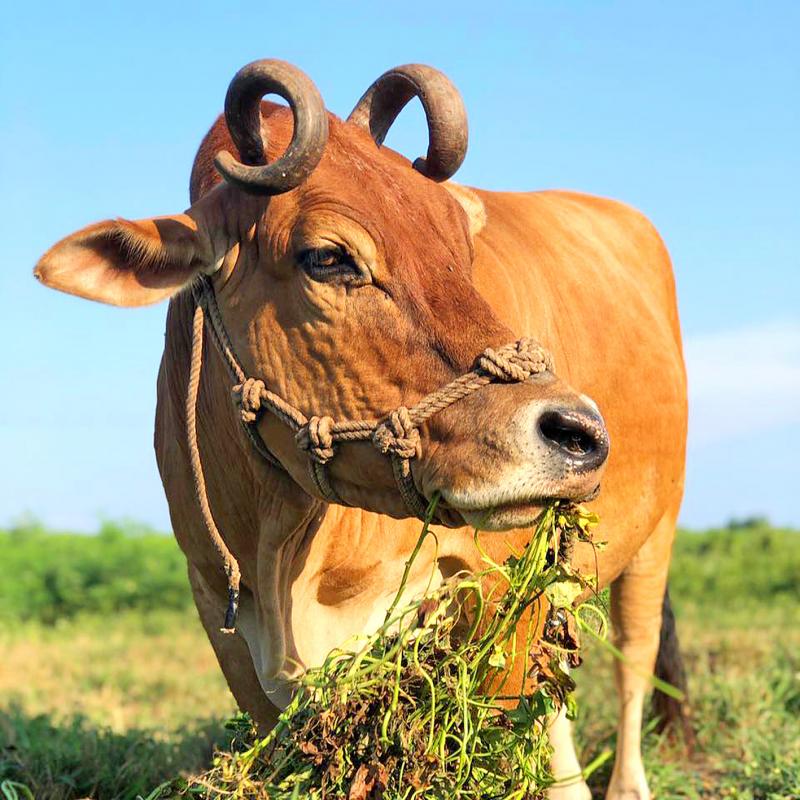
Photo from Sanwan’s Facebook page 照片摘自三萬的臉書粉絲頁
每日上午許光晴與母親就前往北辰市場,向菜販要玉米葉等殘菜,再專車送往湖西鄉尖山村。菜販得知老師愛心寫詩表達謝意;他還發揮專長,為三萬設計儲值卡、賀卡,更因三萬與抵澎以工代宿的一群畫家結緣,將三萬的素描作品集結成月曆,都分送給曾提供協助的親友們。對於三萬最終的宿命,許光晴還是希望老黃牛重返龍門老家,在家鄉中終老,現已有許多龍門耆老專程前來探望三萬,都表達相當的意願。
(自由時報劉禹慶)

Candles were made from animal fats in ancient times. As knowledge and materials improved, people began making them with beeswax and vegetable wax, which burned more cleanly and produced less odor. Before __1__ lighting, candles were considered highly valuable. In many religions, they came to symbolize life and wisdom. Even today, candles are frequently used in religious rituals and for cultural celebrations. The __2__ toward industrial candle making began in 1834, when Joseph Morgan patented a machine that could produce molded candles without interruption. His __3__ marked the start of mechanized production, though for many decades, candles were still

Every few years, the World Baseball Classic (WBC) offers sports fans a real World Series. At its finest, as in the shocking upset on Tuesday last week of the US team by Italy, the games generate the kind of electricity fans feel at the FIFA World Cup. That’s exactly how Major League Baseball (MLB), which owns the WBC, wants it. The tournament, first played in 2006, was designed to boost the league’s profile beyond North America and help it become a global game. In most respects, it’s done better than expected. Yet as the WBC grows, the structure, timing and staging of
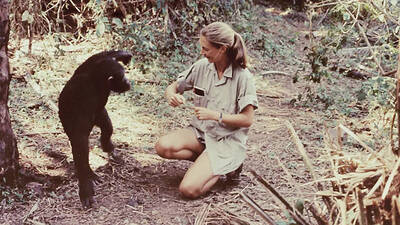
Jane Goodall, the pioneering scientist whose groundbreaking research changed our understanding of chimpanzees and reshaped the study of animal behavior, has died at the age of 91. The Jane Goodall Institute confirmed that she passed away from natural causes in California in October 2025 while on a speaking tour. Born in England, Goodall gained international fame in the 1960s after traveling to Tanzania to study wild chimpanzees under the guidance of anthropologist Louis Leakey. At the time, she had no formal scientific training, yet she lived among the animals and recorded their behavior in remarkable detail. Her discovery that

Dos & Don’ts — 想想看,這句話英語該怎麼說? 1. 她德語說得和她老師一樣流利。 ˇ Her German is as fluent as her teacher’s. ˇ She speaks German as fluently as her teacher (does). χ Her German is as fluent as her teacher. 註︰這裏所比的是「她的德語」和「她老師的德語」,而不是把她的德語和她的老師這個人相比,所以必須說 her teacher’s,即 her teacher’s German。或把「她說德語」和「她老師說德語」比較。 2. 一般認為北部人生活步調和南部人不同。 ˇ The people of the North are generally described as different from those of the South in terms of pace of life. χ The people of the North are generally described as different from the South in terms of pace of life. 註︰所不同者是北部人和南部人,而不是北部人和南部地區的比較,所以應加 those of,those 代替 the people,以免重複。 3. 他的新小說和上一本風格不同。 ˇ The style of his new novel is different from that of his last one. ˇ His new


 RSS
RSS