


A: The fund-raising department was wondering whether you could proofread this content for them.
B: I’m sorry, I have something on hand at the moment. Is there anyone else with their hands free?
A: I’ve asked around, and everyone else has their hands full at the moment.

Photo: Pixabay 照片:Pixabay
B: Well, then, send it to me, and I’ll see if I have time to do it after I get this task off my hands.
A: 募款部門想問你是不是可以幫他們校對這些內容。
B: 抱歉,我現在正在忙。有沒有其他人有空的?
A: 我已經到處問過了,大家手邊都有正在忙的事。
B: 好吧,那你寄給我,看看我忙完以後有沒有時間來處理。
(Paul Cooper, Taipei Times / 台北時報林俐凱譯)
Audio recordings for Speak Up! dialogues will be suspended until further notice due to the pandemic.
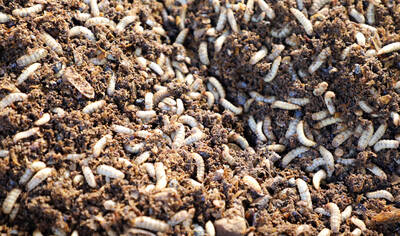
In most cities, food waste is often regarded as one of the most troublesome types of waste: it has a high moisture content, spoils easily and produces strong odors. If not handled properly, it can cause serious sanitation and environmental problems. From the perspective of the circular economy, however, food waste is not “useless leftovers,” but rather an organic resource that has yet to be effectively utilized. The core principle of the circular economy is to break away from the linear model of “production–consumption–disposal,” allowing resources to circulate repeatedly within a system and extending their useful life. Food waste occupies a
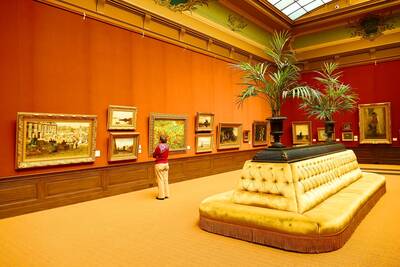
In June, headlines shocked the art world when a visitor damaged a 17th-century painting at the Uffizi Galleries in Florence, Italy, while posing for a photograph. This was not an isolated event. Recently, similar disasters have been reported worldwide, from a child damaging a Mark Rothko painting to a tourist breaking an exhibit by pretending to sit on it. Such incidents highlight why museum etiquette is increasingly crucial. First, we must recognize that art and historical objects are fragile. Once damaged, they may never regain their original condition. Many common actions, though harmless at first glance, can have grave consequences. For

A: Google has unveiled its 2025 Year in Search chart. No. 10 to No. 6 are: Typhoon Podul, Chinese drama “Love’s Ambition,” tariffs, US President Donald Trump and singer Khalil Fong’s death. B: Wow, actress Rosy Zhao’s new drama is so popular. So what are the top five? A: No. 5 to No. 1 are: Gemini, hanzii.net, NT$10,000 cash handout, entertainer Big S’ death and earthquakes. B: Hasn’t Trump topped this year’s most-searched people chart? A: Yup, and he’s closely followed by cheerleader GuoGuo Chiang at No. 2, whose husband Zack Fanchiang is also at No. 8. Apparently, people are curious about her extramarital
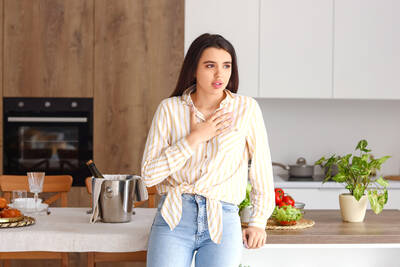
Continued from yesterday(延續自昨日) The study also uncovered a correlation between breathing patterns and mental well-being. Participants with higher scores on anxiety questionnaires exhibited shorter inhalation periods and more frequent breath pauses during sleep. “We intuitively assume that how depressed or anxious you are changes the way you breathe,” says one researcher involved in the study. “But it might be the other way around.” If this proves true, then training people to adjust their breathing may offer a novel approach to managing conditions like anxiety or depression. 該項研究也揭露了呼吸模式與心理健康之間的關聯。在焦慮問卷得分較高的受試者於睡眠期間表現出的吸氣時間較為短促、呼吸中止更為頻繁。一位參與研究的學者表示:「我們直覺地認為憂鬱或焦慮的程度會改變你的呼吸方式,但有可能是反過來的情況。」如果這一假設得到證實,那麼訓練人們調整呼吸的方式,可能會成為管理焦慮或憂鬱等疾病的新穎方法。 What Did You Learn? 1. What problem did scientists previously face when trying to measure breathing patterns? 2.


 RSS
RSS