


The World Night View Summit took place on Friday last week, hosted by the Yakei Convention and Visitors Bureau in Nagasaki, Japan. With a decade since the previous one, the international summit selects three new spectacular night vistas from around the world. Last Friday’s summit saw the establishment of a new “World Night View Heritage” certification, with the Taiwan Lantern Festival selected as one of 10 heritage night vistas.
The summit was attended by 150 representatives from the tourism industries of 10 countries, including Japan, Taiwan, Spain, Monaco and Hungry.
The “World Night View Heritage” certification was established to recognize places or events with beautiful night views. In addition to the Taiwan Lantern Festival, the certification was also awarded to nine other nightscapes outside of Japan, including Gellert Hill in Hungary and the historic ruins of Ayutthaya in Thailand.

Photo: CNA 照片:中央社
Taiwan Tourism Interchange Association consultant Chiang Ming-ching told attendees of the summit that the Taiwan Lantern Festival is Taiwan’s largest celebratory event. Chiang said that the 2019 Taiwan Lantern Festival, which was held in Pingtung County, featured thousands of brightly-colored decorative lanterns which studded the night-time sky with beautiful illuminations. Chiang explained that the lantern festivals were originally held on the 15th day of the first month of the lunar year to celebrate the end of the Spring Festival. People traditionally let off firecrackers and fireworks to bring good luck and avoid calamity, said Chiang. During the1990s, temples across Taiwan began to combine their individual decorative lanterns displays in a single location, forming lantern festivals. The displays gradually increased in scale and began to feature innovative “main lantern” designs, said Chiang.
(CNA, translated by Edward Jones)
由日本一般社團法人「夜景觀光」主辦的世界夜景峰會上週五在長崎市舉行,時隔十年選出世界新三大夜景,也新設世界夜景遺產,包括台灣燈會在內十處入選。
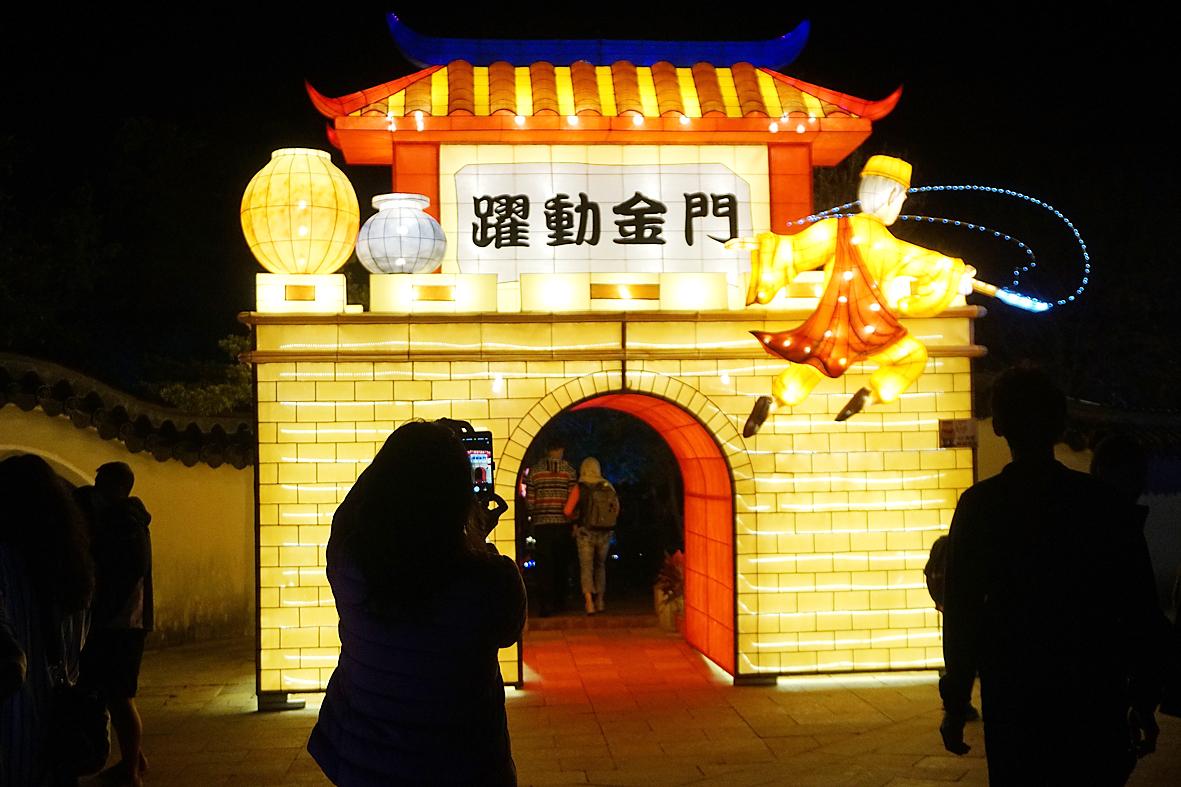
Photo: CNA 照片:中央社
這場世界夜景高峰會有日本及海外國家包括台灣、西班牙、摩納哥、匈牙利等十國的觀光相關人士約一百五十人出席。
主辦單位特別創設認定夜景美的景點或活動之「世界夜景遺產」,結果台灣燈會、匈牙利布達佩斯的蓋勒特山丘、泰國大城的古蹟遺址夜景等日本以外的十處入選。
台灣旅遊交流協會顧問江明清在世界夜景高峰會上,以屏東的台灣燈會舉例說明指出,台灣燈會是台灣規模最大的慶典活動,有好幾千個色彩豔麗的花燈裝飾,將夜空點綴得璀璨亮麗。原本燈會是在農曆正月十五日滿月、也就是元宵節的慶祝活動,民眾會施放爆竹、煙火趨吉避凶,一九九○年代各寺廟開始將花燈集中於一處,形成燈會,後來燈會規模擴大,主燈設計極富巧思。

Photo: CNA 照片:中央社
(中央社)
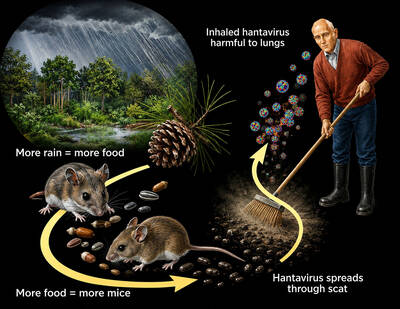
An outbreak aboard a cruise ship of a rare rodent-borne illness called hantavirus has left three passengers dead and sickened others, but global health officials say the risk to the general public remains low because the germ does not easily spread between people. “This is not the next COVID, but it is a serious infectious disease,” said Maria Van Kerkhove, director of epidemic and pandemic preparedness at the World Health Organization (WHO). “Most people will never be exposed to this.” The virus usually spreads when people inhale contaminated residue of rodent droppings. Hantaviruses have been around for centuries and are thought to

Have you ever wondered how people navigate the world when they can’t see a map? For individuals with visual impairments, conventional maps are nearly impossible to use. This is where tactile maps come in — essential tools that allow people to “see” the world through touch. A tactile map is specially designed with raised lines, textures, and symbols to represent geographical features such as roads, rivers, and buildings. Users explore it with their fingertips. However, these maps are not exclusively for people with visual disabilities. They serve as valuable multisensory learning tools that enhance spatial understanding for everyone, making

1. 他病了三天。 ˇ He has been sick for three days. χ He has been sick since three days. 註︰這裡現在完成時態 have / has been 表示從過去某一時日到現在的一段時間存在的行為或狀態,與它連用的時間副詞應為 「for +若干時」,如 for a year, for three hours 等,意思是歷時多少。 2. 他自從星期三以來都很忙。 ˇ He has been busy since Wednesday. χ He has been busy from Wednesday. 註︰「自從……以來」,該用 since。說從某一天(某一時刻)到某一天(某一時刻)才用 from,如 from Monday till Friday。 3. 房間角落裡散放著一些零星物件。 ˇ There were some odds and ends lying in the corner of the room. χ There were some odds and ends lying at the corner of the room. 註︰「在房間角落裡」該用介詞 in。例如: He stood in the corner. There is a lamp in the corner of the room. at the corner 指房子外部的拐角。例如: A little boy

A growing green movement allows hotel guests to fund tree planting projects simply by opting out of daily room cleans. This approach turns an ordinary hotel stay into a direct contribution to nature. Founded in the Netherlands, the nonprofit “Hotels for Trees” operates on the principle that one skipped cleaning equals one new tree. It has planted more than 750,000 trees since 2021. Similarly, Sarnia Hotels in Guernsey donates £2 per refused clean. Since 2024, over 3,300 services have been cancelled, raising sufficient money to plant 1,100 native trees and hedgerows. Simplicity has been central to this success.


 RSS
RSS