


A: Hey, will you look at this Web site? I’m choosing a card. They have options for all occasions!
B: Wow, they have all bases covered, don’t they? Let me see: they have cards for father’s day, mother’s day, passing your driving test, passing exams and graduation.
A: Yes, and also for other major occasions in your life, like congratulating you on the arrival of a baby or retirement.
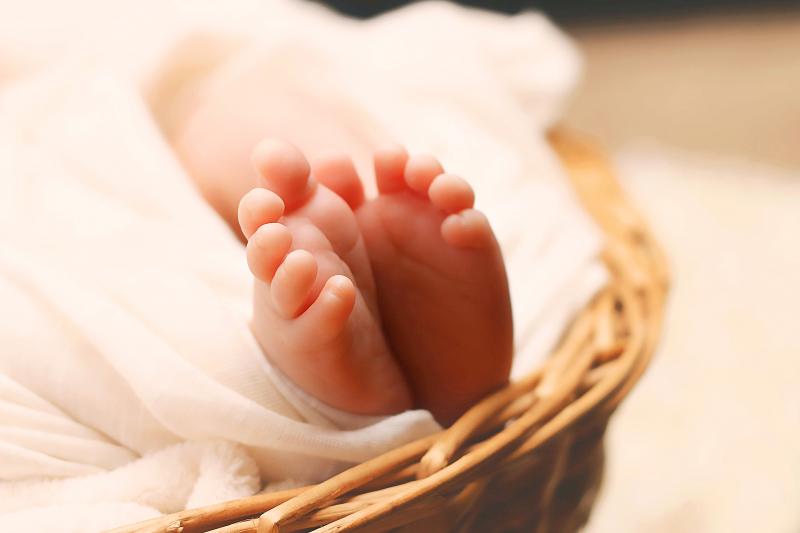
Photo: Pixabay 照片:Pixabay
A: 嗨,你能過來看一下這個網站嗎?我在挑選卡片,所有場合的卡片他們都有喔!
B: 哇,真是應有盡有,不是嗎?讓我看看︰有慶祝父親節的、母親節的、考到駕照的、考試及格的,還有畢業的卡片。
A: 對,還有其它人生大事呢,像是祝賀第一個寶寶出生,或退休。
(Paul Cooper, Taipei Times/台北時報張聖恩譯)

Every few years, the World Baseball Classic (WBC) offers sports fans a real World Series. At its finest, as in the shocking upset on Tuesday last week of the US team by Italy, the games generate the kind of electricity fans feel at the FIFA World Cup. That’s exactly how Major League Baseball (MLB), which owns the WBC, wants it. The tournament, first played in 2006, was designed to boost the league’s profile beyond North America and help it become a global game. In most respects, it’s done better than expected. Yet as the WBC grows, the structure, timing and staging of
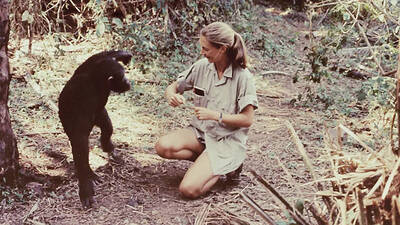
Jane Goodall, the pioneering scientist whose groundbreaking research changed our understanding of chimpanzees and reshaped the study of animal behavior, has died at the age of 91. The Jane Goodall Institute confirmed that she passed away from natural causes in California in October 2025 while on a speaking tour. Born in England, Goodall gained international fame in the 1960s after traveling to Tanzania to study wild chimpanzees under the guidance of anthropologist Louis Leakey. At the time, she had no formal scientific training, yet she lived among the animals and recorded their behavior in remarkable detail. Her discovery that

Dos & Don’ts — 想想看,這句話英語該怎麼說? 1. 她德語說得和她老師一樣流利。 ˇ Her German is as fluent as her teacher’s. ˇ She speaks German as fluently as her teacher (does). χ Her German is as fluent as her teacher. 註︰這裏所比的是「她的德語」和「她老師的德語」,而不是把她的德語和她的老師這個人相比,所以必須說 her teacher’s,即 her teacher’s German。或把「她說德語」和「她老師說德語」比較。 2. 一般認為北部人生活步調和南部人不同。 ˇ The people of the North are generally described as different from those of the South in terms of pace of life. χ The people of the North are generally described as different from the South in terms of pace of life. 註︰所不同者是北部人和南部人,而不是北部人和南部地區的比較,所以應加 those of,those 代替 the people,以免重複。 3. 他的新小說和上一本風格不同。 ˇ The style of his new novel is different from that of his last one. ˇ His new
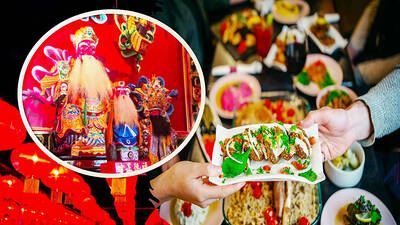
對話 Dialogue 清清:華華,別忘了這禮拜五晚上,老闆請喝春酒喔! Qīngqing: Huáhua, bié wàngle zhè lǐbàiwǔ wǎnshàng, lǎobǎn qǐng hē chūnjiǔ o! 華華:啊!我差點忘了,謝謝提醒。 Huáhua: À! Wǒ chàdiǎn wàngle, xièxie tíxǐng. 清清:老闆人真好,過年前請我們吃尾牙,過完年又請吃春酒。 Qīngqing: Lǎobǎn rén zhēn hǎo, guònián qián qǐng wǒmen chī Wěiyá, guòwán nián yòu qǐng chī chūnjiǔ. 華華:尾牙是感謝我們過去一年的辛勞,春酒是希望我們今年繼續努力啊! Huáhua: Wěiyá shì gǎnxiè wǒmen guòqù yì nián de xīnláo, chūnjiǔ shì xīwàng wǒmen jīnnián jìxù nǔlì a! 清清:給我加薪,我就努力。 Qīngqing: Gěi wǒ jiāxīn, wǒ jiù nǔlì. 華華:還真是「有錢能使鬼推磨」。 Huáhua: Hái zhēn shì “Yǒu qián néng shǐ guǐ tuī mò.” 清清:那還用說。對了!別只顧著吃,頭牙快到了,農曆二月二是土地公生日,記得跟我去拜拜。 Qīngqing: Nà hái yòng shuō. Duìle! Bié zhǐ gùzhe chī, Tóuyá kuài dàole, nónglì èr yuè èr shì Tǔdìgōng shēngrì, jìdé gēn wǒ qù bàibai. 華華:沒問題,東西我來準備,放心吧!一起發大財! Huáhua: Méi wèntí, dōngxi wǒ lái zhǔnbèi, fàngxīn ba!


 RSS
RSS