


The 58th “10 Outstanding Young Persons Awards” ceremony took place in Kaohsiung late last month. Several celebrities were among this year’s winners — including Golden Melody Award-winning singer Crowd Lu, Taiwanese-American TV host Janet Hsieh, top male gymnast Lee Chih-kai and world-class violist Benny Tseng.
The award is organized by the Junior Chamber International Taiwan in honor of outstanding Taiwanese nationals aged 20 to 40 for their achievements. Although the name of the award implies 10 winners, a total of 12 winners were picked this year. Other young talent on the list included David Chou, Cheng Ho, Hsu Te-hua, Huang Chen-lun, Huang Wei-hsiang, Vivi Lin, Lin Yu-chun and Albert Liu.
Lee, who won a silver medal for men’s pommel horse at the 2019 Artistic Gymnastics World Championships, is the first gymnast to win the award. He described the award as “unbelievable” and thanked his long-term coach Lin Yu-hsin at a news conference recently, saying that the award will serve as a motivation for him to keep fighting for his goal.
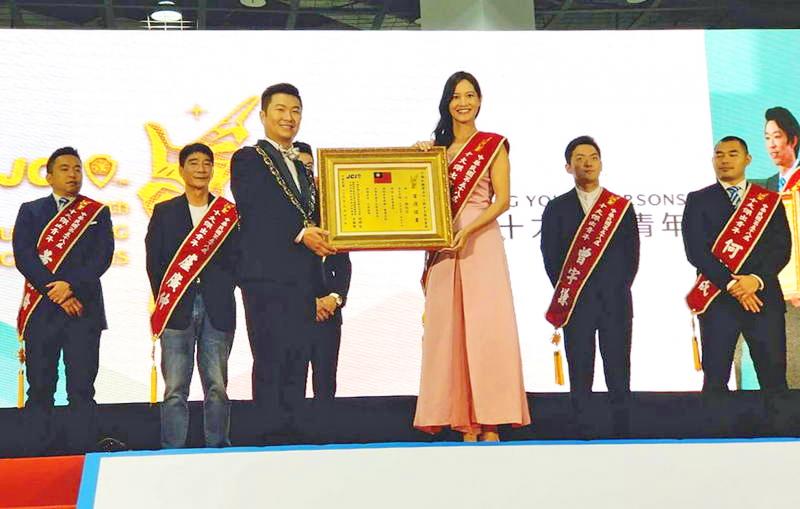
Photo: Ge Yu-hao, Liberty Times 照片︰自由時報葛祐豪
(Eddy Chang, Taipei Times)
第五十八屆「十大傑出青年」頒獎典禮上月底在高雄市舉行,今年有多位名人入選——包括金曲獎歌手盧廣仲、台裔美籍電視主持人Janet(謝怡芬)、頂尖體操國手李智凱、國際小提琴家曾宇謙。
該獎項由國際青年商會中華民國總會所發起,以表揚二十至四十歲之間優秀台灣國民的成就。雖然名義上是「十大」傑出青年,但是今年總共有十二人入選。獲獎名單上的青年才俊還包括︰周仁海、何凱成、徐德華、黃振倫、黃偉翔、林薇、林玉俊、劉峻誠。
李智凱在二○一九年世界體操錦標賽,勇奪男子鞍馬項目銀牌,也是第一位入選傑出青年的體操選手。他近日在記者會上表示,得知獲選時感覺很不可思議,並感謝長期以來的教練林育信,還說這個獎就像是一種動力,讓他可以繼續奮戰下去。
(台北時報張聖恩)

The debate surrounding Taipower’s recent corporate identity reboot has gone well beyond the design community. The controversy began after Taipower replaced the familiar “Taiwan Power Company” wording — widely regarded as the calligraphy of Yu You-ren (1879-1964), former Control Yuan president and master calligrapher — with a modern logotype by designer Aaron Nieh’s team, Aaron Nieh Workshop. Taipower said the change was not a wholesale replacement of old signage, but an “optimization of its identity system,” aimed at meeting the needs of digital media, electronic bills, apps, social media graphics and various small-format applications. Existing physical markings, such as building

Since 2005, the third Monday in January has come to be known as “Blue Monday.” In other words, that day is believed to be the most depressing day of the year. This concept seems logical at first. After all, Monday marks the start of the school or workweek after two days of rest and fun. Also, blue is a color that is often associated with sadness. Furthermore, in many parts of the world, January is a time when the weather is cold, rainy, and gloomy. But is there any scientific proof that this January day is truly sadder than any of

Continued from yesterday(延續自昨日) https://www.taipeitimes.com/News/lang For the most part, the idea of “Blue Monday” has been rejected as a myth. Some mental health experts also say there is a danger in labeling a certain day as the most depressing time of the entire year. Some argue that if people expect to feel sadder on the third Monday in January, this belief alone may increase their anxiety. One group that is worried about the negative effect of believing in Blue Monday is Samaritans. A mental health charity based in the UK, Samaritans is working to turn Blue Monday into “Brew Monday.” In this
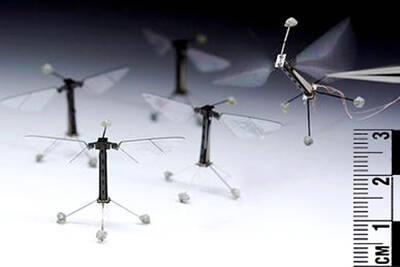
As bee populations around the world continue to decline at an alarming rate, scientists are developing an innovative solution: robotic bees. Recent advances at research institutions like Massachusetts Institute of Technology (MIT) in the US have produced tiny flying robots capable of performing pollination tasks similar to those of real bees. These tiny machines represent an impressive technological achievement. MIT’s latest models can hover in the air for over 1,000 seconds and perform complex movements, demonstrating the agility needed for successful pollination. The robots are designed to mimic the flight patterns of natural bees, offering potential support to agriculture


 RSS
RSS