


Taiwan’s domestic tourism and hotel industries are suffering from the COVID-19 outbreak. However, campsites emphasizing their locations within the great outdoors, are bucking the trend. Bookings are stable and even on the up, with some sites reporting they are already fully-booked through to the Dragon Boat Festival. Those within the industry believe the reason for the increased interest is mainly because guests are able drive to campsites under their own steam, thereby negating the need to use public transport. Additionally, campsites allow guests to enjoy an entire day outdoors without the usual frenetic itinerary, dashing from one scenic spot to another. Guests can relax in relative isolation, far from the madding crowd and the airless confines of a hotel room.
Yilan County’s hotel industry has seen a sharp decline in the number of bookings this month, while the usually thriving five-star hotel sector is reporting that room occupancy rates have slumped to 30 percent. Many of the smaller sized hotels are encouraging their staff to take annual leave and even closing for refurbishment as a way to reduce wage costs.
Wang Jung-sung runs Syano Campsite in Yilan County’s Datong Township accomodates a total of 18 pitches. The campsite has been able to maintain a stable occupancy rate during weekdays throughout the virus outbreak — even increasing occupancy by 30 percent during weekends — and Wang says he currently has bookings all the way up to the Dragon Boat Festival. Wang adds that parents and children alike enjoy the act of camping: everything from pitching the tent and cooking meals fills the day with a full set of fun activities.
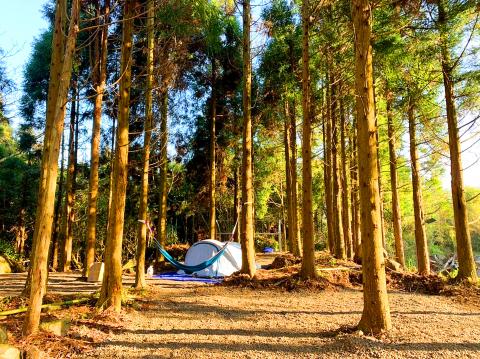
Photo: Chang Yi-cheng, Liberty Times
照片:自由時報記者張議晨
Taiwan has undergone a camping trend in recent years, with campsites throughout the nation experiencing rapid growth. There are approximately 80 campsites in Yilan County, most of which are clustered around Jiaosi, Toucheng, Datong and Nanao townships. Chen Chun-yu, director of the Yilan County Camping Industry Development Council, says that the council’s members have not yet experienced any impact from the COVID-19 outbreak. Conversely, Chen says members have actually seen an increase in business and adds that there will be opportunities for expansion in the near future with more people traveling outside of urban areas as a way to escape the epidemic.
(Translated by Edward Jones, Taipei Times)
國內旅宿業受武漢肺炎疫情衝擊,不過,主打親近自然的露營區卻異軍突起,入住率持穩甚至增加,假日熱門,有的營區帳位已被預定到端午節。業者認為是露營遊客以自駕為主,營區又在戶外可玩整天,不用四處跑景點,住宿環境與旅館等密閉空間不同,人群接觸少,成為出遊熱門選項。
宜蘭縣住宿業三月住宿率大幅下滑,平時業績長紅的五星級飯店,三月住房率僅剩三成,還有多家旅館「鼓勵」員工休假,甚至提前閉館「整修」,減少人事開銷。
大同鄉「夏諾營」業者王榮松經營四年,擁有十八個帳位,平日入住率與疫情爆發前持平,但假日業績增加約三成,預約單排至端午節。他指出,露營是親子同樂的活動,搭帳篷、煮飯就能玩一整天。
台灣近年吹起露營熱潮,各縣市露營區雨後春筍冒出來,宜蘭縣目前約有八十處露營區,集中在礁溪、頭城、大同、南澳等地。宜蘭縣露營產業發展協會理事長陳俊宇指出,協會會員普遍未受疫情影響,業績持平甚至增加,仍有發展機會,他看旺未來「逃疫」出遊的露營市場。
(自由時報記者張議晨)
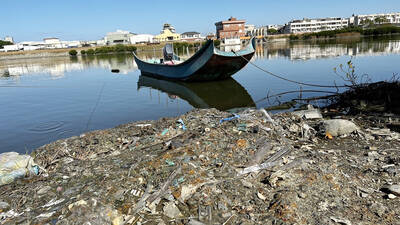
Many consumers are guilty of filling drawers or closets with old laptops, cellphones, fitness trackers and other electronic devices once they are no longer needed. It’s hard to know where to recycle such items, or it seems costly and inconvenient to do so. The world generates millions of tons of electronic waste — also called e-waste — each year. According to the UN’s most recent estimate, people worldwide produced 62 million metric tons of e-waste in 2022, and only about 22 percent of it was properly recycled. The US’ Environmental Protection Agency estimates that less than a quarter of e-waste is

You’re sitting in class when a classmate asks to borrow a pencil. It seems like a small favor, so you agree without hesitation. The following week, the same classmate asks to share your notes. Later, they request help with a group project. You agree each time — after all, you helped out the first time — but before you know it, it has become automatic. This scenario demonstrates the “foot-in-the-door technique,” a psychological concept that shows how agreeing to small, acceptable demands makes it easier to accept larger ones later on. The name for this strategy comes from door-to-door

A: The four-day Tomb Sweeping Day long weekend begins Friday and will run until Monday. Are you going to sweep your ancestors’ tombs? B: I did in advance last weekend, so I can go to Kaohsiung to see the musical “The Phantom of the Opera.” A: Wow, is “Phantom” touring Taiwan again? It debuted in 1986, so this year marks the 40th anniversary of the show. B: And it’s not just touring Kaohsiung starting March 31, but also Taipei starting April 21 and Taichung starting May 26. A: “Phantom” is one of the world’s Four Major Musicals. I’ve seen all of them, except “Les

對話 Dialogue 清清:這禮拜又有連假了,這次一共放四天。 Qīngqing: Zhè lǐbài yòu yǒu liánjià le, zhè cì yígòng fàng sì tiān. 華華:你是要過兒童節還是清明節? Huáhua: Nǐ shì yào guò Értóng jié háishì Qīngmíng jié? 清清:都要過啊!不管幾歲,都要有童心,才能永遠都年輕,知道嗎? Qīngqing: Dōu yào guò a! Bùguǎn jǐ suì, dōu yào yǒu tóngxīn, cái néng yǒngyuǎn dōu niánqīng, zhīdào ma? 華華:好啦!能當個長不大的孩子也好,就不會有那麼多煩惱了。 Huáhua: Hǎo la! Néng dāng ge zhǎngbúdà de háizi yě hǎo, jiù bú huì yǒu nàme duō fánnǎo le. 清清:還好春天有這兩個節假日,常常可以變成連假休息一下。 Qīngqing: Háihǎo chūntiān yǒu zhè liǎng ge jiéjiàrì, chángcháng kěyǐ biànchéng liánjià xiūxi yíxià. 華華:對啊!上禮拜我已經先跟家人去掃墓了,就怕清明節當天人太多。 Huáhua: Duì a! Shàng lǐbài wǒ yǐjīng xiān gēn jiārén qù sǎomù le, jiù pà Qīngmíng jié dāngtiān rén tài duō. 清清:親人雖然過世了,但有清明節掃墓的習俗,讓我們在不同的世界還是能「聚」一下、說說話,真的很有意義。 Qīngqing: Qīnrén suīrán guòshì le, dàn yǒu Qīngmíng jié


 RSS
RSS