


Which dessert best represents Taiwan? Instead of pearl milk tea, pineapple cakes or sun cakes, “xuehua ice” has been listed as one of the top 50 desserts in the world, according to an article by pastry chef-turned-food writer Jen Rose Smith on CNN. Xuehua ice (literally “snowflake ice”), a popular local frozen treat, is known as “shaved ice” or “snow ice” in English.
“Taiwanese snow ice is an invitation to get as creative as you’d like,” Smith wrote in her article, titled “50 of the World’s Best Desserts.” First, you need to shave the ice into a pile of crumbling ice flakes. Then, you can blend it with your favorite treats such as red bean paste and fresh fruit such as mangos, strawberries or pineapples, along with syrup, chocolate sauce or sweetened condensed milk.
Other top Asian sweets chosen by the foodie include sesame balls in China, egg tarts in Hong Kong, light cheesecake in Japan, cendol in Singapore, sticky rice with mango and tub tim krob in Thailand, and gulab jamun and kulfi in India.
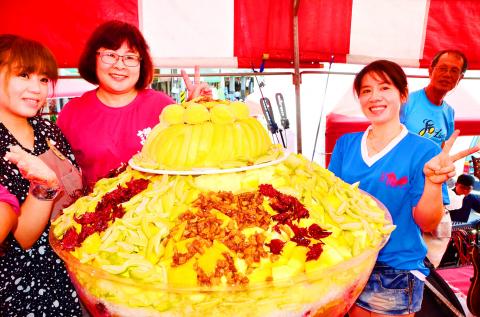
Photo: Wu Chun-feng, Liberty Times
照片:自由時報記者吳俊鋒
(Eddy Chang, Taipei Times)
什麼是台灣最具代表性的甜點?不是珍珠奶茶,也不是鳳梨酥、太陽餅,而是被CNN列為全球五十大最佳甜點的「雪花冰」!該報導由點心廚師轉行美食作家的史密斯女士所撰寫。雪花冰是本地受歡迎的冰品,英文叫「shaved ice」或「snow ice」。
史密斯在這篇名為《全球五十大最佳甜點》的文章裡寫道:「台灣的雪花冰簡直讓你的創意大爆發。」首先你要把冰刨成一堆細碎的雪花片,然後和你最喜愛的紅豆沙等配料混合在一起,加上芒果、草莓、鳳梨等新鮮水果,最後再淋上糖漿、巧克力醬或煉乳即可。
這位美食家選出的其它亞洲最佳甜點還包括:中國的芝麻球、香港的蛋塔、日本的輕乳酪蛋糕、新加坡的煎蕊(珍多冰)、泰國的芒果糯米飯和椰香石榴冰、印度的玫瑰漿果和牛奶雪糕…等。
(台北時報張聖恩)
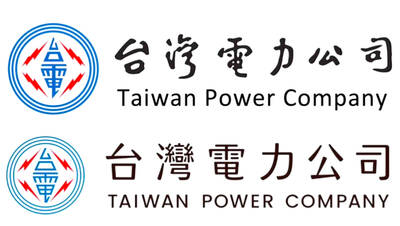
The debate surrounding Taipower’s recent corporate identity reboot has gone well beyond the design community. The controversy began after Taipower replaced the familiar “Taiwan Power Company” wording — widely regarded as the calligraphy of Yu You-ren (1879-1964), former Control Yuan president and master calligrapher — with a modern logotype by designer Aaron Nieh’s team, Aaron Nieh Workshop. Taipower said the change was not a wholesale replacement of old signage, but an “optimization of its identity system,” aimed at meeting the needs of digital media, electronic bills, apps, social media graphics and various small-format applications. Existing physical markings, such as building
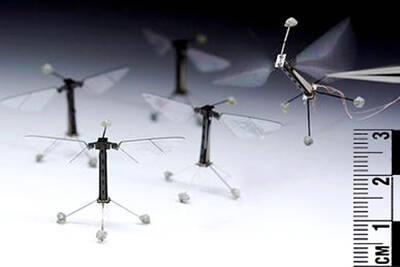
As bee populations around the world continue to decline at an alarming rate, scientists are developing an innovative solution: robotic bees. Recent advances at research institutions like Massachusetts Institute of Technology (MIT) in the US have produced tiny flying robots capable of performing pollination tasks similar to those of real bees. These tiny machines represent an impressive technological achievement. MIT’s latest models can hover in the air for over 1,000 seconds and perform complex movements, demonstrating the agility needed for successful pollination. The robots are designed to mimic the flight patterns of natural bees, offering potential support to agriculture
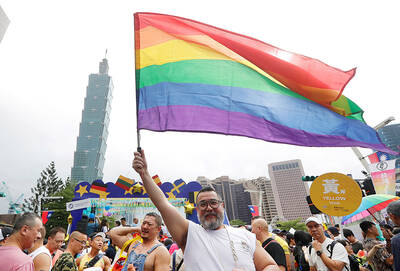
A: Taiwan legalized same-sex marriage on May 24, 2019, so this week marks the seventh anniversary of that milestone. By the end of 2024, a total of 32,126 LGBT couples had tied the knot. B: How many of them got married to foreign partners? A: In 2024, there were 504 cross-border same-sex marriages. By the end of that year, there were 130 cross-strait same-sex marriages between Taiwanese and Chinese — accounting for only about 0.4 percent of the total. B: I’ve heard that a seven-year marriage brings the “seven-year itch.” I bet some couples regret their decisions now. A:

A: While Taiwan is celebrating the 7th anniversary of legalizing same-sex marriage, a poll shows that the support rate for same-sex marriage rose sharply from 37.4 percent seven years ago to 69.9 percent last year. B: Actually, I’m a bit curious about the size of Taiwan’s LGBT population. A: I’m not sure. But if we take a Gallup poll in the US as an example, 9.3 percent of American adults identified as LGBT in 2024. B: Wow, is it because the Americans are relatively open? In many other countries, the figures hover around 5 percent. A: Based on this,


 RSS
RSS