


Fembooks, a feminist bookstore which has been in business for 30 years, announced on June 1 that its physical store will close next month due to long-term losses.
Despite the support of more than 600 Fembooks account members, the bookstore was unable to shoulder monthly losses of between NT$50,000 and NT$70,000. Fembooks store manager Yang Ying-ying says it was decided at a shareholder meeting on May 21 that it was necessary to halt the company’s losses and “restructure debt.” Yang says “a new manager will be elected at July’s shareholder meeting” and “there is hope of the possibility that the store can reopen for business.”
This is not a “full-stop,” says Yang, simply a “comma.”

Photo: CNA
照片:中央社
Fembooks will continue to publish, and its online bookstore, Facebook page and blog will continue to operate as normal, although the bricks-and-mortar shop be now used as part of its publishing operation. However, as before, readers will still be able to pop in and choose a book.
Fembooks was established in 1994. At the time, National Taiwan University associate professor of sociology, Fan Yun, was still a student. Fan describes the bookshop’s presence on the scene as an oasis of enlightenment for the feminist movement and gender equality, and said the store’s temporary closure fills her with “regret and sadness.” Fan added, “Fembooks contributed greatly toward Taiwan becoming the first country in Asia to recognize marriage equality and progress toward gender equality.”
“Although we’ve hit rock bottom,” says Yang, “I’m confident that if a member of the younger generation comes forward with creative, fresh business ideas, Fembooks will be able to carry on in a new guise.”
(Liberty Times, translated by Edward Jones)
開業廿三年的女性主義書店女書店,不堪長期虧損,六月一日宣告將於七月一日起結束門市營運。
雖然有六百多個女書之友情義相挺,仍挺不過每個月五到七萬元的虧損,女書店店長楊瑛瑛說,書店按照股東們在五月二十一日會議上所做的決定,設下停損點,「先進行債務重整。七月股東會選出新的經營者,期待能有一個重新開始的可能性。」這不是「句點」,只是暫時畫一個「逗點」。
女書的網路書店、臉書、部落格及出版,都不會停止。門市停止營運之後,店址保留,功能轉變為「出版社」性質,讀者依舊可以到這裡選書。
女書店於一九九四年創立,台大社會系副教授范雲當時仍是台大學生,她形容,女書店的出現,對於女性運動及性別平權的啟蒙猶如荒漠甘泉,對門市將暫時熄燈,她表示既「遺憾、難過也感嘆。」范雲說:「台灣成為亞洲第一個婚姻平權的國家,在性別平等上的成就,女書店也貢獻不少力量。」
楊瑛瑛說:「到谷底了,我相信若有年輕世代帶進新的創意與行銷概念,將來或許可以全新的面貌再出發。」
(自由時報記者凌美雪)

A: Which team do you think will win the championship in the 2026 World Baseball Classic? B: The previous champion Japan and runner-up the US are exceptionally strong. A: The Taiwan team was captained by Chen Chieh-hsien with a roster of 16 pitchers, 3 catchers and 11 fielders, and was quite strong, too. B: Yeah, players like Hu Chih-wei, Lin Tzu-wei, Yu Chang and Cheng Tsung-che all played in Major League Baseball. And this tournament marked the first call-up of mixed-race talent: MLB’s Stuart Fairchild. A: There are also some Taiwanese stars playing in Japan, including

Candles were made from animal fats in ancient times. As knowledge and materials improved, people began making them with beeswax and vegetable wax, which burned more cleanly and produced less odor. Before __1__ lighting, candles were considered highly valuable. In many religions, they came to symbolize life and wisdom. Even today, candles are frequently used in religious rituals and for cultural celebrations. The __2__ toward industrial candle making began in 1834, when Joseph Morgan patented a machine that could produce molded candles without interruption. His __3__ marked the start of mechanized production, though for many decades, candles were still

A: Did you watch the preliminary games of the 2026 World Baseball Classic? Pool C included Australia, the Czech Republic, Japan, South Korea and Taiwan. All the games in Tokyo were absolutely intense. B: Of course. Many teams called up star players from Major League Baseball this time. Going up against players like Shohei Ohtani must come with enormous pressure. A: Japan and South Korea ultimately advanced to the quarterfinals, which are scheduled for March 14 and 15 in Miami. B: What about the semifinals and the final? A: The semifinals are set for the 16 and 17, followed
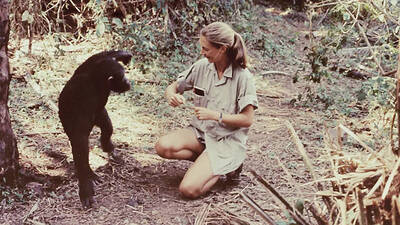
Jane Goodall, the pioneering scientist whose groundbreaking research changed our understanding of chimpanzees and reshaped the study of animal behavior, has died at the age of 91. The Jane Goodall Institute confirmed that she passed away from natural causes in California in October 2025 while on a speaking tour. Born in England, Goodall gained international fame in the 1960s after traveling to Tanzania to study wild chimpanzees under the guidance of anthropologist Louis Leakey. At the time, she had no formal scientific training, yet she lived among the animals and recorded their behavior in remarkable detail. Her discovery that


 RSS
RSS