


Kuo Hsiang-pin, the owner of a dyeing and finishing factory, crashed his ultralight aircraft into a lychee orchard in Changhua County on Sept. 21 following suspected mechanical failures. Only the frame of the aircraft was left after the fire was put out. Kuo was sent to Changhua Christian Hospital in critical condition for emergency treatment.
A female friend of Kuo’s surnamed Chang, said he phoned her at 5pm to tell her that he was flying right above her house, asking her if she could see him. She walked out of her house and looked up to see Kuo flying his white ultralight aircraft. She waved at him and said that he was flying very high and indeed could see him.
Chang said she heard two explosions not long after she went back inside her house. She felt something was wrong and rushed out to see what happened, immediately spotting a fire in the neighboring mountains. When she reached the site of the crash she saw the burning aircraft.
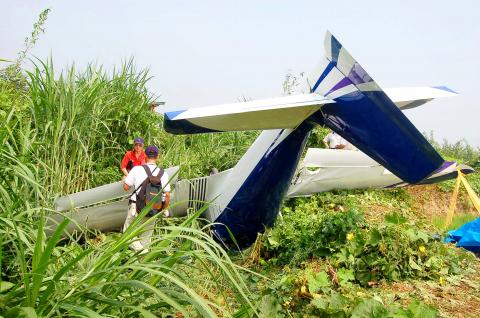
Photo: Tsai Wen-cheng, Taipei Times
照片:自由時報記者蔡文正
A male witness surnamed Wu said he was busy cutting the grass when the aircraft crashed. Before the crash he noticed that an aircraft kept hovering over the mountainous area, and started smoking before plunging from the sky. After hearing two explosions, Wu saw a huge fire break out and alerted the police.
When Changhua County firefighters arrived at the lychee orchard, they found that only the frame of the aircraft remained after the fire. Kuo was burned over his entire body and he was sent to Changhua Christian Hospital. The police suspect that a mechanical failure caused the crash.
(LIBERTY TIMES, TRANSLATED BY TAIJING WU)
染整廠老闆郭祥彬駕駛輕航機,疑似機械故障,九月二十一日傍晚摔落彰化縣一處荔枝園,輕航機起火燒得只剩骨架。當時郭男命危被送往彰化基督教醫院急救。
郭祥彬友人張小姐表示,郭約於下午五點打電話給她,並說「我飛到妳家上空,妳有看到我嗎?」她走到屋外抬頭看,果然看到郭所駕駛的白色輕航機,並揮手打招呼說,「飛得很高,我有看到你。」
張小姐說,她回到屋內不久,便聽到兩聲爆炸聲。她感到不對勁,便奪門而出,就見到附近山區起火,於是立刻衝去察看。到達現場就看到起火的輕航機。
目擊民眾吳先生說墜機時他正忙著除草。當時他發現輕航機一直在山區盤旋,之後看到飛機冒煙,隨後便往下墜。聽到兩聲爆炸聲後看到一團熊熊烈火,於是趕緊報警。
彰化縣消防隊趕抵荔枝園,發現整架輕航機已燒得只剩骨架,將全身燒傷的郭男緊急送往彰基醫院。警方研判輕航機疑似機械故障,才導致墜機意外。
(自由時報記者湯世名、吳為恭)
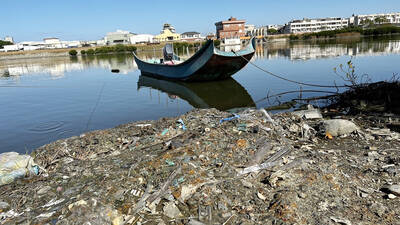
Many consumers are guilty of filling drawers or closets with old laptops, cellphones, fitness trackers and other electronic devices once they are no longer needed. It’s hard to know where to recycle such items, or it seems costly and inconvenient to do so. The world generates millions of tons of electronic waste — also called e-waste — each year. According to the UN’s most recent estimate, people worldwide produced 62 million metric tons of e-waste in 2022, and only about 22 percent of it was properly recycled. The US’ Environmental Protection Agency estimates that less than a quarter of e-waste is
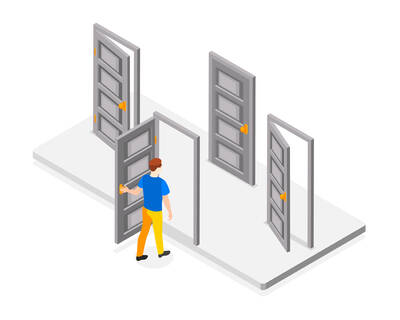
You’re sitting in class when a classmate asks to borrow a pencil. It seems like a small favor, so you agree without hesitation. The following week, the same classmate asks to share your notes. Later, they request help with a group project. You agree each time — after all, you helped out the first time — but before you know it, it has become automatic. This scenario demonstrates the “foot-in-the-door technique,” a psychological concept that shows how agreeing to small, acceptable demands makes it easier to accept larger ones later on. The name for this strategy comes from door-to-door

A: The four-day Tomb Sweeping Day long weekend begins Friday and will run until Monday. Are you going to sweep your ancestors’ tombs? B: I did in advance last weekend, so I can go to Kaohsiung to see the musical “The Phantom of the Opera.” A: Wow, is “Phantom” touring Taiwan again? It debuted in 1986, so this year marks the 40th anniversary of the show. B: And it’s not just touring Kaohsiung starting March 31, but also Taipei starting April 21 and Taichung starting May 26. A: “Phantom” is one of the world’s Four Major Musicals. I’ve seen all of them, except “Les

Dos & Don’ts — 想想看,這句話英語該怎麼說? 1. 我們很早到達電影院。 ˇ We arrived at the theater very early. χ We arrived the theater very early. 註︰arrive 為不及物動詞,後面如果有受詞要用 at 或 in。例如:They arrived in Taipei yesterday.。一般大地方,如國家、省、大城市等前面用 in,凡小地方城鎮、學校等則用 at。 2. 開車半小時以後,我們到達了海灘。 ˇ After half an hour’s drive, we got to the beach. χ After half an hour’s drive, we got the beach. 註︰come, go, get(來、去、到達)某地時,在表示地點的名詞前面應該用 to,如 go to school, go to Taipei, come to Shanghai 等。如果這些動詞後面所跟的是 here, there, home 等副詞,則不用 to。 3. 明天我會回辦公室。 ˇ I will be back in the office tomorrow. χ I will be back to office tomorrow. 註︰to be back 一語裡的 back 是副詞,不是介詞,所以後面要用 at (the market) 或 in (the office)。 假如假期結束,要回學校上課了則可說: ? Kids will be back


 RSS
RSS